x




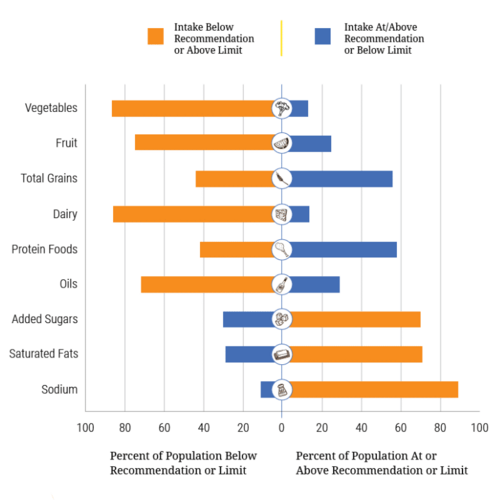
Despite eating an overabundance of food, numerous studies indicate that over 90 percent of Americans do not get the recommended daily vitamins and minerals from their diets. According to the Office of Disease Prevention and Health Promotion, across almost every age and sex group, U.S. eating patterns are too low in vegetables, fruits, whole grains, dairy, seafood, and oil and too high in refined grains, added sugars, saturated fats, sodium.
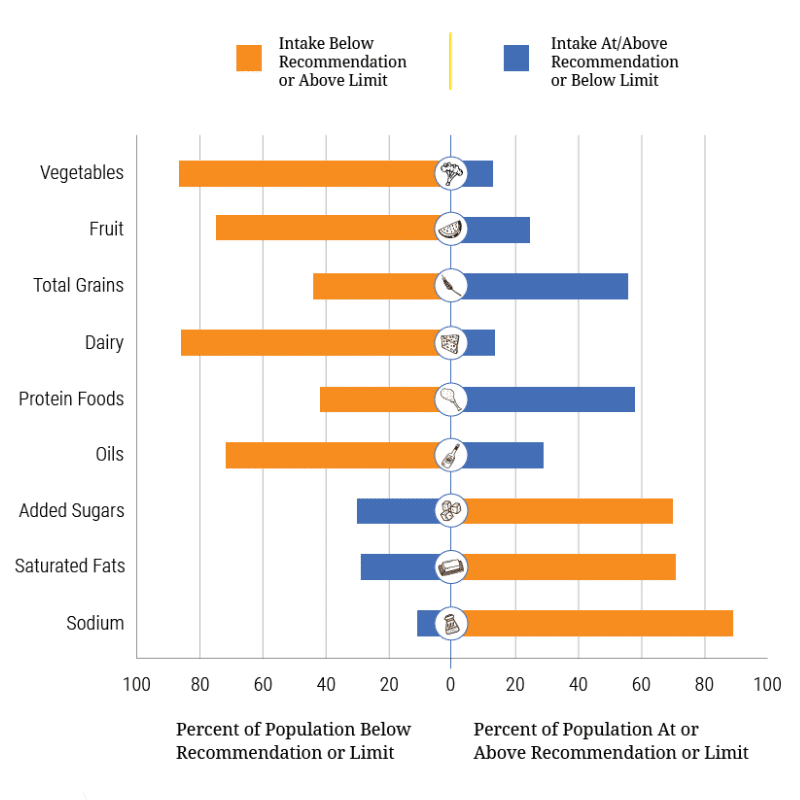
Dietary Intakes Compared to Recommendations. Percent of the U.S. Population Ages 1 Year and Older Who Are Below, At, or Above Each Dietary Goal or Limit
This kind of diet primes the body for disease and illness – especially the brain. A nutrient-poor diet affects brain and mental health at every age. Unhealthy diets increase the risk for psychiatric and neurologic conditions, such as depression and dementia.
You eat and are surrounded by known neurotoxins every day. Studies show that neurotoxins shorten the lifespan of nerve cells and cause various health problems. The symptoms of neurotoxicity range from temporary, minor, and reversible to chronic, serious, and potentially permanent brain or nervous system damage.
Minor symptoms can include headache, memory loss, impaired vision, fatigue, flu-like symptoms, sexual dysfunction, impaired motor skills, and tingling, numbness, or weakness of the limbs. Neurotoxicity can also manifest as psychological problems including anxiety, depression, mental confusion, compulsive behaviors, hallucinations, and changes in personality.
The availability of neurotoxins has increased dramatically in the last few decades as our food has become more processed, and we rely heavily on synthetic, manufactured products and live in chemically treated environments. Most restaurant and junk food contain high amounts of neurotoxic additives because they make the food taste good and make you crave more.
Common environmental pollutants, such as auto emissions and pesticide exposure, are also damaging your brain.
On a biological level, stress is a normal physical response which originally evolved to keep you safe. It was necessary for human survival. Like inflammation, stress was meant to be a short-lived response to a life-threatening situation. The problem is that, in today’s world, too many of us have a stress reaction to almost everything that happens and live our lives in a constant state of stress.
The long-term activation of your stress-response system and the overexposure to cortisol and other stress hormones that results can disrupt almost all your body’s processes. Chronic stress literally damages your brain and body increasing your risk of many health problems, including:
Humans evolved to move — hunting, foraging, running, climbing, — and that movement promotes brain growth. This growth takes place especially in the prefrontal cortex, which is essentially your humanness. In Spark, The Revolutionary New Science of Exercise and the Brain, Dr. John Ratey explains it this way:
The real reason we feel so good when we get our blood pumping is that it makes the brain function at its best. The point of exercise is to build and condition the brain.” The reverse is also true, however: “What virtually no one recognizes is that inactivity is killing our brains… If your brain isn’t actively growing, then it’s dying.”
The studies are overwhelming. In 2011, The Mayo Clinic went through 1,600 papers on exercise and there was no disputing that exercise had a definite positive effect on memory, learning, performance, and motivation while reducing depression, age-related decline, and the risk of dementia and Alzheimer’s. Exercise also promotes neurogenesis and neuroplasticity, the production of new neurons and connections between neurons which helps keep your brain healthy and aids mental health. Ratey declares that “Exercise is the single most powerful tool you have to optimize your brain function.”

In Genius Foods, Lugavere says:
[G]ood quality sleep is a precondition for optimal brain quality and health. ….(you get) Costco-size gains for dollar store effort, and yet our collective sleep debt is rising.”
Insufficient sleep is a huge problem – so much so that the Centers for Disease Control and Prevention (CDC) declared it a public health epidemic similar to the warnings issued about smoking cigarettes decades ago. Sleep deprivation can have serious short-term and long-term consequences. After just one night of skimping on sleep, the results can be seen in delayed reaction times, glucose levels, mood, headache, impaired memory, and hormone imbalances. Not getting enough sleep can literally make you sick, fat, and stupid.
Lack of sleep slows down your thinking, impairs your memory, concentration, judgment, and decision-making, impedes learning, and contributes to depression. Sleep is absolutely essential for your brain to work properly because during sleep your brain is busy processing information, consolidating memories, making connections, and clearing out toxins. When asleep, your brain does its housekeeping and not having adequate time to do this could potentially accelerate neurodegenerative diseases. Recent research shows that not getting enough sleep may actually shrink your brain.