This Blog Post is now in the queue for publishing as requested.
Depending on transfer load expect completion in around 15 minutes or 60 minutes if it has just been published by the owner.
This Blog Post has been removed from the queue for publishing as requested.
Nutrition Facts Label
Posted by
Bobby Brown on October 05, 2020 - 3:41pm
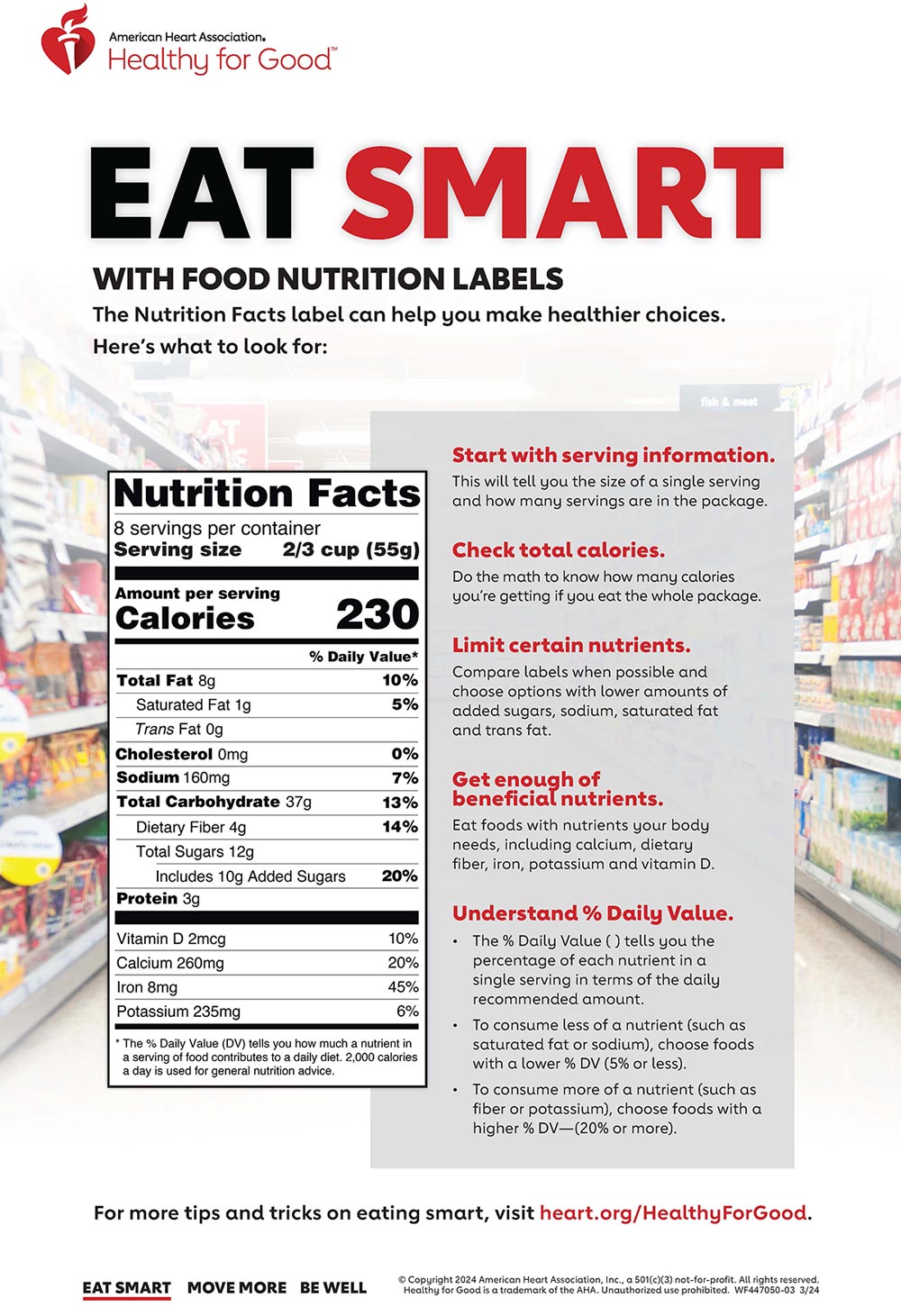
Eat Smart with Food Nutrition Labels
The Nutrition Facts label can help you make healthier choices. Use it! Here’s what to look for:
- Start with serving information.
This will tell you the size of a single serving and how many servings are in the package.
- Check total calories.
Do the math to know how many calories you’re really getting if you eat the whole package.
- Limit certain nutrients.
Compare labels when possible and choose options with lower amounts of added sugars, sodium, saturated fat and no trans fat.
- Get enough of beneficial nutrients.
Eat foods with nutrients your body needs like calcium, dietary fiber, iron, potassium, and Vitamin D.
- % Daily Value.
- The % Daily Value (DV) tells you the percentage of each nutrient in a single serving in terms of the daily recommended amount.
- To consume less of a nutrient (such as saturated fat or sodium), choose foods with a lower % DV (5% or less)
- To consume more of a nutrient (such as fiber), choose foods with a higher % DV – 20% or more.