x




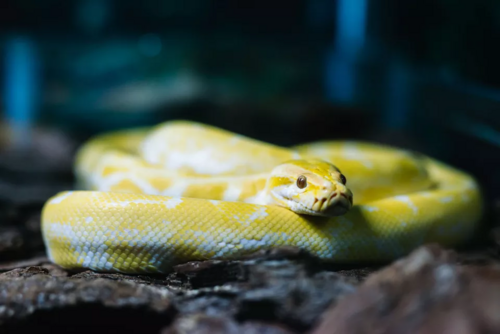
There are almost 2,800 different snake species that have been discovered in the world. And that number changes regularly as more are discovered.
But not all species of snakes are kept as pets. The most commonly kept snakes are in the families of Boidae, Pythonidae, and Colubridae. Although you can probably get almost any kind of snake from a reptile show or online, your commonly kept pet snake species from these families are listed here. Many other kinds of snakes are kept as pets.
Pet Snakes: Names and Fun Facts
A kind of boa constrictor, the red-tail boa is regularly seen in the pet trade. Red-tails grow to be around 10 feet long and don't make good pets for those unwilling to make the commitment to care for a snake that eats large rats or rabbits and can live about 30 years.1 They are known for the distinct red tip on the end of their tails.
:max_bytes(150000):strip_icc():format(webp)/peruvian-red-tailed-boa-in-northeastern-peru-10014219-5c4366d646e0fb0001dcdd24.jpg)
JH Pete Carmichael / Getty Images
Growing to be about a foot and a half long, these are unique burrowing snakes. They are usually docile snakes that burrow their entire body under sand while keeping just their tiny head exposed to strike at passing prey.2 They are beautifully colored with yellow and brown patterns.
:max_bytes(150000):strip_icc():format(webp)/kenyan-sand-boa--eryx-colubrinus-loverridgei---east-africa-135622795-5c436703c9e77c0001bb088a.jpg)
Andrew Bee / Getty Images
Arguably the most popular pet snake there is, the ball python is a very even-tempered, docile snake. They only grow to be about 3-5 feet in length but can live several decades.3 They get their name from the tight ball they curl up into when they feel threatened. These snakes don't require much in the way of heating or lighting and make great first snake pets.
:max_bytes(150000):strip_icc():format(webp)/royal-python--ball-python--python-regius---studio-shot-460703803-5c43673e46e0fb0001dcf2b7.jpg)
Simon Murrell / Getty Images
These are large snakes but still regularly seen as pets.4 Growing to be 15-20 feet long (and sometimes even longer), burmese are usually pretty docile but a little more active than your smaller ball python. Feeding these big guys isn't for someone scared of handling dead rats, or other larger prey items. Due to their heavy weight when full grown and their extreme length, burmese pythons may be better left for adult snake owners.
:max_bytes(150000):strip_icc():format(webp)/slithering-burmese-python--python-molurus---view-from-above--73507128-5c436823c9e77c0001bb42b0.jpg)
Dave King / Getty Images
Arboreal snakes add a little more interest to a typical snake enclosure. green tree pythons like to curl up in an elegant clump and hang onto a little tree limb. Very vibrant green (sometimes yellow) as adults, they max out in length at about 7 feet and are often confused with the emerald tree boa.5
:max_bytes(150000):strip_icc():format(webp)/green-tree-python--morelia-viridis---captive-928806248-5c43685d4cedfd0001031e3e.jpg)
Martin Siepmann / Getty Images
Known to be a little temperamental, the blood python is a stocky snake with lovely patterns. They have short tails and can grow to be about 8 feet long. They get their name from the brick-red blotches commonly found in their patterns.
:max_bytes(150000):strip_icc():format(webp)/blood-python-528275406-5c436888c9e77c0001efa03b.jpg)
John Pitcher / Getty Images
Closely related to the milk snake, king snakes grow to be about 6-7 feet in length making them a smaller pet snake. They got their name from the fact that they will readily eat other snakes so they should definitely be housed alone. King snakes are native to North and South America and breed regularly in captivity so finding a captive-bred pet shouldn't be difficult.
:max_bytes(150000):strip_icc():format(webp)/lampropeltis-pyromelana-knoblochi-132406104-5c4368a346e0fb00015bac58.jpg)
David Bygott / Getty Images
Actually, a species king snake, the milk snake is most commonly seen in the pet trade closely mimics the color patterns of the venomous coral snake (known as Batesian mimicry). The common saying, "Red on yellow will kill a fellow, but red on black is a friend of Jack" refers to the band patterns found on coral and milk snakes. Coral snakes have red bands next to yellow bands while milk snakes have red bands next to black bands.
:max_bytes(150000):strip_icc():format(webp)/pueblan-milk-snake--lampropeltis-triangulum-campbelli--460704415-5c4368dbc9e77c00014e8ade.jpg)
Simon Murrell / Getty Images
Perhaps one of the plainer looking snakes, the rat snake makes up for his lack of luster in his athletic abilities. Able to swim and climb trees, this is an active snake.8 They will wrinkle their bodies up to resemble a rattlesnake and even vibrate the ends of their tails when startled or frightened. The rat snake constricts his prey before eating it and is found throughout parts of North America.
:max_bytes(150000):strip_icc():format(webp)/black-ratsnake--elaphe-obsoleta---new-york--usa-128068503-5c4368fa46e0fb0001c8df54.jpg)
John Cancalosi / Getty Images
A species of rat snake, the corn snake is a popular beginners snake due it's small size but also a well-loved snake to the experienced keeper because of their varying color patterns. Corn snakes usually max out at about 5 feet and are excellent escape artists, as are many snakes. They aren't known to be biters and are pretty docile snakes.
:max_bytes(150000):strip_icc():format(webp)/sunglow-corn-snake--sunglow-cornsnake--pantherophis-guttatus--545756601-5c436913c9e77c0001763e91.jpg)