x



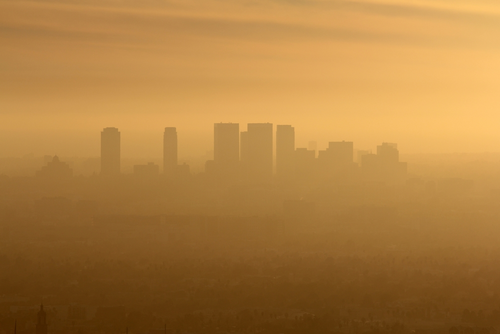
As air pollution increases so do the number of road accidents. The reason? Pollution has an impact on the brain, affecting drivers’ ability to concentrate and focus.
That was the surprising conclusion from a five-year study conducted by the London School of Economics.
It seemed a bit farfetched and the findings raised a lot of eyebrows. But if it’s true, how would pollution affect the brain over a long period of time?
We didn’t have to wait long for the answer, because hot on the heels of this study came the first comprehensive review of dementia risk factors found in the environment.
And it’s not good news for road users.
So. . .air pollution and memory loss. . . Before you dismiss the idea as crazy, let’s look at what the article said in general about the causes of dementia.
“It has been suggested that approximately a third of Alzheimer’s dementia cases could be attributed to seven potentially modifiable risk factors: diabetes, midlife hypertension and obesity, smoking, depression, cognitive inactivity [this is an error, it should read physical inactivity], and low educational attainment [this includes cognitive inactivity].”
In an interview the lead author Dr. Tom Russ said genetics accounted for an additional third of the risk and “there is still one third of dementia risk that is not explained.”
Environmental factors could fit the bill.
To find out, Dr. Russ’s research team from the Alzheimer Scotland Dementia Research Centre at the University of Edinburgh screened nearly 5000 studies before deciding on 60 that met their criteria.
The research covered a wide range of potential factors from population studies.
Air Pollution: The most robust body of research covered air pollution. Strong evidence was found for nitric oxides, particulate matter, and ozone as causes of dementia, and moderate evidence for carbon monoxide and environmental tobacco smoke.
Metals: Of 15 different metals, moderate evidence was found only for aluminum. Although they looked at 16 studies, only one study from France was considered high quality. In that instance, aluminum levels in the drinking water that gave rise to consumption above 0.1mg per day doubled the dementia risk and tripled the risk of Alzheimer’s.
For other metals the evidence was mixed and generally weak.
Occupational-Related Exposures: Little reliable evidence. Strongest comes from pesticide exposure but even these studies give mixed results.
Other Factors: Moderate evidence was found for exposure to electromagnetic fields. For instance, a Swiss study found people living close to power lines for 15 years or more doubled their risk of death from Alzheimer’s. This one study should not be considered the last word.
Strong evidence from three high quality studies found vitamin D deficiency from a lack of sunlight exposure raised dementia risk.
In Dr. Russ’s opinion, “Environmental risk factors are an important new area to consider, particularly since we might be able to do something about them.
“We found that the evidence is particularly strong for air pollution and vitamin D deficiency.”
Robert Howard, Professor of Old Age Psychiatry at University College London and King’s College London said “most of the environmental factors identified in this review probably represent no realistic increase or only a vanishingly tiny increased risk for dementia.”
Tom Dening, Professor of Dementia Research at Nottingham University, opined, “What is difficult to tell is whether the environmental exposures are themselves contributing to dementia or whether they are in fact acting as proxies for some underlying variable.”
Both professors may be correct in their assessment. It’s important to note that observational studies of the kind included in this review only show associations, not cause and effect.
The review did not look at other laboratory, animal and human studies. Many support air pollution and vitamin D deficiency as risk factors for dementia.
If you live in a high pollution area and are a regular cyclist or motorist, a face mask is one option. On hot, humid days when the authorities say air pollution is high, it might be wise to stay indoors and breathe filtered air. An indoor air filter is not a bad idea in any case.
Maintaining high levels of antioxidants would also offer some protection. Finally, make sure you get plenty of safe sun exposure and take vitamin D supplements in the winter mon