x




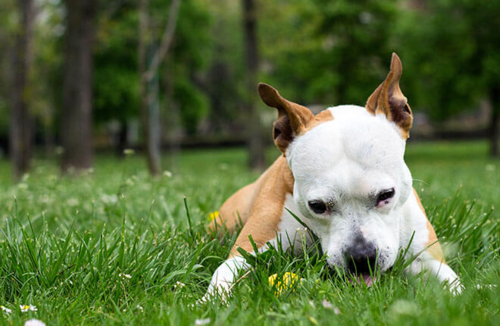
Pet owners often wonder ‘why’ when it comes to their dogs and cats. One very common ‘why’ that many dog owners ask is, “Why does my dog eat grass?” While there are many dogs that do it, the answer is not a simple one, and mostly speculation. But it’s important to understand what may be behind your dog’s grass eating and whether it’s safe to let them consume grass.
The simplest answer is often the best answer. Some dogs may just simply like to graze on grass. Sometimes when animals have a nutritional deficiency they seek and ingest non-food substances (such as dirt or fabric); this disorder is called pica. However, even dogs on well-balanced diets eat grass, so a nutritional deficit is unlikely. Perhaps the taste and texture of fresh green grass are appealing to them. Dogs, like their ancestors, are omnivores so seeking grass as a source of fiber might even be in their nature.
Could there be an emotional need that eating grass fulfills? It’s possible that dogs eat grass out of boredom or that this behavior may be calming for anxiety. As pet owners, we must consider each dog’s individual needs and be on the lookout for behavior changes that could indicate a problem.
It has been proposed that dogs eat grass to make themselves vomit. One thought is that the grass blades physically stimulate the back of the throat or the upper part of the gastrointestinal tract to induce vomiting. In reality, vomiting occurs in a relatively small proportion of dogs who eat grass.
Is It Safe to Let Your Dog Eat Grass?
If your dog grazes on grass every once in a while, don’t worry about it (as long as you use year-round parasite prevention). The environment is a common source for parasites, and gastrointestinal parasites and their eggs (such as intestinal worms like hookworms and roundworms) can live in and around the soil and grass that your dog may ingest.
It’s also critical to prevent your dog from accessing and ingesting certain types of grass and plants. Toxic plants and weeds like Narcissus (Daffodil) and English Ivy are hazardous. Grasses are also often treated with pesticides, herbicides, and fertilizers that can be harmful to your dog. Always monitor what products you put on your grass to be sure they are safe for pets. Avoid letting them eat greenery in areas that you don’t know, especially in places likely treated with pesticides or fertilizers like parks and playgrounds.
If you notice that your dog is eating grass and regularly showing signs of stomach issues like retching, salivating, foul-smelling breath, licking lips, vomiting, or acting uncomfortable or restless, it’s best to have them evaluated by a veterinarian. These signs could indicate health issues that can cause serious problems if not treated.
If your dog seems to be obsessed with eating grass, it is very important to talk to your veterinarian. They will work with you to rule out a medical condition, anxiety, or behavioral consequences from boredom. A veterinary behaviorist or certified behavior consultant can also be helpful to address the underlying cause of anxiety or other inappropriate behaviors with the added benefit of reducing or eliminating grass eating.
If you and your veterinarian suspect your dog is eating grass due to boredom, you can focus on increasing their mental enrichment through toys, games, and training fun. Puzzle toys for dogs that allow you to hide treats are a great option. You could also try establishing more active playtime and exercise for your dog. Work on training your dog to focus on you while on walks. If you see your dog moving towards a patch of grass with the intent to take some bites, redirect their attention to you by using their name or a command followed immediately by a treat and praise when they focus on you. Continued positive reinforcement with treats for maintaining attention will keep your dog engaged — and ignoring the grass.
The exact reason dogs eat grass remains a mystery — but in most cases it tends to be benign. If you suspect a medical issue might be contributing to your dog’s grass-eating or if you have questions or concerns about the behavior, contact your veterinarian to have your dog evaluated. And always be aware of the potential dangers of eating grass, such as parasites and toxins
.jpg)