x




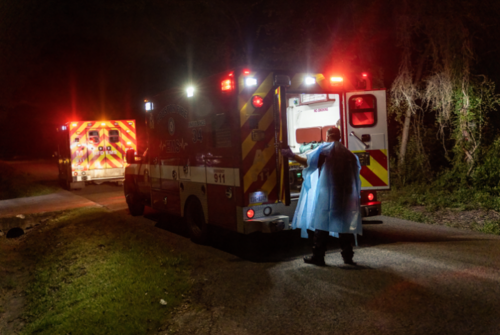
The recently enacted No Surprises Act (NSA) provides landmark protections against surprise billing in a wide range of settings — but not for ground ambulances. At least half of all ambulance rides may result in a surprise bill, with bills averaging $450. Since consumers cannot choose an ambulance service when they dial 911, patients have little ability to avoid out-of-network charges. The NSA created a ground ambulance advisory committee of stakeholders and experts to develop recommendations related to disclosure of charges, surprise-billing protections, and enforcement mechanisms. However, the committee has not selected members nor published a convening date.
The variety of ways ground ambulances are operated and paid for creates challenges for states and federal agencies. In 2020, 37 percent of emergency ground ambulance rides were provided through local fire departments, 25 percent through other government agencies, 30 percent through private companies, and 8 percent through hospitals. State and local regulation creates barriers for publicly funded providers, such as local fire departments, to contract with insurance companies as in-network providers. In Houston, for example, ambulance reimbursement rates are set by municipal ordinance, which means rates cannot be lowered during insurer contract negotiations. These rates may be set high to influence Medicare and Medicaid reimbursement, which is based on the average emergency medical service (EMS) rate per region. Some states, like Colorado and Delaware, have chosen to exempt public agencies from protections altogether, meaning that patients who use ambulance services run by a publicly funded provider may receive surprise bills. The complexity of working with local governments was cited as one reason ground ambulance coverage was excluded from the NSA.
Several states have addressed out-of-network protections for ground ambulances. For state-regulated fully insured plans, 10 states provide some protection for consumers from surprise bills by out-of-network ground ambulance services; six provide guidance on reimbursement rates, though some use billed charges as a factor in that guidance, meaning providers can still charge insurers high rates even if the patient is only responsible for in-network cost sharing. High rates, in turn, may contribute to higher premiums for consumers.
Some states have released data showing the positive impact of reimbursement guidance. In Colorado, aggregate claims data showed that out-of-network ambulance providers charged $21,212,290 statewide, but insurers ultimately paid out only about half that amount, $11,715,373, following reimbursement guidance that capped payments at either 350 percent of Medicare or an independently negotiated amount. In Florida, complaints related to ground ambulance billing have decreased since the passage of surprise billing protection in 2016, falling from 36 percent of complaints in 2015 to 5 percent of complaints in 2020.