x




People say that beauty’s only skin deep; it’s what’s on the “inside” that counts. Our insides are certainly important, but skin is your first layer of defense against the outside world. Skin can also give important clues to your overall health. Learn to take good care of your skin, so your skin can keep taking good care of you.
Skin protects your body in many ways. “The skin provides a barrier to protect the body from invasion by bacteria and other possible environmental hazards that can be dangerous for human health,” says NIH dermatologist Dr. Heidi Kong.
Skin plays other roles, too. It contains nerve endings that let you feel when an object is too hot or sharp, so you can quickly pull away. Sweat glands and tiny blood vessels in your skin help to control your body temperature. And cells in your skin turn sunlight into vitamin D, which is important for healthy bones.
Skin can also alert you to a health problem. A red, itchy rash might signal allergies or infections, and a red “butterfly” rash on your face might be a sign of lupus. A yellow tint might indicate liver disease. And dark or unusual moles might be a warning sign of skin cancer. Be on the lookout for unexpected changes to your skin, and talk with your doctor if you have concerns.
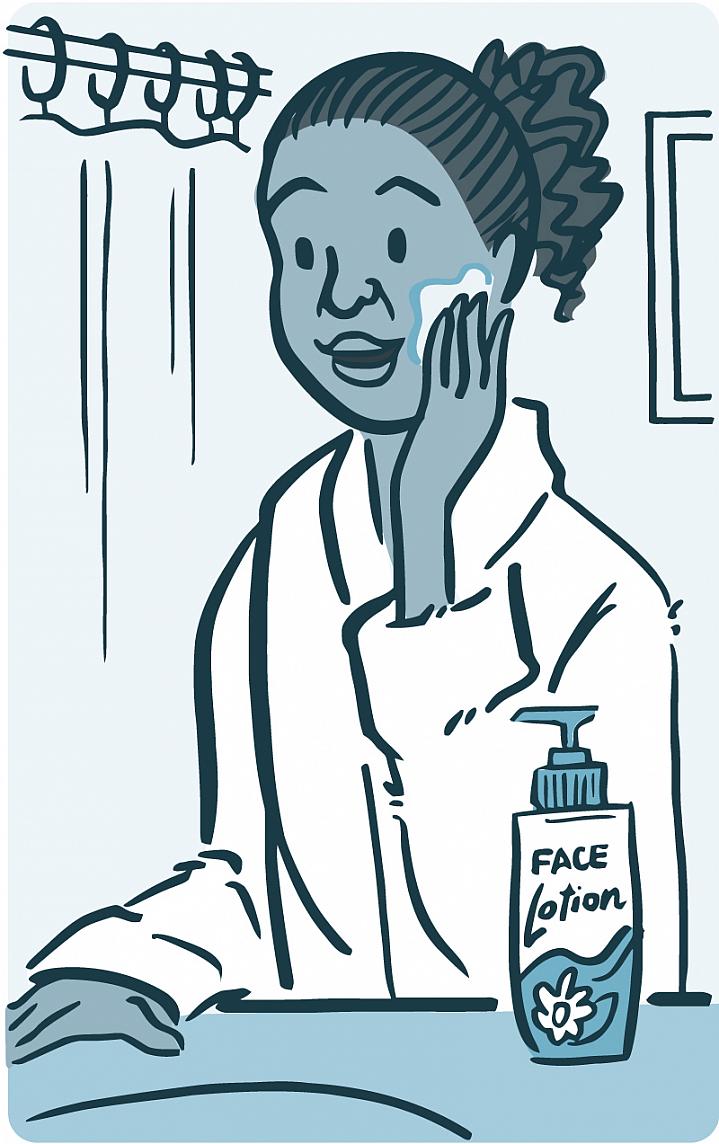
Your skin can become too dry if you don’t drink enough fluids or spend too much time in sunny or dry conditions. “While washing hands is important for good hygiene, washing your hands too much can also lead to dry skin,” Kong says, especially if you wash with hot water and harsh soaps. To treat dry skin, use moisturizing creams or lotions, and use warm instead of hot water when you bathe and wash your hands. You can also try using a humidifier to make the air in your home less dry.
The sun can damage your skin as well. Sunlight contains ultraviolet (UV) light that causes sunburn and makes your skin age faster, leading to more wrinkles as you get older. “There’s a strong link between UV exposure and skin cancer,” Kong adds. So protect your skin from the sun. Wear hats and other protective clothing, use sunscreen with a sun protection factor (SPF) of at least 30, and restrict your time in the sun during the late morning and early afternoon hours, when sunlight is strongest.
.png)
Many skin researchers like Kong are studying the skin’s microbiome—the bacteria and other microscopic organisms that live on your skin. Some of these microbes can be helpful. Evidence suggests that they boost the body’s infection-fighting immune system and help keep you healthy. “But there are some skin diseases with known associations with certain microbes,” says Kong. “We’re trying to understand how those microbes differ between healthy people and people with skin diseases.” In the long run, scientists would like to find ways to support healthy skin microbes while reducing harmful ones.