x





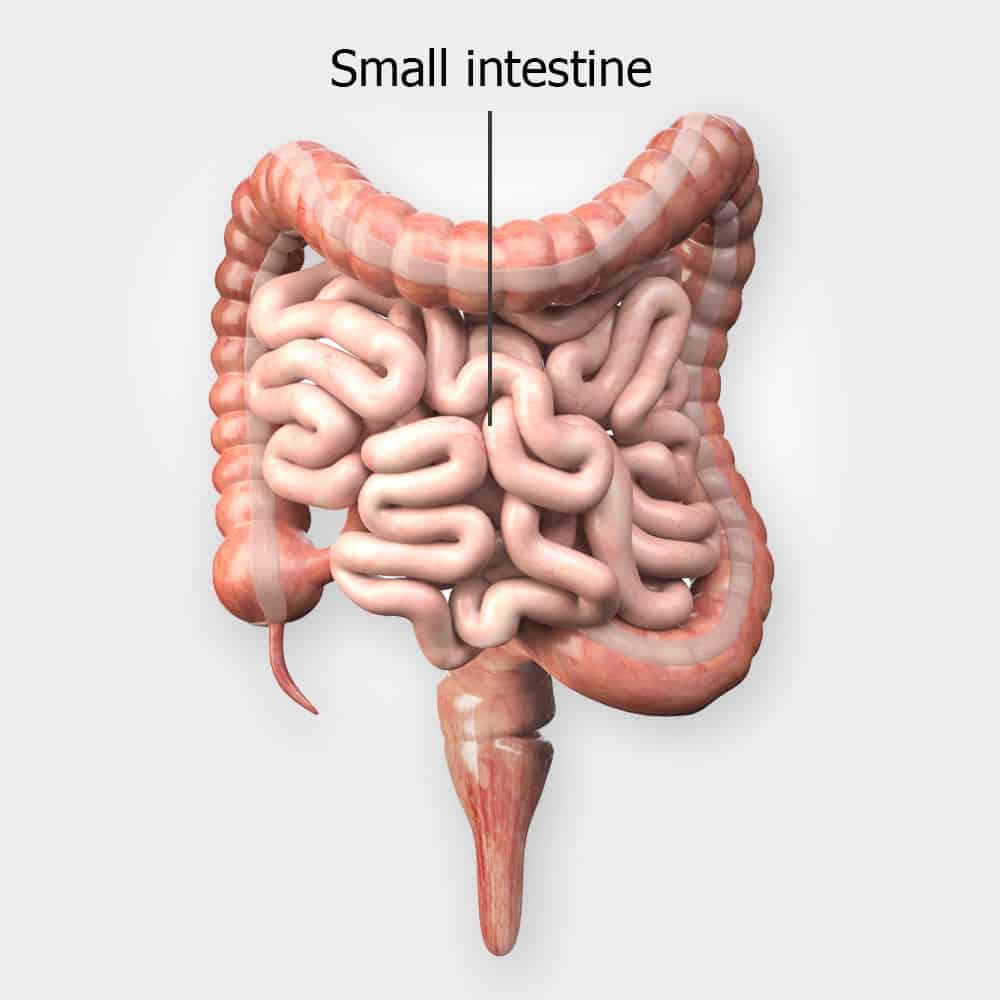
The small intestine also has special features that help to increase the number of nutrients absorbed by the body. The inner layer of the small intestine has millions of what are known as villi. These are tiny finger-like structures with small blood vessels inside. They are covered by a thin layer of cells. Because this layer is thin, it allows the nutrients released by digestion to enter the blood. Most of the important nutrients needed by the body are absorbed in different points of the small intestine. Following on from the ileum is the large intestine. The inside of the large intestine is wider than the small intestine. It does not contain villi, and mainly absorbs water.

Bacteria in the large intestine also help with the final stages of digestion. Once chyme has been in the large intestine for 3-10 hours it becomes semi-solid. This is because most of the water has been removed. These remnants are now known as stools. Movements of the muscles found in the large intestine help to digest the chyme and move feces towards the rectum. When feces are present in the rectum, the walls of the rectum stretch. This stretch activates special receptors. These receptors send signals via nerves to the spinal cord. The spinal cord signals back to the muscles in the rectum, increasing pressure on the first sphincter of the back passage.
.png)