x




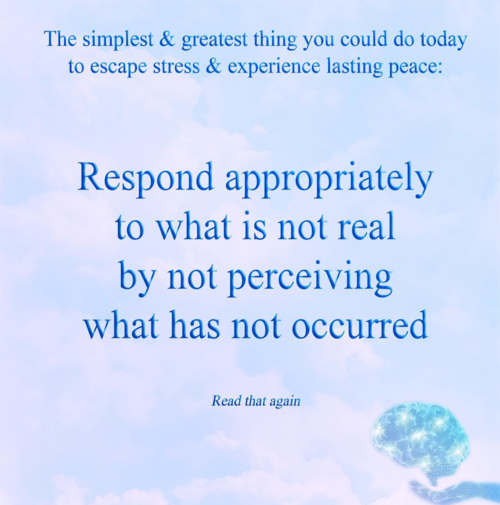
Stress, or more accurately; stress responses in human physiology are caused by our perceptions of stressful stimuli OR, another way to say it might be: Stress responses in the body result from the way the brain transduces sensory information that relates in some way to negative, fearful, &/or harmful beliefs held within the subconscious mind. Stress responses result from our perceptions… change the perception & you change the response in the body.
__
- Emotional reactions cause stress in the body…once again, our emotional reactions are dictated by our perceptions of people, words, actions, situations etc. Those perceptions relate to subconscious beliefs & if we perceive differently, or if we shift the beliefs, once again, the response can be completely different. At this point, it’s perhaps an opportune moment to appreciate just how limited our physical senses, via which we perceive, actually are. On a logarithmic scale of frequency, visible light is 2.3% of the whole electromagnetic spectrum, while on a linear scale it is a mere 0.0035%
__
- The brain can’t see the world around us that it’s attempting to make sense of & understand. It receives this very limited information from our senses. In the case of our visual sense: the brain receives & transduces around only 1% of the information that constitutes reality and then it attempts to make predictions about the remaining 99% it is left to guess about....& yet we’re so certain we know what ‘know’ what ‘reality’ is.…because “seeing is believing
.png)
__
- Contemplating those numbers even only for a moment allows us to potentially understand that much of what we believe to be true, is very often a misperception & so often it’s these misperceptions upon which our stress responses are ‘triggered’. Be open to the idea that things are not always what they may seem & new ‘truths’ may await you if you can allow your brain & body to begin to pay attention to the more subtle information around us that we’ve been hardwired since childhood to ignore. When we take that approach, we’re forced to slow down & not jump to the conclusions that lead to habitual stress responses