x






Stress is your body’s way of responding to any kind of demand or threat. When you sense danger—whether it’s real or imagined—the body’s defenses kick into high gear in a rapid, automatic process known as the “fight-or-flight” reaction or the “stress response.”
The stress response is the body’s way of protecting you. When working properly, it helps you stay focused, energetic, and alert. In emergency situations, stress can save your life—giving you extra strength to defend yourself, for example, or spurring you to slam on the brakes to avoid a car accident.
Stress can also help you rise to meet challenges. It’s what keeps you on your toes during a presentation at work, sharpens your concentration when you’re attempting the game-winning free throw, or drives you to study for an exam when you’d rather be watching TV. But beyond a certain point, stress stops being helpful and starts causing major damage to your health, mood, productivity, relationships, and your quality of life.
If you frequently find yourself feeling frazzled and overwhelmed, it’s time to take action to bring your nervous system back into balance. You can protect yourself—and improve how you think and feel—by learning how to recognize the signs and symptoms of chronic stress and taking steps to reduce its harmful effects.
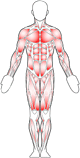 When you feel threatened, your nervous system responds by releasing a flood of stress hormones, including adrenaline and cortisol, which rouse the body for emergency action. Your heart pounds faster, muscles tighten, blood pressure rises, breath quickens, and your senses become sharper. These physical changes increase your strength and stamina, speed up your reaction time, and enhance your focus—preparing you to either fight or flee from the danger at hand.
Your nervous system isn’t very good at distinguishing between emotional and physical threats. If you’re super stressed over an argument with a friend, a work deadline, or a mountain of bills, your body can react just as strongly as if you’re facing a true life-or-death situation. And the more your emergency stress system is activated, the easier it becomes to trigger, making it harder to shut off.
If you tend to get stressed out frequently, like many of us in today’s demanding world, your body may exist in a heightened state of stress most of the time. And that can lead to serious health problems. Chronic stress disrupts nearly every system in your body. It can suppress your immune system, upset your digestive and reproductive systems, increase the risk of heart attack and stroke, and speed up the aging process. It can even rewire the brain, leaving you more vulnerable to anxiety, depression, and other mental health problems.
Health problems caused or exacerbated by stress include:
The most dangerous thing about stress is how easily it can creep up on you. You get used to it. It starts to feel familiar, even normal. You don’t notice how much it’s affecting you, even as it takes a heavy toll. That’s why it’s important to be aware of the common warning signs and symptoms of stress overload.
Cognitive symptoms:
Emotional symptoms:
Physical symptoms:
Behavioral symptoms:
The situations and pressures that cause stress are known as stressors. We usually think of stressors as being negative, such as an exhausting work schedule or a rocky relationship. However, anything that puts high demands on you can be stressful. This includes positive events such as getting married, buying a house, going to college, or receiving a promotion.
Of course, not all stress is caused by external factors. Stress can also be internal or self-generated, when you worry excessively about something that may or may not happen, or have irrational, pessimistic thoughts about life.
Finally, what causes stress depends, at least in part, on your perception of it. Something that’s stressful to you may not faze someone else; they may even enjoy it. While some of us are terrified of getting up in front of people to perform or speak, for example, others live for the spotlight. Where one person thrives under pressure and performs best in the face of a tight deadline, another will shut down when work demands escalate. And while you may enjoy helping to care for your elderly parents, your siblings may find the demands of caretaking overwhelming and stressful.
Common external causes of stress include:
Common internal causes of stress include:
According to the widely validated Holmes and Rahe Stress Scale, these are the top ten stressful life events for adults that can contribute to illness:
.png)