x





KEN WIEDEMANN/GETTY IMAGES
You've heard of “eating the rainbow” when it comes to getting lots of nutritional variety in your diet. Although that goal may seem easier when you're knee-deep in summer greens and produce, winter provides its own bounty of immune system boosters — right when cold and flu season means you really need them.
High on the list? Winter squash, sweet potatoes, carrots, beets (and don't forget their greens) and many green vegetables. Cruciferous veggies, such as cabbage, brussels sprouts, broccoli, kale, collards, turnips and rutabaga, are at their best in winter, when they've had a bit of cold exposure when they are grown.
The exceptions to the rainbow rule are onions, garlic, turnips and cauliflower, all of which boast nutritional benefits, especially onions and garlic. They are known as alliums. Also including leeks, shallots, chives and green onions, alliums have a sulfur-containing compound that is naturally detoxifying and anti-inflammatory. Plus, a single cup of chopped onion provides 20 percent of your daily value of vitamin C. Both vitamins A and C are important for your immune system, and other winter produce provides more of each. Yellow or deep-orange vegetables, such as winter squash and sweet potatoes, contribute vitamin A, and one cup of red cabbage provides 43 percent of the daily value of C — at just 20 calories.
Herbs and spices contain powerful antioxidant compounds, along with adding flavor and, sometimes, color (think chili powder, turmeric and curry powder, which contains turmeric). Try using just a little as you cook vegetables; even one-quarter to one-half teaspoon goes a long way to boosting health.
With all of its antioxidant activity and super nutrition, winter produce is ripe for the picking. Enjoy the variety to avoid that feeling that there's nothing to eat in winter. Here are some recipes to help you relish eating the rainbow.

Herb-Roasted Root and Other Vegetables
This is a satisfying and easy dish to make, with a pleasant aroma that fills the house. I make it whenever I want substantial leftovers to eat throughout the week. Use any root vegetables that you like, such as rutabaga, kohlrabies, leeks and shallots. Make sure to use only white or gold beets, if they are available, as red ones will color your entire dish of vegetables unless you find a way to segregate them. If you have brussels sprouts, try adding them to the mix. A key to good roasting is to give the veggies some space in the pan. In fact, it's better to use two dishes than to overcrowd one. Switch positions in the oven halfway through if you use two dishes.
Serves 4
Ingredients
1. Preheat the oven to 425° F.
2. Combine all vegetables in a large glass baking dish. Add the olive oil, vinegar, salt and pepper, and toss well.
3. Add the herb sprigs or dried herbs. Cover the dish. Bake for 40 minutes. Remove the cover and see if the vegetables are cooked through. Cook for another 5 minutes or until the vegetables are tender but not mushy. Remove the sprigs of herbs and peel the garlic if you intend to eat it. Serve hot.
©2019 From The Veggie Queen: Vegetables Get the Royal Treatment, Jill Nussinow, MS, RD
Nutrients per serving: 241 calories, 7 grams total fat (saturated, 1 gram; trans fat 0), 42 grams carbohydrates; 15 grams total sugars (0 added sugar), 5 grams protein, 8.4 grams fiber, 154 milligrams sodium, 0 milligrams cholesterol
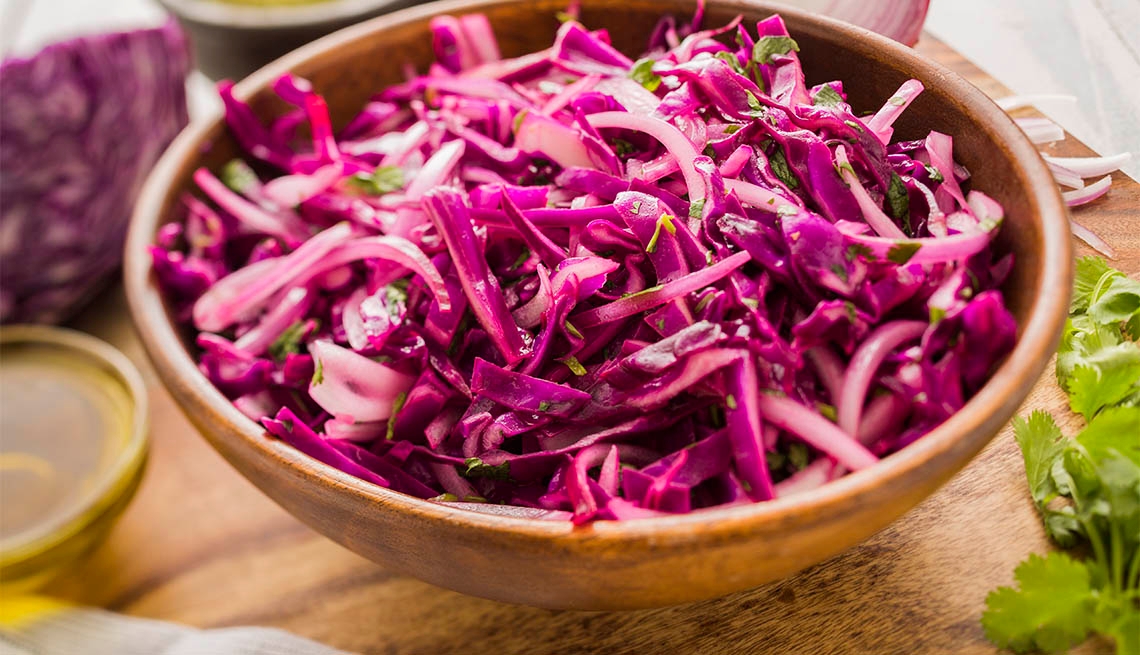
Cabbage and Red Apple Slaw
This recipe takes just a few minutes to make using a food processor. Since cabbage, apples and carrots are almost always available, you can make this anytime, but it's especially refreshing in the winter, when green salad may not seem as appealing and lettuce can be expensive. It's also terrific to bring to potlucks. And if you want to make it even easier, just buy a 14-ounce bag of prepared coleslaw; use half or more with the carrot and apple plus the dressing. Voilà!
Serves 6
Ingredients
1. Quarter the cabbage, removing and discarding the central white core. Shred the cabbage by cutting very thin slices along the length of each quarter or use the thin slicing blade of your food processor. You should have about 6 cups. Place the shredded cabbage in a large bowl. While your processor is out, use the grating blade for the apple and carrot, or grate by hand.
2. Toss in the carrot and apple.
3. In a small jar, combine the maple syrup, vinegar, mustard and salt. Shake vigorously and pour over the cabbage. Mix well. Taste and add more vinegar if desired.
4. Refrigerate for at least half an hour before serving.
©2019, From The Veggie Queen: Vegetables Get the Royal Treatment, Jill Nussinow, MS, RD
Nutrients per serving: 73 calories, 0 grams total fat (saturated fat 0, trans fat 0), 18 grams carbohydrates, 11 grams total sugar (3 grams added), 2 grams protein, 3 grams fiber, 297 milligrams sodium, 0 milligrams cholesterol

Curried Greens With Chickpeas
This recipe is perfect with the sweet collard greens you find in the winter. Instead of using lentils or split peas, which were in my original version and which would take longer to cook, here we use canned chickpeas, a pantry staple. If you don't like spicy food, leave out the chili. Any leftover tomato paste or canned tomatoes can be easily frozen for later use. I freeze tomato paste in 1- or 2-tablespoon amounts in ice cube trays. Or buy tomato paste in a tube, which keeps a long time in the refrigerator. The recipe yields an ample amount, which can be frozen to enjoy later.
Serves 4 to 6
Ingredients
1. Heat a nonstick or regular sauté pan over medium heat. Add the oil and let sit for 30 seconds. Add the onion and carrot and sauté for 1 to 2 minutes. Then add garlic, chile or cayenne, ginger, cumin seeds, curry powder and turmeric; sauté for about 30 seconds until fragrant. Add the collards, chickpeas, and stock or water.
2. Cook for 5 to 7 minutes until the collard greens turn bright green. Add the tomatoes and tomato paste and stir well. Simmer for 2 to 3 more minutes until the mixture has some liquid but is not soupy.
3. Add the lemon zest and stir well. Serve hot over rice, quinoa or your favorite grain.
To pressure-cook, sauté the first ingredients, as stated above. Add the stock, stir well, and then add the greens and chickpeas. Add the tomatoes but do not stir. Cook on high pressure for 3 minutes and quick release. Remove the lid, carefully turning it away from you. Stir in the tomato paste. If the mixture looks too soupy, cook on low sauté for a minute or two. Add the lemon zest.
©2019 Jill Nussinow, MS, RD, Adapted from Vegan Under Pressure, Houghton, Mifflin, Harcourt
Nutritients per serving: 211 calories, 3 grams total fat (.4 gram saturated fat, 0 grams trans fat), 38 grams carbohydrates, 10 grams total sugars (0 added sugar), 12 grams protein, 13 grams fiber, 387 milligrams sodium, 0 milligrams cholesterol

This recipe is easy to make, and you'll get a great dose of greens. Use your favorites types, or use what's on hand. The only limit to what goes into this salad is your imagination. If you don't want to deal with whole leaves of kale, you can buy the baby kale and use that. It usually comes in a 5-ounce package, and you can use all of it. You'll notice the greens shrink by about half when they are massaged with the tahini, miso and lemon juice. If you are eating this solo, make half a batch, although it will last in the refrigerator for a day or two.
Serves 2 to 4
Ingredients
1. Remove leaves from large ribs and slice thinly, or use baby kale. Put into a large bowl. Add the tahini, lemon juice and miso. Put your hands into the bowl and massage the greens until they are wilted, about 3–5 minutes. Add the garlic, onion and avocado. Stir well to combine. Sprinkle with the seeds. This dish tastes best when eaten immediately.
©2019, Adapted from Nutrition CHAMPS: The Veggie Queen's Guide to Eating and Cooking for Optimum Health, Wellness, Energy and Vitality, Jill Nussinow, MS, RD
Nutrients per serving: 294 calories, 19.8 grams total fat (saturated fat 2.4 grams), 25 grams carbohydrates, 5 grams total sugar, 12 grams protein, 11 grams fiber, 278 milligrams sodium, 0 milligrams cholesterol