x




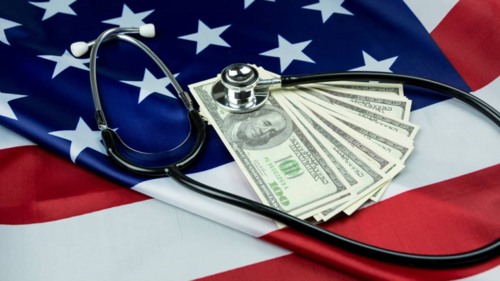
At this point, it's safe to say that most Americans are struggling with the high cost of prescription drugs. There are a lot of different factors at play, but one of the most significant is simply the fact that prescription drug prices in the United States are higher than anywhere else in the world.
Like anything else that's expensive, the burden falls on certain subsets of the population. Millionaires are less likely to spend their time searching for the best online pharmacy in order to save some cash. No, people looking for discount prescription drugs online are people who can't afford their medication in the first place.
While this list is by no means exhaustive, there are four major groups of people who struggle the hardest to pay for their prescription drugs. Here are the people hit hardest by the high cost of prescription drugs in the U.S., and why this is the case.
According to the National Health Council, an estimated 157 million Americans likely have at least one chronic condition (it will take time for actual data to populate and be available in official reports). For the purposes of this data, six chronic conditions were considered: arthritis, asthma, cancer, cardiovascular (heart) disease, chronic obstructive pulmonary disease (COPD), and diabetes.
Now, some of the medications that people may take for these chronic conditions aren't entirely overpriced. For example, there are plenty of generic statins available that are reasonably priced and mostly accessible. Statins are used to treat high cholesterol, which is sometimes part of an overall cardiovascular disease treatment plan.
However, asthma and COPD inhalers are notoriously expensive, and because of the mechanisms involved in the inhalers themselves, pharmaceutical companies are able to file for a new patent each time they make an improvement to the delivery design. This allows them to set a high price and prevents generic versions from entering the market.
It probably comes as no surprise that diabetes medication is also expensive (with insulin being a particular concern because of special shipping considerations) and of course, medication used to treat cancer, or alleviate symptoms that people with cancer experience.
The main issue here is that people who need medication to treat a chronic condition won't be doing so for a short period of time. Drug coupons will not help these people because they need this medication every single day in order to manage their condition. Because they cannot take a break from the medication (or are unlikely to be able to do so for long periods of time), the cost becomes burdensome very quickly.
Senior citizens — generally classified as people aged 65 and older — are hit hard by high prescription drug costs in a couple different ways, making them a particularly vulnerable group of people. Because most senior citizens are retired, they're in a unique situation in that they are living off of less money (and have less potential to make additional money), and they're more likely to need medication.
The most common age of retirement in the United States is 65, and the main reason for this is based on health insurance. This is the age at which Americans qualify for Medicare, the social service that provides health insurance for senior citizens (not to be confused with Medicaid, which is the social safety net designated for the poorest Americans).
In the U.S. a significant portion of people get their health insurance through their employer. According to data from the Kaiser Family Foundation (KFF), nearly half of all Americans are enrolled in an employer-sponsored health insurance program, which comes out to be about 158,000,000 people. Of course, tying health insurance to employment means that once you retire, you lose your healthcare. Therefore, Medicare exists to help care for people who are retired or have simply reached age 65.
As soon as the average American stops working and starts living off of their Social Security benefits and (hopefully) their retirement savings, they have to be more careful about their spending. Living on a fixed income refers to the fact that they only have so much money to spend, and they're unlikely to have the possibility of earning additional income.
If your fixed monthly income is $2,500, a $500.00 prescription bill is a significant chunk of your money. That could be the property tax bill and all of the utilities, depending on where you live, of course.
The other major consideration here is the way Medicare is structured. Every enrollee gets Medicare Part A "free of charge" (meaning that you've been paying into it your whole working life, so now you're given the benefits you're entitled to). However, Medicare Part A only covers hospitalization. It doesn't include doctor visits, physical therapy, occupational therapy, or prescription drugs. In order to get coverage for these types of services, you'll need to purchase a supplemental plan — preferably, two supplemental plans: a Medicare Part B plan (doctor visits) and a Medicare Part D plan (prescriptions).
Needing to pay extra for Medicare supplement plans further eats away at your fixed budget, and the more expensive the medication, the more difficult it will be to be able to cover the costs.
As mentioned above, chronic conditions are a major consideration in how hard people are hit by high prescription drug costs. The same data that estimated 157 million Americans having a chronic condition by the year 2020 also predicted that about 81 million of those people would have more than one. Unfortunately for senior citizens, the chances of being diagnosed with a chronic condition increases with age — as does the likelihood that they'll have more than one chronic condition.
According to the Centers for Disease Control and Prevention (CDC), 78% of Americans over the age of 55 have at least one chronic condition, with 47% of Americans having two or more, and 19% having three or more. In all cases, women were more likely than men to be diagnosed with chronic conditions, but the data is inconclusive as to why. It could be something as simple as women being more likely to seek medical attention for an issue.
Adding to this complication is that women tend to live longer than men — 76.1 and 81.1 years, respectively. This could mean that women will be hit harder by high prescription costs by the simple probability that they'll live about five years longer than their male counterparts.
It should go without saying that people who are uninsured will have a difficult time paying for their prescriptions. One of the ways that many people in the United States spend less on prescriptions is through copays through their health insurance.
For example, if the medication they need is only available via brand name, they will have a higher copay. Even if that copay is $50.00, it's still cheaper than the market price of the drug, which is likely hundreds of dollars. If you don't have insurance, you're on the hook for the entire retail price.
The other complication here is that people who are uninsured, but still need medication, will need to see a doctor to get a prescription. Because they don't have insurance, they'll be paying for the doctor's visit out of pocket.
Of course, if someone is uninsured because they cannot afford health insurance, it's very possible that they'll be able to pay for their prescriptions, let alone the office visit in order to obtain a valid prescription.
Being unemployed in the United States poses additional challenges — and given the volatility of the employment market since 2008, it's safe to say that this is a significant issue for Americans.
First of all, being unemployed obviously creates cash flow issues. Given the abysmal state of savings accounts in the U.S., losing a job could be catastrophic for a large portion of people.
Second, having employee benefits tied to employment causes a major problem when people are let go. They typically have the option of keeping their health insurance by using COBRA, but the premiums in this case are extraordinarily high because you're paying the entire bill, rather than just part of it.
And of course, if you're short on cash, you're not likely to be checking in regularly with your doctor, and you're less likely to be able to afford your medication, which can have negative effects on your health.
In counties like the U.K., France, Canada, Germany, etc, insurance is organized at least in part by the government, so this issue isn't as relevant in most other western developed countries.
.jpg)