x




Using the hormone-like messenger protein leptin to shrink your fat cells is an intriguing, potentially key new concept in weight loss. Diminishing the body’s cravings that lead to overeating is another critical, new concept. And with more and more of us diningout on, or taking out, industrialsized
meal portions, it is clear that shrinking our fat cells and reducing cravings that lead to overeating are potentially two very good things. So what if we really could safely shrink our fat cells (without losing muscle)? What if we simply could safely lose the cravings that cause us to overeat?
The science of slimming is now on the verge of such breakthroughs. We cannot assure everyone reading this report that the information we present
will result in weight loss or conversion of fat to lean muscle, because the information is preliminary (and also individual biochemistry affects
all outcomes). But, many of us welcome all the help we can get when it comes to appetite control and weight loss. Our mission is to keep you informed
of cutting edge breakthroughs in health. Anecdotal reports are coming in now from individuals who are losing weight and/or becoming more trim
with the use of a leptin-based So we want to present this information. It may prove helpful to many of you.
Scientists Say Leptin Works As a longtime consultant to the dairy industry, Dr. Al Fox has seen firsthand the beneficial impact of leptin on body
mass composition. “I have been involved in studies with lean body mass and calves, and we have demonstrated that supplemental colostrum
aids lean body mass. It seems likely that it is the combination of leptin and insulinlike growth factor-I (IGF-I) in colostrum that helps to create lean
body mass,” says Fox, one of the world’s leading experts on colostrum, its formulation, utilization and applications.
Dr. Fox is scientific consultant to “Leptin directs how you actually use fatty acids,” he continues. “Large fat cells indicate a leptin deficiency or
an inability to properly use leptin due to faulty cell receptors or other feedback mechanisms. It’s a vicious cycle.Once you get a lot of large fat cells you
have inefficient uses of leptin and you end up with more fat cells and even more leptin because your body is no longer responding. But as people lose
weight, their leptin levels decrease, making it difficult to reach ideal body weight. What we do know is that supplemental leptin seems to work.”
Most telling is a 1999 study from the Journal of the American Medical Association that found that leptin not only resulted in significant weigh loss,
“more than 95% of weight loss was fat loss,” note researchers.
Meanwhile, researchers at the Howard Hughes Medical Institute have been using genechip technology— a powerful tool for analyzing the
expression patterns of thousands of genes at a time—and have identified a number of genes that are specifically regulated by the hormone leptin.
Identifying genes regulated by leptin will improve knowledge of how leptin causes its effects on weight and appetite, and may also offer new targets
for drugs designed to stimulate weight loss. Since the discovery of leptin in 1994, many have hoped that the hormone would be a promising
weight-loss treatment for humans.
Studies of the hormone’s weightreducing effects in humans are underway, but researchers still have a way to go before they fully comprehend
how the hormone affects the brain and other tissues. In experiments described in the April 15, 2000, issue of the journal Genes & Development, Dr. Jeffrey M. Friedman, an HHMI investigator at The Rockefeller University, and Rockefeller colleagues Alexander Soukas, Paul Cohen and Nicholas D.
Socci report that they are beginning to probe the genetic program orchestrated by leptin to induce weight loss.
We knew that an animal given leptin eats less and loses fat,” says Dr. Friedman. “And while restricting foodintake also causes weight loss, we had
reason to believe that the two weightloss responses are very different.” For example, says Dr. Friedman, leptin triggers weight-loss of fat stores alone,
while food-restriction robs the body ofboth fat and muscle. Also, he says, a diet-restricted human or animal compensates for decreased caloric intake
by lowering energy expenditure, while leptin treatment shows no such energy-robbing effect. Until now, however, no one had explored the molecular
basis of such differences in detail. Studying normal mice and a mutant strain that cannot produce leptin, the researchers looked for differences in
gene expression patterns related to either leptin administration or caloric restriction. After administering leptin to or restricting food intake in the two
groups of mice, the researchers analyzed gene expression in the mice by extracting messenger RNA from their fat cells. Messenger RNA levels reflect
the expression levels of different genes. They applied these collections of messenger RNA to a series of “oligonucleotide microarrays,” popularly
known as genechips. Each kind of messenger RNA “found” and adhered to its corresponding gene on the genechip. Indicator molecules
revealed the level of RNA present, showing the expression levels of hundreds of fat-tissue-related genes.
Analyzing data from many such experiments with the mice, the scientists were able to group the expressed genes into clusters that appeared to
behave similarly— increasing or decreasing in expression in tandem—as the mice were subjected to different regimes of leptin treatment or
food restriction.
The discovery of these leptin-regulated genes offers a glimpse of the complex metabolic machinery controlled by leptin. The new findings
also open a promising pathway for understanding the complexity of leptin’s effects on different body tissues, said Friedman. Although researchers
know that leptin is produced by fat cells and suppresses appetite by affecting the hypothalamus, the hormone- like protein may also trigger
metabolic changes in fat and other tissues. Learning how changes in gene regulation lead to these effects is a goal of future studies in
Friedman’s laboratory. Break Through Weight-loss Plateaus with Leptin The lowered levels of leptin associated with initial weight-loss may be offset
by supplemental leptin. “No matterhow hard you try, it’s often the case that losing the last 10 or 15 pounds of stubborn fat can take forever,” notes
health writer Christian Finn. This is where supplemental leptin seems to help. In an experimental study, after two weeks of leptin treatment,
leptin-deficient mice unable to produce leptin naturally lost 40 percent of their body weight. The reduced weight came exclusively from fat, mirroring
results from the human clinical trial. The body fat content of the normal mice receiving leptin, however, also was reduced up to 12 percent.
Food Consumption Reduced and Metabolic Rate IncreasedLeptin treatment not only reduced food consumption in the mice, but alsoincreased their energy expenditure.
Four days after starting leptin treatment,the mice with the deficient leptin production gene consumed about 60 percent less food compared to
untreated mice. When the researchers put a group of untreated mice on a low calorie dietin which they were fed only as much food as the treated mice, the foodrestricted mice lost less weight. Thissuggests that leptin also increases energy expenditure.In short, these early studies suggest
that leptin is released from fat stores in response to a rise in fat stores—triggering appetite suppression and an increase in energy expenditure. Thus, says one weight-loss expert, “Think of leptin a little like a thermostat—reducing food intake and increasing the metabolic rate when your body fat
moves beyond a set point
Prescription for Healthy Living
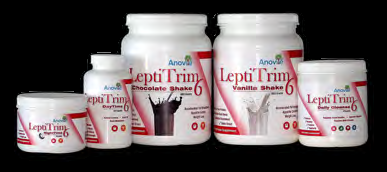
Lepti-Trim6, a formula with the isolated leptin molecule in a colostrum base, also supplies additional leptin and insulinlike growth factor-I, which may also aid the body in weight loss and conversion of fat mass to lean muscle. It’s too early for us to give you a definitive word on how well Lepti-Trim6 works and in what percentage of users. But the formula looks really promising. Anecdotal reports have been coming in which also show
promise. Our mission is to keep you on the cutting edge and get you the information you need first. We know that the formula is safe and we have reason to believe it works.
Most telling is a 1999 study from the Journal of the American Medical Association that found that leptin not only resulted in significant weight loss, “more than 95% of weight loss was fat loss,” note researchers.
Background
Leptin, a hormone-like messenger protein (known technically as a cytokine), is produced in relatively large amounts by fat tissue and in smaller amounts by other peripheral organs, and then secreted into the bloodstream, where it travels to the brain and other tissues, causing fat loss and decreased appetite. Once leptin has been secreted by your fat cells, it travels to the hypothalamus—the part of your brain that has an influence on eating behavior. In the medial hypothalamus, leptin activates “anorectic” nerve cells, which serve to suppress your appetite. At the same time, leptin prevents “orexigenic” cells from stimulating your appetite.
Leptin (from the Greek leptos, meaning thin) first came to national attention in 1994 when the obesity gene and its product leptin were discovered. It was shown then that obese mice dropped 40 percent of their body weight after only one month of treatment with leptin. Leptin also improved symptoms of diabetes. Recently, the taste organ was found to be one of the peripheral targets for leptin. The hormone specifically inhibits sweet taste responses in lean mice. Thus, leptin appears to act as a modulator of sweet taste. Leptin also suppresses a gene that produces an enzyme known as acetyl-CoA
carboxylase, or ACC, which is essential for fat production. When researchers injected laboratory mice with leptin, previously obese mice became as
thin as rodent track stars. Some researchers believe that leptin works, in part, by inhibiting the synthesis of fat in fat cells and increasing the burning of fat in muscle cells—that it works at an enzymatic, cellular level.
.png)