x




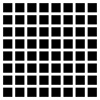
How many colors do you see in this image?
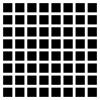
While there are really only two colors in the grid, the high contrast black and white areas fool the eyes into perceiving a gray circle at each intersection. The illusion results from retinal cells adjusting the brightness of an image by adjusting the intensity of the light signal in many small sections, which allows you to see a wide range of both bright and dark details in the same image, unlike a computer monitor or TV screen that has one brightness setting for the entire image.
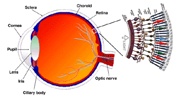 The size of these small sections is determined by the size of neural receptive fields in the retina. The fovea, an area near the center of your retina with the highest resolution vision, has the smallest receptive fields and the highest number of photoreceptor cells. Areas of your retina dedicated to peripheral vision have larger receptive fields, and therefore, lower resolution viewing. Inhibitory lateral connections between cells in the peripheral retina help determine the edges of the rough shapes perceived with the low resolution peripheral sight. These lateral connections turn down brightness.
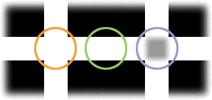
In the Hermann Grid, the intersection that you are looking directly at (orange circle) falls onto the fovea, which has very little lateral inhibition due to the small receptive field and high concentration of photoreceptors. Our perception within this area is fairly accurate, and we see the area as either white or light gray. In the area within the green circle, the dark and light areas are balanced, so no gain adjustment is needed, and we see this area as white. At the peripheral intersections (purple circle), most of the receptive field is flooded with white light, causing strong lateral inhibition which results in reduced gain and an area that appears gray.