Strength training
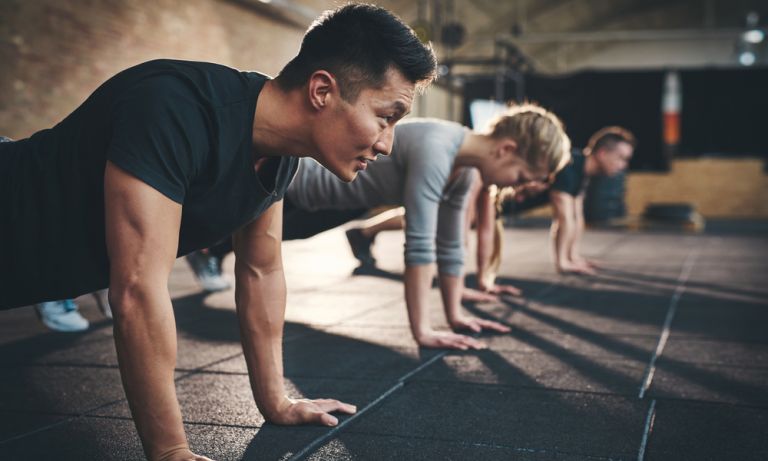
What it is: Strength training, sometimes called resistance or power training, builds up muscles with repetitive motion using resistance from free weights, weight machines, elastic bands, or your own body weight. Power training is often strength training done at a faster speed to increase power and reaction times.
Examples of strength and power training activities include:
- Push-ups and pull-ups using your own body weight as resistance.
- Squats, curls, or shoulder presses using dumbbells, kettlebells, resistance bands or tubes, or even cans of food or other heavy household objects.
- Deadlifts or bench presses using a weight bar.
- Exercising with weight machines in a gym or fitness center.
Why it’s good for you: Strength training builds and tones muscle and increases lean muscle mass. Aside from improving how you look and feel, resistance and power training can also:
- Help manage your weight by burning calories more efficiently and reducing body fat, especially around your middle.
- Ensure you have the strength to carry out everyday tasks such as carrying groceries, lifting your kids or grandkids, opening a jar, climbing stairs, or hurrying for a train or bus.
- Help you stay active and independent as you get older.
- Prevent loss of bone mass.
- Assist you in avoiding accidents and falls by improving your speed and reaction times.
- Trigger endorphins that improve your mood, relieve stress, and ease symptoms of anxiety and depression.
- Improve your flexibility, balance, and mobility.
The do’s and don’ts of strength training
You don’t need to spend hours every day lifting weights to enjoy the benefits of strength training. Exercising the major muscle groups—legs, hips, back, abdomen, chest, shoulders, and arms—in 20- to 30-minute sessions twice a week is enough to deliver results and help keep you toned and strong. Neither do you need to invest in a gym membership or buy expensive equipment for use at home. Inexpensive resistance bands can be used to exercise nearly every muscle in the body—and they can also fit easily into a bag or suitcase so you don’t need to put your fitness regime on pause when you’re traveling or on vacation. There are even plenty of exercises you can do using your own body weight as resistance.
- Always warm up before and cool down after strength training to reduce your risk of injury.
- If you’re new to this type of exercise, it’s important to learn the correct techniques to avoid injury. You can find free fitness classes at many community facilities. Apps and online video tutorials can also help, as can exercising in front of a mirror to ensure you’re maintaining the right form as you work out.
- When it comes to choosing the right weight or resistance level, most people benefit from hitting muscle fatigue after 10 to 15 repetitions of an exercise. While you can build up to 3 sets of each exercise, a single set is a great place to start—and can be just as beneficial.
- As you progress and get stronger, you can challenge your muscles again by adding weight or using a band with more resistance.
- Try to leave 48 hours between exercising the same muscle group in order to give your muscles chance to recover. You can do cardio exercises in between full-body strength training sessions or exercise your upper-body muscles on one day, lower-body muscles the next.
- Always listen to your body and forget the old adage “no pain, no gain.” Strength training should never cause pain!
The importance of core-strength exercises
Many of us equate exercising our core with endless sit-ups and unobtainable images of washboard abs. But your core is much more than just your abdominal muscles. Your core stretches from below your breastbone down to your thighs and includes your back, sides, buttocks, and hips as well as your abdomen. A strong core can help you maintain good posture and carry out many different daily movements that involve twisting, bending, or rotating your body. Everything from getting out of a chair to carrying heavy groceries or reaching for a book on the top shelf are all made easier when you have a strong core.
Strengthening your core can also:
- Help alleviate and prevent lower back pain.
- Improve performance in many different sports, from tennis and golf to running, swimming, and cycling.
- Help prevent falls as you get older.
- Improve endurance.
- Lower your risk of injury.
As well as abdominal crunches, activities that are particularly good at targeting your core include yoga, Pilates, swimming, beach volleyball, kayaking or canoeing, rollerblading, surfing or stand-up paddle boarding, using a hula hoop, or performing perhaps the most popular core exercise, the plank. For guidelines on how to correctly perform the plank, see the Recommended reading section below.
.png)