x




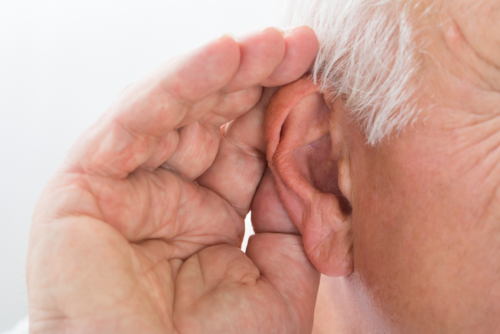
Hearing is a complex sense that provides us with awareness of environmental sounds and, more importantly, the ability to communicate. The ear is the organ responsible for perceiving sound, but it may not be so obvious that the brain is responsible for processing the sound. It is necessary that both organs work properly for hearing to occur.
In recent years, there has been extensive research examining how age-related hearing loss and brain function (cognition) are associated. There are some general concepts that might contribute to the association between hearing loss and cognition. One theory is that hearing loss leads to a decreased input to the brain, so there is less processing that occurs, which contributes to cognitive decline (a “bottom-up” approach). Another theory is that early cognitive deficits may impact a person’s ability to process sound, and thus contribute to hearing loss (a “top-down” approach). Irrespective of which theory is correct, it is clear that the association between hearing and cognition is very real. This association emphasizes the need to improve our approach to testing and treating hearing loss.
Most audiologists and otolaryngologists define normal hearing as someone being able to hear any level above 25 decibels. This value is somewhat liberally designated, and largely based on the average range below which most people in a population experience hearing trouble. Most clinicians who manage patients with hearing loss will admit that conventional hearing tests are imperfect, despite the important information they provide. The imperfections in conventional hearing tests are due to the fact that it is a simple measure that is trying to quantify a complex process. For example, hearing tests present simple tones and words, but hearing in real-life situations involves sentences, speech, and language, which is much more complicated to hear and would require more complicated testing to evaluate.
Researchers and clinicians who specialize in hearing loss have considered that the current standard for normal hearing may be too liberal. Additionally, research suggests there may be a role for new definitions of normal hearing that account for people who are experiencing symptoms of hearing loss, but are considered to have normal hearing by current standards. These people might be considered as having “borderline hearing loss” or “subclinical hearing loss.”
.png)