x




When improving one’s health, most people think in terms of prescription medication and therapies. While conventional medicine has its practical applications, it tends to focus more on the symptoms of the condition rather than addressing the underlying problem. On the other hand, if we can address health at the cellular level, we can prevent aging, prevent infections and diseases, manage serious health conditions, reduce fatigue, and promote overall health. Here at the Pain Relief Institute, we specialize in revolutionary non-invasive treatments aimed at relieving pain and boosting overall levels of cellular health and wellbeing.
There are ways that you can boost your health from the cellular level. Generally speaking, improving cellular health involves adopting a healthy diet and using supplements where necessary. But before you take these crucial steps to better physical and mental health. It is important to understand how the cell works and the function of some of its most critical constituent parts.
The mitochondria are commonly referred to as the powerhouse of the cell. They provide energy by producing ATP (adenosine triphosphate). They are found in higher numbers in the muscle and kidney because these cells require more energy. The mitochondria perform a lot of work round the clock, and it is estimated that the average person can produce over 60kg of ATP per day from the mitochondria. The body needs the energy to sustain its various biochemical functions, and the mitochondria provide it.
However, the role of the mitochondria does not stop with energy production. They perform other important functions related to cellular health. They help to modulate programmed cell death to avoid atrophy or growth of tumors. They regulate communication between cells and also regulate metabolism and are influential when it comes to your overall health and wellbeing and what we can do to improve our health.
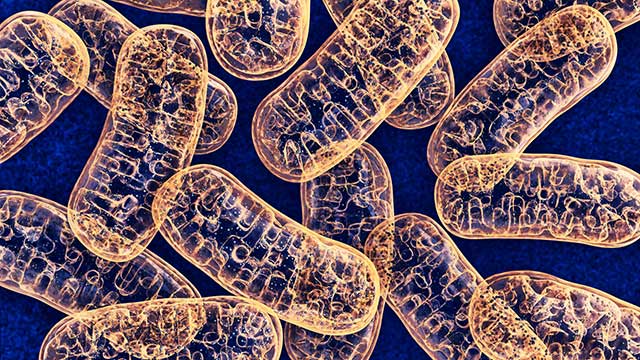
Why are the mitochondria often associated with aging? One reason is that mitochondrial dysfunction seems to increase significantly as we age. There are also increasing mutations and chromosomal arrangement errors.
The reason the mitochondria begins to deteriorate with age is believed to be because of their intensive energy producing mechanism. When ATP is produced, the byproducts are free radicals that can cause damage to nearby molecules and in turn to tissues and organs.
Free radicals are molecules missing one or more electrons. These molecules need to acquire the missing electrons to regain their stability. In the process, electrons from nearby DNA, enzymes, and lipids are taken, and the free radicals form a new compound that could prove to be more unstable than the first free radical. For example, a hydroxyl free radical formed from superoxide radicals can cause a lot of damage to the cell membrane, RNA, and DNA of the cell. When the damage is very extensive, it can kill the entire cell.
There are certain foods that contain substances that can mop up the free radicals without becoming unstable themselves. These substances are referred to as antioxidants. They are considered to be very important to the body because by getting rid of free radicals, they can prevent RNA and DNA damage and uphold the integrity of biochemical systems that need to be running efficiently for the sake of your health.
You can prevent the development of mitochondrial diseases and avoid complications related with age by doing a number of things. The first is to use supplements, adopt a diet that is rich in mitochondria-beneficial nutrients, and adopt certain healthy lifestyle practices that can boost your health from the cellular level.