x




Zachary Davis, owner of The Glass Jar restaurant group in Santa Cruz, Calif., said he intentionally avoided working with food-delivery apps before the COVID-19 pandemic because the costs to his business just seemed too high.
But when his county issued shelter-in-place orders, “we were effectively shut down. We closed for a couple of days, took stock and realized it was the only way to keep our business open,” he told MarketWatch.
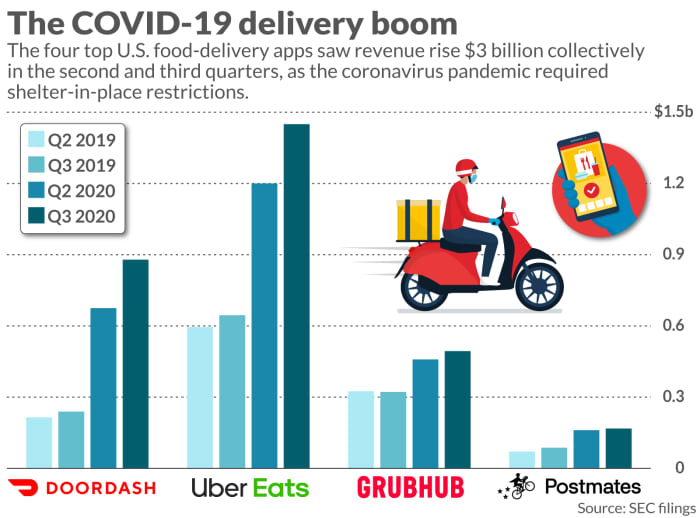
Davis is not alone. Delivery apps have become more important for both business owners and their customers as more people order takeout and groceries during the coronavirus pandemic. DoorDash Inc.’s DASH recent filing for an initial public offering and earnings reports from Uber Technologies Inc. UBER, -1.38%, Grubhub Inc. GRUB and Postmates have provided a deeper look into delivery apps’ business in 2020, and it is clear the pandemic has given the industry a big boost.
The four companies raked in roughly $5.5 billion in combined revenue from April through September, more than twice as much as their combined $2.5 billion in revenue during the same period last year.
Still unclear is how long the surge in deliveries will last, though, and what it means to the financial success — or lack thereof — of food-delivery apps in the long run. While the companies are seeing a surge in business, their costs remain too high to post any sustained profit. And the other stakeholders involved, such as the restaurants, drivers and cities, are looking to either cap the fees the companies are allowed to charge or to get their fair share of the companies’ revenues.
In the short term, many restaurants have little choice but to sign on with the apps. A Cowen & Co. survey of 2,500 consumers showed that in July, 52% said they would avoid restaurants and bars even after they fully reopen, and a recent rise in COVID-19 cases nationwide means many restaurants are again facing onsite-dining restrictions. According to restaurant-reservation platform OpenTable, the number of seated diners in the U.S. decreased an average of 52% the week of Nov. 19-23.
“Restaurants are heading into a terrifying winter with no lifelines other than delivery platforms,” MKM Partners analysts reported last week.
That is likely to benefit DoorDash, the U.S. industry leader with 50% market share, and the next biggest players: a combined Uber Eats and Postmates, then Grubhub, according to Edison Trends. DoorDash said in its prospectus that its 543 million total orders for the first nine months of the year tripled compared with 181 million orders in the year-ago period.