x





The poisoning of our entire planet continues to progress at a steady pace. To minimise ingestion of these chemicals and the oxidative stress they induce, it makes sense to ‘go organic’ when it comes to certain foods.
Unfortunately, the reason we don’t all rush to buy these infinitely healthier foods is their cost: organic foods are on average 65% more expensive than their non-organic equivalents . A significant difference which clearly influences consumer purchasing decisions …
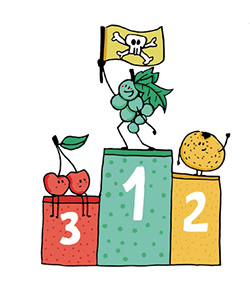 If you’re not prepared - or simply don’t have the financial means - to consistently spend more on healthier foods, there is an alternative approach: choose organic option when buying those fruits and vegetables which are the most contaminated by pesticides and rely on antioxidants to limit the damage.
Drawing on the annual report produced by the Environmental Working Group (EWG), on pesticide residues in fruits and vegetables, and analysis by the associationGénérations Futures of hundreds of foods sold in French supermarkets, we have compiled a list of the ten most pesticide-contaminated fruits and vegetables.
In 2008, five environmental associations revealed that pesticides were present in 99% of the 124 grape samples tested. On average, each sample contained almost seven different pesticides, with 20% containing more than 10 of these undoubtedly banned substances.
Ten years on, the situation remains the same, with grapes still the most contaminated fruit, as reported by Générations Futures. Its top-ranking place is attributed to the fragility of vines and the lack of care taken by winegrowers.
Why we should carry on consuming grapes – in their organic form:
Grapes are exceptionally rich in antioxidants: anthocyanins, quercetin, myricetin, catechins, resveratrol, kaempferol … These compounds contribute to the body’s antioxidant system which combats oxidative stress, the imbalance that promotes numerous diseases.
The inclusion of citrus fruit in this list is no surprise: they are very delicate and undergo multiple insecticide treatments during cultivation, and are even dipped into fungicide post-harvest to prevent mould. Citrus fruit-growers often use imazalil (classed as a probable carcinogen) and thiabendazole (considered a hormone disruptor and probable carcinogen).
Why we should carry on consuming citrus fruit - in its organic form:
Citrus fruit, particularly clementines and mandarins, contain many types of flavonoid, the main ones being nobiletin and hesperitin, as well as limonoids with powerful antioxidant activity, carotenoids (beta-cryptoxanthin), vitamin C and soluble fibre.
Cherry trees are often attacked by the Asian fruit fly, the larvae of which can destroy an entire harvest. For some time, growers have fought it with dimethoate but in 2016, a number of countries including France, Spain and Italy, decided to ban its use due to “unacceptable health risks”. Unfortunately, growers choose to use the many alternative pesticides available instead of natural devices which they consider to be less profitable …
Why we should carry on consuming cherries - in their organic form:
Cherries, particularly red ones, contain high levels of anthocyanins (2) and melatonin (3), an outstanding antioxidant and sleep regulator.
Apple orchards are sprayed 10-20 pesticide times a year on average, a very high rate compared with other crops. The most common products used are fungicides, mostly against the fungal disease apple scab, and insecticides designed to combat apple fly, plum weevil and European red mite. Herbicides, growth regulators and rodenticides are often used as well.
Why we should carry on consuming apples - in their organic form:
Apples contain a wide variety of antioxidants (quercetin, polyphenols, flavonoids) recognised for preventing oxidation of cells and reducing the risk of cancer.
Peach trees often suffer pest and fungal attacks and intensive pesticide use is therefore the norm (4).
Why we should carry on consuming peaches - in their organic form:
Peaches and nectarines boast an abundance of phenolic compounds, vitamin C and carotenoids, with the skin containing twice as many phenols as the pulp (5)!
At 84.6%, celery is the most contaminated of all the vegetables. Pesticides are used (pre- and post-harvest) to combat two aggressors: septoria (a fungal disease) and leaf miner insects which tunnel into the leaves.
Why we should carry on consuming celery – in its organic form:
Celery contains bioactive compounds with anti-inflammatory and anti-bacterial effects (6) (polyacetylenes), as well as vitamins K and B6.
The fact that chicory features on this list is something of a surprise as it is a fairly hardy, field-grown vegetable. It seems growers choose to use pesticides to combat its main ‘enemies’: aphids, slugs and fungi (particularly Sclerotinia).
Why we should carry on consuming chicory – in its organic form:
High in fibre and low in calories, chicory is an excellent source of minerals and trace elements.
Lettuce is subject to so many biopests (fungi, aphids, snails, viruses) that growers bombard it with pesticides as a purely preventive measure.
Why we should carry on consuming lettuce – in its organic form:
Lettuce is the ‘king’ of soluble fibre, known for its beneficial effect on blood lipids.
Growing fresh herbs requires considerable care: once a problem occurs, it cannot be stopped and the whole crop has to be destroyed. That’s why growers tend to be somewhat heavy-handed when it comes to protecting them …
Why we should carry on consuming fresh herbs – in their organic form:
Regularly adding fresh herbs to foods boosts antioxidant intake from the diet.
Like lettuce, potatoes are attacked by many biopests such as Colorado beetle, aphids, slugs and potato cyst eelworms … Even though organic farming has ways of combatting them, potato-growers prefer to use pesticides to maximise yields.
Why we should carry on consuming potatoes – in their organic form:
Potatoes are an excellent source of fibre, and contain several antioxidants as well as minerals such as copper, iron, manganese and potassium.
If you continue to eat other foods that are potentially contaminated by pesticides, you can use antioxidant supplements to offset the effects (8), especially if you are subject to other factors that stimulate oxidative stress (high stress levels, pollution, regular alcohol consumption, ultra-processed foods, smoking, excess weight, etc.).
Oxidative stress is recognised as the main contributory factor in cancer, and in infertility problems and complications of pregnancy. It may also be involved in neurodegenerative diseases.
The antioxidant supplements below have demonstrated positive results in studies that have specifically investigaed oxidative stress linked to environmental pollutants:
.png)