x




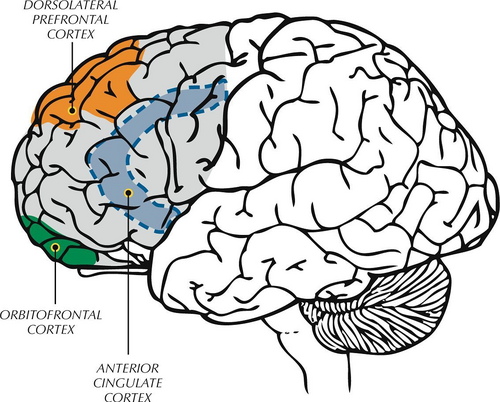

The role of the executive system is to handle novel situations outside of the domain of some of our more automatic psychological processes. Norman and Shallice (1992) outlined five types of situations in which routine activation of behavior would not be sufficient for optimal performance, and where executive functions must kick in:
1. Situations that involve planning or decision making
2. Situations that involve error correction or trouble shooting
3. Situations where responses are not well-rehearsed or contain novel sequences of actions
4. Dangerous or technically difficult situations
5. Situations that require overcoming strong habitual response or resisting temptation.
The executive functions are often evoked when it is necessary to override responses that might otherwise be automatically elicited by stimuli in the external environment. For example, when being presented with a potentially rewarding stimulus, such as a piece of pie, a person might have the automatic response to take a bite. However, where such a response conflicts with internal plans (having decided not to eat pie due to being on a diet), the executive functions might engage and inhibit the response.