x






There’s no denying that, as you age, your brain slows and cognitive function declines. However, this doesn’t mean that you’re destined to live out your days in a brain fog or develop dementia or worse. The best bet you have to put the odds in your favor are your lifestyle habits. Take care of your brain and it will take care of you.
It may seem daunting to adopt healthier habits, but this doesn’t mean you have to overhaul your whole life at once. One really easy thing you can do to today to benefit your brain is drink tea. That’s right. Research is showing that simply adding a few cups of tea to your day can help your brain and body stay healthy.
Tea, which has been consumed for centuries, is still one of the most favorite drinks around and is the second most popular beverage in the world today – surpassed only by water. Over 158 million people in the US drink tea on any given day, according to the Tea Association of the USA. In Britain, 165 million cups of tea are consumed daily.
Just to clarify, the term “tea” can be broadly used to mean any blend of herbs, fruits, flowers, or leaves, steeped in water to make a beverage. True “tea” comes from the leaves of the tea plant, Camellia sinensis. What many of us call herbal teas, such as chamomile and rooibos, are actually tisanes or infusions. The differences in true teas result from how the tea plant’s leaves are processed: black teas are oxidized (exposed to oxygen) a few hours before rolling and drying, deepening their color, while white teas and green teas are simply steamed, rolled and dried. Think of oolongs as hybrids; their leaves are partially oxidized before drying.
Tea, in general, contains a number of plant polyphenols, catechins, antioxidants, and other phytochemicals, which have been proven to have a wide range of health benefits for your body. Science is also determining that these ingredients may be just as beneficial for your brain and cognitive health. A phytochemical is any of various biologically active compounds found in plants. Some of the many found in tea are:
Flavonoids are a diverse group of chemicals, found in almost all fruits and vegetables, which are responsible for the vivid colors. They have antioxidant powers and reduce inflammation. Diets rich in flavonoids have been associated with reduced risk of a variety of diseases. Flavonoid-rich foods include cocoa, apples, onions, cranberries, tea, and red wine.
Caffeine, which is found in most teas, but not all, in smaller amounts than coffee, is the most well-known brain booster. As you are probably aware firsthand, the effects of caffeine are fairly immediate and include increased alertness, wakefulness, and attention. Caffeine works by blocking adenosine, an inhibitory neurotransmitter. Studies have discovered that people who consume caffeine regularly have improved thinking ability and long-term memory performance.
Tea also contains the amino acid, L-Theanine, which has a relaxing effect without inducing drowsiness. When caffeine and L-Theanine are consumed together, as in tea, research shows that people experience increased alertness, reaction times and working memory while the mental fatigue that can be felt with caffeine alone was reduced. When ingested regularly over 16 weeks, the combination also improved memory and cognitive alertness.
Studies reveal that L-theanine increases the production of the inhibitory neurotransmitter GABA, which has anti-anxiety effects. It also increases serotonin and dopamine and the production of alpha waves in the brain.
Tea has various catechins. Catechins are phenolic compounds, found in abundance in tea, cocoa, and berries, with potent antioxidant properties. In studies with mice, the catechins in green tea prevented cognitive dysfunction and other negative changes in the brains of “at-risk” mice while improving working memory. One study found them to also have cognitive enhancing and anti-depressive effects. Another study on humans showed catechins to improve attention.
Research is showing that simply adding a few cups of tea to your day can help your brain and body.
The outcome of much scientific study proves that tea is a powerfully healing elixir. Specifically:
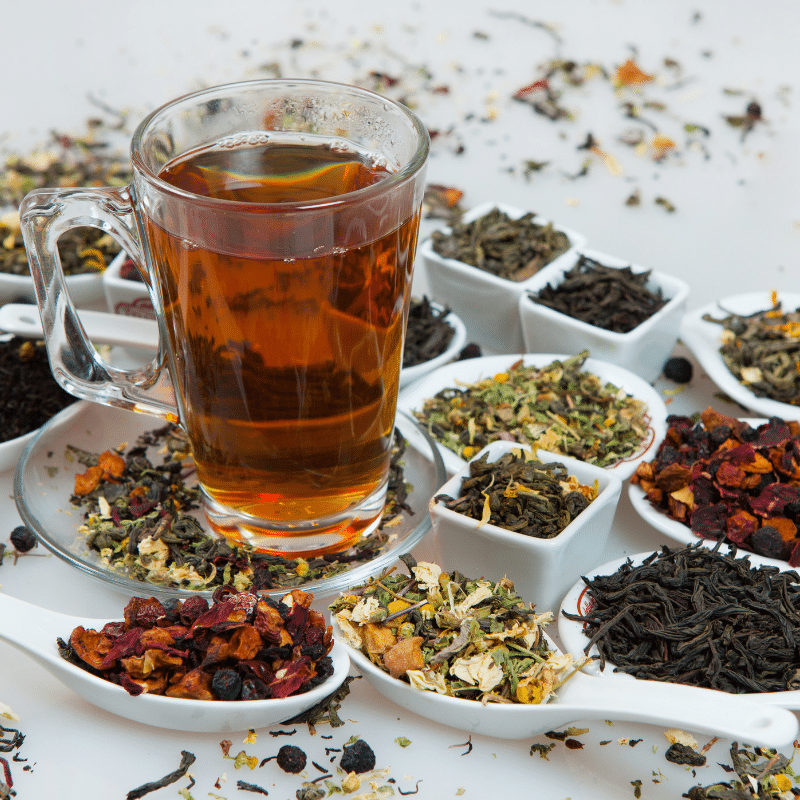
Regardless of the variety or how you serve it, cold or hot, you can maximize the power of tea’s healthy ingredients by drinking it freshly brewed. If you want to keep a pitcher of cold tea in your refrigerator, add a little lemon juice, to it before storing. The citric acid and vitamin C in the lemon helps preserve the flavonoids.
Making your own iced tea is easy—and much cheaper than buying the bottled or powdered stuff. It can also be healthier. While iced tea is generally lower in antioxidants than hot tea because it’s diluted with ice and water, you can counteract that tendency by starting with an extra-strong brew. For a stronger, healthier brew, steep it longer.
The article, Types of Tea and Their Health Benefits, provides the following information about which teas to drink for specific benefits: