x




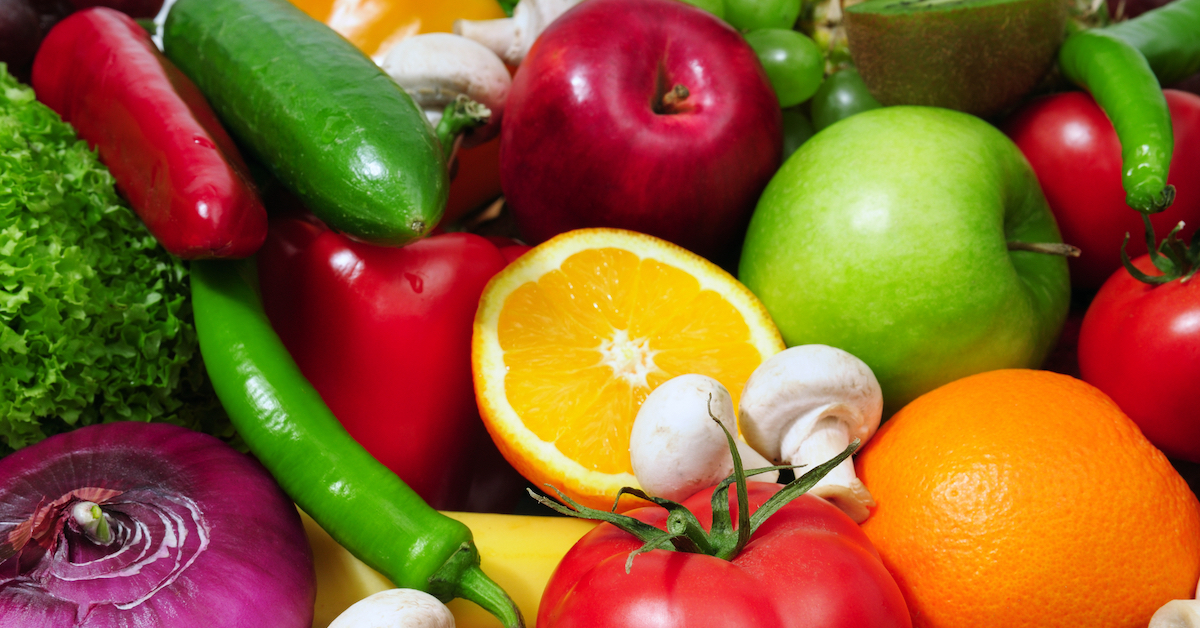
Plants are full of pigments that produce the vibrant colors that attract our attention in the fruit and vegetable aisle. This rainbow of hues does more than please the eye. When we eat them they also have numerous health benefits for both the body and the brain.
A new study not only demonstrates the powerful brain protection of brightly colored fruits and vegetables but reveals which colors are the most effective in keeping our memories in good shape.
Within virtually every fruit and vegetable lies a large and diverse group of phytochemicals (plant compounds) called flavonoids. Together with a separate group called carotenoids, they supply fruit and vegetables with their vivid colors.
Flavonoids also have a number of health benefits. They’re potent antioxidants, defend against inflammation and help support immune function. Many population studies already show flavonoids help prevent the onset of heart disease, cancer and neurodegeneration.
Recently, researchers at Harvard T. H. Chan School of Public Health wanted to explore the effects of flavonoids on the brain. In particular they were interested in which of the six main subgroups of flavonoids protect the brain from cognitive decline and by how much.
Their study, published in the journal Neurology online in July, included almost 50,000 female nurses and 28,000 male health professionals with the average age of 51. Researchers followed the group for 20 years as particpants completed between five and seven questionnaires regarding food intake.
On two separate occasions researchers asked the participants to evaluate their own cognitive abilities with questions such as, “Do you have more trouble than usual remembering recent events?” and “Do you have more trouble than usual remembering a short list of items?”
These questions are intended to pick up memory problems people start to notice that may not be serious enough to be detected in formal cognitive tests.
After adjusting the findings to take into account the participants’ age, calorie intake, and major non-dietary and specific dietary factors, those in the top fifth of flavonoid intake, consuming about 600 mg per day, had a 20 percent lower risk of self-identified cognitive decline compared to those in the bottom fifth who consumed 150 mg of flavonoids a day.
To get some perspective, a 100 gram (3.5 ounce) serving of strawberries has about 180 mg of flavonoids, while an apple has about 113.
The strongest memory protection came from a subgroup of flavonoids called flavones.
The Harvard team found that study participants who ate more flavones enjoyed a 38 percent reduction in the risk of memory loss over participants who ate fewer flavones– a reduction that’s equivalent to a mind three or four years more youthful.
Flavones are found in some spices and in yellow and orange fruits and vegetables. For example, peppers have about 5mg of flavones per 100 gram serving.
Following just behind flavones were another subgroup called flavanones. These lowered the risk of memory loss by 36 percent.
You can find flavanones in citrus fruits. For instance, orange juice contains 21.5 to 68.5 mg of flavanones per 100 grams. Grapefruit juice has ten to 65 mg, and lemon juice supplies five to 30 mg.
Coming in a respectable third place with a protective factor of 24 percent was a better known flavonoid subgroup called anthocyanins, found abundantly in blueberries, blackberries, blackcurrants, black grapes and cherries. Blueberries have about 164 mg of anthocyanins per 100 gram serving.
One of the study authors, Walter Willett, has been described as “the world’s most influential nutritionist.” He is a leading voice for healthier food and the most widely cited academic in his field of nutrition. Commenting on this research, Dr. Willett said, “There is mounting evidence suggesting flavonoids are powerhouses when it comes to preventing your thinking skills from declining as you get older.
“Our results are exciting because they show that making simple changes to your diet could help prevent cognitive decline.
“While it is possible other phytochemicals are at work here, a colorful diet rich in flavonoids—and specifically flavones and anthocyanins—seems to be a good bet for promoting long-term brain health.
“And it’s never too late to start, because we saw those protective relationships whether people were consuming the flavonoids in their diet 20 years ago, or if they started incorporating them more recently.”
.png)