x




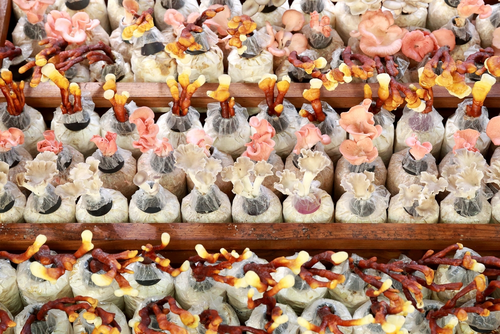
To the Romans, they were “food of the gods.” Ancient Greeks warriors ingested them before battle to increase their strength. In Chinese culture, they’re considered an “elixir of life.”
While most people enjoy them as part of their everyday diet, certain varieties of mushroom are prescribed in ancient medical traditions for their health and healing properties.
A recent review described mushrooms as exhibiting “antioxidant, anti-tumor, anti-virus, anti-cancer, anti-inflammatory, immuno-modulating, anti-microbial, and anti-diabetic” properties.
The review, which appeared in the Journal of Medicinal Food in January, also suggested that mushrooms could play a role in preventing Alzheimer’s disease and other age-related neurodegenerative diseases.
The authors, three researchers from the University of Malaysia, summarized the scientific information they were able to find on 11 different varieties of edible and medicinal mushrooms with regards to their effects on the brain.
Looking mainly at rodent studies, they found that each variety boosted the production of nerve growth factor (NGF).
This protein-like molecule is important for growth, development, survival and maintenance of nerve cells.
The researchers also found that NGF in turn promoted the regeneration of peripheral nerves – the network that connects the brain and spinal cord.
Because the body uses NGF to build nerve networks throughout the body, this natural body chemical is seen as a key factor in maintaining brain and nervous system health and lowering the risk of cognitive decline.
Some of the most important mushrooms in the review were:
Cordyceps – This has a long tradition in Chinese and Tibetan medicine. It has anti-inflammatory properties and is able to promote neural growth. Other lab studies show the cordyceps mushroom is able to prevent memory loss in rodents and the death of human neurons.
Reishi – Used medicinally for thousands of years in Asia, this mushroom improves cognitive abilities and could prevent toxicity and death of brain cells. Mice that were fed reishi extract in their food had lower brain amyloid and higher levels of antioxidants.
Oyster – The most active compound in this large, edible wild mushroom is uridine, which has been shown to be critically important in many areas of brain function.
Maitake – This species is able to induce neurite outgrowth – the growth of axons and dendrites that project from the body of a nerve cell. Dysfunction of this outgrowth leads to neurodegeneration. Studies have also shown that maitake reduces inflammation, inhibits high blood pressure, and enhances insulin sensitivity.
Lion’s Mane – This is the star mushroom in terms of its effects on the brain. Studies suggest it can promote the regeneration of injured or damaged nerves, stimulate NGF secretion, improve myelination – the insulation around nerve fibers — and induce neurite outgrowth. In several human studies, lion’s mane decreased anxiety, improved sleep quality and improved cognitive functions. (Our sister company, Green Valley Natural Solutions, offers Maximum Memory Support, which contains a clinical dose of lion’s mane.)
The researchers concluded that the mushrooms covered in their review “may fulfill a preventive function against the development of Alzheimer’s.”
According to one of the team, Professor Vikineswary Sabaratnam, “Mushrooms contain diverse yet exclusive bioactive compounds that are not found in plants. It’s very likely a dietary intake of mushrooms or mushroom-based extracts might improve brain function. Regular consumption of mushrooms may reduce or delay development of age-related neuro-degeneration.”