x




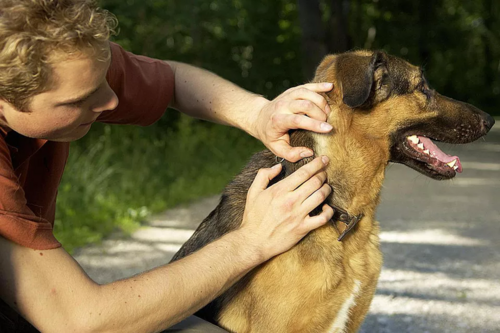
What should you do if you find a tick on your dog? Ticks are not just disgusting; they pose a health risk to your dog. It's important to remove ticks and prevent more from affecting your dog.
Ticks are parasitic arthropods that feed on the blood of their hosts. They can carry a variety of diseases that can affect dogs as well as humans.1 The best way to keep yourself and your dog safe is to prevent ticks from attaching to your dog in the first place. It is also important to look for ticks on your dog and safely remove them. This is essential if you live in a region known for ticks. Wooded areas are favorite spots for ticks, but they can live anywhere.
:max_bytes(150000):strip_icc():format(webp)/wood-tick-and-deer-tick-comparison-924711034-5c4083a8c9e77c0001215e91.jpg)
Bernard Lynch / Getty Images
To search for ticks on your dog, run your hands all over the body, paying close attention to the ears neck, skin folds, and other crevices. Closely examine any raised areas closely by parting the hair, making sure you are in a very well-lit area (you can even use a flashlight). You may prefer to wear gloves for your own safety.
Depending on the species and life stage, a tick may be as small as a pencil point or as large as a lima bean (when engorged). If you live in an area where ticks are prevalent, or your dog spends a lot of time in high grasses or wooded areas, you should check for ticks daily. If you find an embedded tick, be sure to remove it promptly.
:max_bytes(150000):strip_icc():format(webp)/cropped-hand-of-vat-removing-louse-from-paw-over-white-background-908787390-5c40842bc9e77c0001b3e00b.jpg)
Panyawat Boontanom / EyeEm / Getty Images
It's important to understand that there are really no shortcuts that can make a tick release itself from its host. A tick will not voluntarily detach until its meal is complete. DO NOT apply hot matches, nail polish, petroleum jelly, alcohol or other chemicals to the site. These methods are not effective and can actually cause harm to your dog. Doing something that agitates the tick might make it harder to remove.
The symptoms of tick-borne diseases may take weeks to months to appear.2 Be sure to contact your vet if you notice any signs of illness in your dog.
The best way to protect your dog from the hazards of ticks is to keep them from attaching in the first place. Routine checks should be done to search for ticks on your dog. Finding them before they attach is helpful, but this is not the most accurate method of prevention.
One of the most effective ways to keep ticks off your dog is to directly apply a tick prevention product specifically designed for dogs. Tick prevention may be oral or topical. Oral treatments may be given every one to three months depending on the drug. Topical products are typically designed to be applied monthly to prevent ticks. Another topical option is a tick collar. Some products are available over-the-counter while others require a prescription. Be aware that not all products are created equally. Ask your vet for recommendations so you can choose the most effective method for your pet.
Though approved for use on dogs, be aware that some tick preventive products contain toxins and should ALWAYS be used according to the directions.3 Do not use extra amounts of a product or apply more than one at the same time. In addition, many topical products are highly toxic to cats.
To reduce the number of ticks hiding out in your yard, keep your grass mowed and plants neatly trimmed. You may also choose to treat outdoor areas with pesticides, but be sure to use a substance that is safe for dogs and preferably environmentally-friendly.
With the proper knowledge, you can help defeat the dreaded tick and protect your dog, your family and yourself from the dangers of tick-borne diseases.
:max_bytes(150000):strip_icc():format(webp)/tick-prevention-on-a-golden-retriever-184344790-5c408366c9e77c000155b622.jpg)
PK-Photos / Getty Images
If you suspect your pet is sick, call your vet immediately. For health-related questions, always consult your veterinarian, as they have examined your pet, know the pet's health history, and can make the best recommendations for your pet.