x




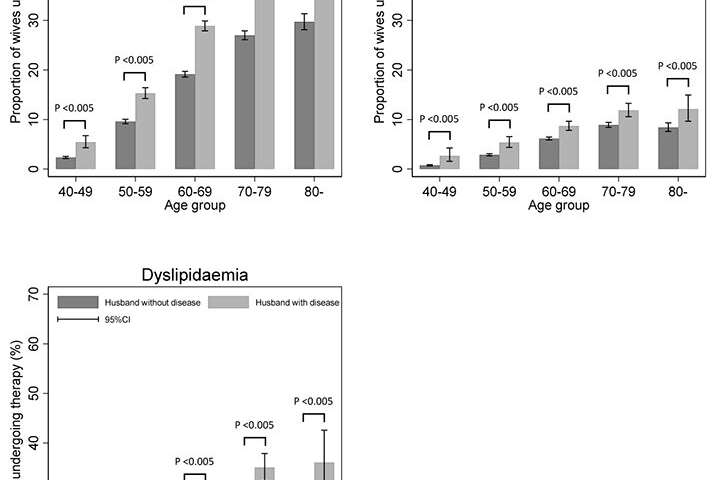
Credit: Watanabe T, et al. BMJ Open 2020;10:e036281. doi:10.1136/bmjopen-2019-036281
Cardiovascular disease is the leading cause of death worldwide, killing nearly 18 million people annually, which is approximately the entire population of the New York metropolitan area. Now, researchers at the University of Tsukuba have shown that men bearing any or all of the major risk factors—hypertension, diabetes, and dyslipidemia—are more likely to have wives who suffer from the same diseases.
The World Health Organization lists ischemic heart disease and stroke as the number 1 and 2 killers; together they account for 85% of all cardiovascular-related deaths and have occupied top position for over three decades. Cardiovascular disease is both genetically and environmentally determined, with the latter exerting a greater influence. Hypertension, diabetes, and dyslipidemia are among the major risk factors and, though modifiable by drug therapy and behavioral change, are unfortunately becoming increasingly common.
In Japan, where over 83% of deaths occur after the age of 70, alleviating these chronic diseases will ensure that life is as healthy as it is long. Westernization of the diet, specifically reduced salt, has resulted in a drop in the incidence of hypertension, but causes increased obesity, diabetes, and hyperlipidemia.
"Married couples share food preferences and meal patterns, lifestyle with regard to levels of activity, attitudes to physical exercise, and usage of cigarettes and alcohol," explains Professor Takehiro Sugiyama. "Concordant disease patterns within couples may refer to risks of chronic diseases that could be reduced by changing daily habits, rather than unmodifiable genetic risks."
The researchers conducted a cross-sectional study of 86,941 married couples over the age of 40, across Japan. Using logistic regression, they modeled husbands undergoing treatment for hypertension, diabetes, and dyslipidemia as the exposure and their wives undergoing therapy for the same disease as the outcome. Features that could skew the results such as residence, education, age, habits, expenditure, and access to healthcare and health groups were also factored in to determine the degree of spousal concordance. Because spouses often influence personal habits, the researchers also evaluated models excluding the wife's smoking and alcohol history. The findings were clear: wives were significantly more likely to be receiving therapy for the same diseases as their husbands.
Professor Nanako Tamiya, senior author, highlights their inferences. "Our findings stress that healthcare professionals should target not only patients' blood-relatives, but also their spouses. Medical information should include the partner's data. In addition to optimizing individual therapy, family-based interventions are needed. Couples too need to appreciate their influence on each other's health patterns."