x



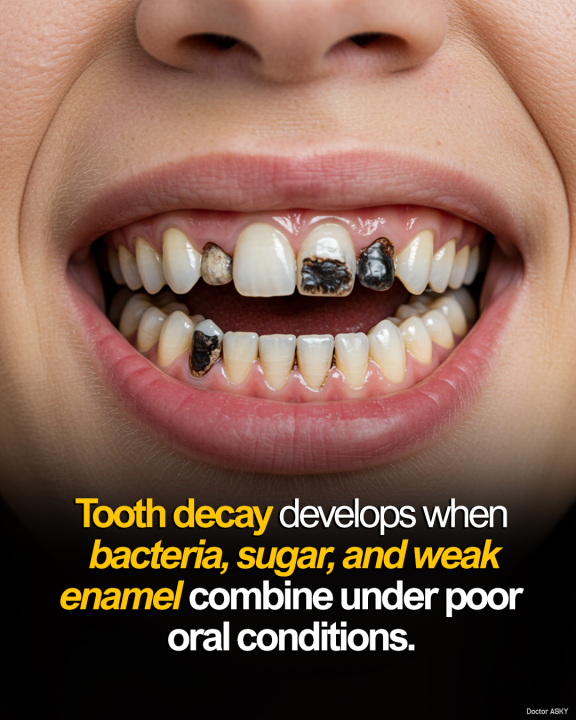
Tooth decay doesn’t just happen overnight—it needs certain conditions to grow: acid-producing bacteria, sugary or starchy food, and vulnerable teeth lacking fluoride protection. While plenty of bacteria live in our mouths, only specific ones generate the acid that eats away at enamel, and once decay begins, it can progress from a slow creep to a rapid breakdown.
The damage moves fastest once it reaches the dentin and can destroy the inner tooth (the pulp) in a matter of months, causing intense pain. Decay can even spread through close contact—like sharing utensils or kissing someone with active cavities. There are three main types of decay: smooth decay (slow-growing and common in people aged 20–30), pit or fissure decay (which hides in the grooves of molars and is tougher to clean), and root decay (which hits harder in older adults and is often tied to dry mouth or poor hygiene).
Root decay is the most aggressive and hardest to stop. Brushing, flossing, fluoride use, mouthwash, and regular dental checkups are key defenses. Even if bacteria are always around, staying on top of oral hygiene can stop decay before it really gets started. Time To Next Your Health To The Next Level at www.drinkbc6.com