x




When it comes to sugar, I’ve got two words for you: dump it! It is nasty stuff that weakens the immune system and feeds the development of so many of the diseases we all fear: diabetes, heart disease, cancer, and Alzheimer’s, to name a few. It’s a destructive, highly addictive substance that stimulates the same areas in the brain as cocaine and heroin. It hijacks your taste buds, pumps up blood sugar and insulin levels, and drives weight gain.
Trouble is, millions of people who are hooked on the sweet stuff often turn to non-sugar, ‘non-nutritive’ artificial sweeteners to enable them to have their cake and eat it too, so to speak. Not a wise move. In fact, most, if not all, of the chemical sweeteners out there are just as rotten for your body as sugar, only in different ways. Swapping one bad habit (sugar) for another (fake stuff) can make cravings worse, mess with your microbiome and possibly even damage your brain. Now, that’s a lousy trade-off! In short, nobody should be using artificial sweeteners and I encourage you to redline them (and sugar, too) without delay. Here’s why – and how to phase these nasty substances out of your life ASAP:
Many sweets-loving folks shift over to artificial or non-nutritive sweeteners thinking it will help keep their weight under control or even result in weight loss. Wrong. Even though they’re not adding extra calories to your system, a recent study found that in women and those struggling with obesity, artificial sweeteners can actually increase appetite and cravings. Numerous other studies have also linked artificial sweetener use and weight gain, with users often gaining more weight or having higher body mass indexes than non-users. Small wonder that diet soda consumption has also been linked to increased weight gain. So, if help with weight control is what you’re after, look elsewhere. Bottom line: keep artificially sweetened sodas, foods, treats and so on out of your house and especially, nowhere near your kids.
Artificial sweeteners have a lesser-known and incredibly unwelcome side-effect. Which is? They’re very effective at killing off large numbers of your beneficial gut bacteria – the ones that are essential to keeping your gut bacteria balanced and you well. If you want to keep your gut and your immune system healthy and strong, ditching the fake sweet stuff is an essential part of protecting your microbiome.
There are hundreds of studies out there, many with contradictory conclusions, but, as I always follow the precautionary principle , in plain English, better be safe than sorry. Bottom line: we simply don’t know what the health impact of consuming these problematic substances over the course of a lifetime might be. However, we do know that when heated, sucralose, aka Splenda, releases compounds related to dioxin, which is a carcinogen. Aspartame, one of the most widely used artificial sweeteners in the world, found in more than 5000 food products globally, has been shown to cause cancer in lab rats. There’s a reason why the labels on those sweetener packs suggest they may be hazardous to your health. With all these red flags hiding in plain sight, you have to ask yourself, ‘Is this something I should ingest? Is it worth the risk?’ Didn’t think so.
Equal, NutraSweet, Pure Via, Splenda, Sugar Twin, Sweet ‘n Low, and just about every other chemical sweetener you see on the shelves share one key characteristic: they’re sweet. Super sweet. As in, hundreds of times sweeter than sugar. All that artificial sweetness activates your taste receptors, then swamps your tastebuds so they’re both overwhelmed and dulled, pushing your sweetness threshold to crazy levels – and as some studies suggest, encourage a preference for intensely sweet foods. In effect, artificial sweeteners wind up training your body to want more sweetness, which only leads to more trouble.
Not only do artificial sweeteners confuse your tastebuds and, in the case of sucralose, promote insulin resistance (a precursor to diabetes), but they also interfere with hunger hormones while slowing the release of satiety hormones. Truly, the worst of both worlds. The result is, it takes a lot longer for your brain to send out the signals that it’s time to put the fork down, and the delay makes overeating, and ultimately, weight gain, that much more likely. And just because these sweeteners are calorie-free doesn’t mean they’re not affecting your metabolism. The fake sweet taste may in effect prime the body to expect bona-fide sugar and throw off its ability to properly metabolize the real thing when it does eventually arrive.
In a nutshell, if you want to feel great, artificial sweeteners have got to go. What many people don’t realize is that many of the everyday ills, blahs and mild (or for some, severe) feelings of unwellness they experience all too frequently may be largely due to their sweetener intake. While some people may be more sensitive than others to the deleterious effects, it’s not unusual for even light users to experience any number of unwelcome symptoms, ranging from rashes, dizziness, and migraines, to cramps, gas, bloating and diarrhea. So try quitting sweeteners and you’ll likely start feeling better in a matter of days.
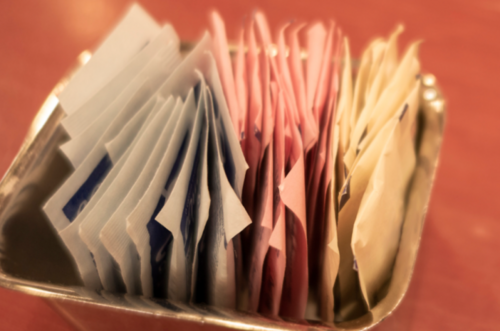
There comes a time in everyone’s life when you just have to say ‘enough,’ and with artificial sweeteners, that time is now. It’s like a bad relationship, and it’s time to end it, to say farewell to all those pink, yellow and blue packets, and don’t look back. I do understand though that if you’ve been a life-long sweetener, you’re probably not going to drop the fake stuff overnight (as much as I wish you would). So, assuming you’re not a cold turkey/rip-off-the Band-aid kind of person, here are a few tips to make the transition more manageable: