x





A healthy gut microbiome is achieved with three different factors: healthy environment, healthy diet, and absence of disease. Sound simple? It’s not! There are so many differences between individuals, their lifestyles, and their genetic makeup. Fortunately, we’ve got a few tips for anyone looking to make some improvements.
First and foremost, a healthy gut microbiome has a diverse composition of different bacterial species. Understanding the need for variability in the microbiome has been a major challenge in microbiome research, dating back to at least the 1960s, continuing through the Human Microbiome Project and beyond.
While researchers work to iron out the details, we know that our environment, diet, and long-term stressors are key factors affecting the composition of our individual microbiomes.
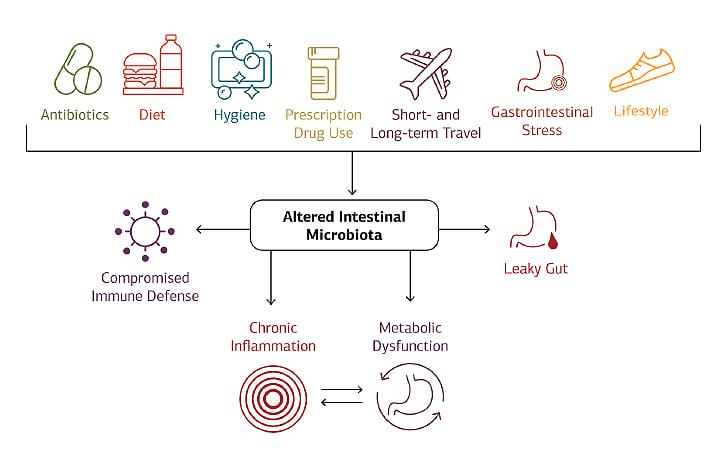
Factors influencing our gut microbiome and how an altered intestinal microbiota can influence health.
Studies have shown evidence of compositional differences between microbiomes of individuals living on different continents and in different countries, as well as differences between people living in rural and urban neighborhoods.
The relationship between our personal microbiome and our environment is complex. For example, if you’ve moved around a lot, you may have a drastically different microbiome than your next-door neighbor who goes to the same grocery store and is subject to the same environmental pollution as you, but has lived in the same place for many years.
Additionally, it is likely that diet, early-life exposures, and genetics also play roles in these environmental differences
The amount and type of protein, fats, carbohydrates (including fiber), and phytonutrients from plants that make up our diet plays an enormous role in determining the composition of our gut microbiome The bacteria in the gut rely on the human diet for nourishment; a larger variety of healthy, whole food ingredients in our diet can lead to a healthier, more diverse microbiome.
Extended times of stress and unresolved inflammatory response can make significant changes to the composition of the microbiome. Such changes may then exacerbate existing inflammation, creating a vicious cycle Lack of microbiome diversity is also linked to other health issues such as obesity, inflammatory bowel disease, and diabetes.
Antibiotic use also alters the diversity of the microbiome, transforming its status to an “alternative stable state” with an unknown timeline of consequences. In other words, it’s unknown as to whether the microbiome ever fully recovers its diversity after antibiotic use—or how long this could take. The ultimate impact of antibiotics on the microbiome likely stems from the type, dosage, and length of time of the antibiotics used.
While it may be difficult to create a precise description of your personal healthy gut microbiome, the positive outcomes that come as a result of a healthy gut microbiome may indicate if you’re on the right track.
It’s much easier to explain why a healthy gut microbiome is important than it is to describe the microbiome’s ideal configuration. Put simply, a healthy gut microbiome – made up of bacteria, viruses, and fungi—is important for supporting gut health, heart health, immune system health, and other body systems, as if it were its own body system with physiological connections to every inch of the body.
The health of your gut microbiome may produce negative or positive health outcomes. Composition of the microbiome is such a huge factor in determining how the gut microbiome affects health because of the constant power struggle between “bad” and “good” bacteria. One group makes a negative impact, and the other makes a positive impact. You can support a healthy microbiome with lifestyle choices to give the mutualistic bacteria in the gut the best chance at thriving, and they’ll return the favor!
The bottom line? The same lifestyle choices thought by scientists to positively influence a healthy gut microbiome are also typically those that are thought of as universally “healthy” choices:
While it may be difficult to create an exact formula for a healthy microbiome, that doesn’t mean that we can’t apply reasonable amounts of different “ingredients” to our lifestyle to give ourselves the best possible chance.