x




:max_bytes(150000):strip_icc():format(webp)/close-up-of-fish-in-dirty-tank-617929349-5ada39d5642dca0036bca394.jpg)
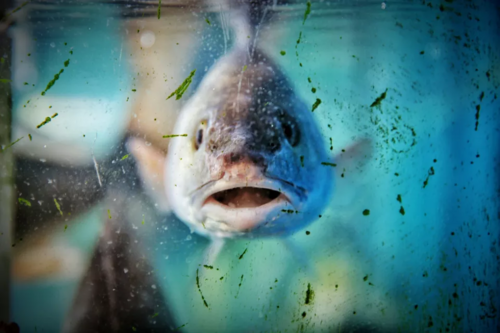
Old Tank Syndrome is a condition in which the aquarium environment had degraded over time, specifically the water chemistry. Aside from some cases of algae overgrowth, there are generally few visible indications of the significant changes that have occurred in the water parameters. However, water tests will show a different picture.
Nitrates and phosphates will be significantly increased. The pH, GH (general hardness), and kH (carbonate hardness) will be quite different than that of the water supply. Generally, the pH will become more and more acidic over time. A falling pH is often a sign of old tank syndrome.
Owners may assume all is well, because their fish are still alive, or at least most of them are. However, when new fish are added they usually die within a short time. The deaths may be blamed on the fish, rather than the underlying problem of old tank syndrome. Some owners may have a clue that something is wrong at this point, and perform a massive cleanup. The result is usually the death of even more fish. Why? Because the fish have been subjected to rapidly changing water conditions.
Understanding what causes old tank syndrome is as simple as understanding that your aquarium is a closed environment. Like a new house, a new tank is clean and pristine. Like a house, things get messy once someone moves in, in this case, the fish. Excess food and fish excrement fall to the bottom of the tank and builds up in the gravel or they are sucked into the filter. Water evaporates and leaves residue behind on the glass. In your house, you clean old junk out of the fridge, vacuum the floors and take out the garbage. Who does that for the aquarium? If you don't, nobody does. Everything that goes into the tank, stays in the tank in some form until you take steps to remove it. When the aquarium owner fails to do regular maintenance, the tank gradually builds up waste material that changes the water chemistry.
Although the filter will remove most waste particles from the water, the waste is still there in the filter until you clean it out. The same is true of toxic chemicals, such as ammonia and nitrite. Yes, beneficial bacteria will convert them to a less toxic form. However, the byproducts of that conversion process are other chemicals that are not healthy for fish at high levels. Remember, everything stays in the tank until you remove it.
Because all of this happens slowly, the fishes in the tank have time to adapt to the changes in the water chemistry. The weaker ones often die, but the stronger ones survive, although they are more susceptible to disease and will usually have shorter lifespans. Any newly added fish are likely to perish quickly, as they cannot adjust to the water chemistry.
Slow and steady are the keywords for correcting old tank syndrome. Don't make any sudden massive water changes. The tank may be clean, but the fish will all be dead. Instead, perform daily water changes of 10 percent to 15 percent. Monitor the ammonia and pH closely, testing on a daily basis initially. If the ammonia should rapidly increase, skip the water changes for a couple of days to allow things to stabilize. Test the nitrate levels weekly to determine if they are dropping as expected.
As the water parameters improve, the filter media can be changed/cleaned, as well as the tank itself. Again, testing the water is important to ensure the water chemistry is not dramatically changing. The end goal is to have zero ammonia, low nitrates, and a pH that is close to the original water source, whether that is tap water or specially prepared water.
Preventing old tank syndrome is a far better approach than allowing things to crash and trying to correct things later. Maintenance and water testing should be regular, rather than when a problem occurs. Water changes should occur weekly, usually 10 percent to 15 percent, unless the tank is heavily stocked. Filter maintenance should be performed monthly, along with cleaning the inside of the tank. Debris, such as excess food particles, should be removed promptly from the tank at the time it occurs. Cleaning is not enough, though. Water tests are key to keeping on top of potential problems.
If performed faithfully, a monthly testing cycle is sufficient. Be sure to log your results so you can easily compare them to prior tests to see if a pattern is emerging.
If the pH changes, or if you see any of the other parameters drifting upward, you should step up your cleaning and water change schedule. With good maintenance and careful observation, you may never have to suffer the scourge of old tank syndrome.