x






Knowing if your weight is within a healthy range can be beneficial. This is particularly so in the United States, where obesity is a significant problem.
American women aged 20 years and above weigh an average of 170.6 pounds (lbs), according to the Centers for Disease Control and Prevention (CDC). Height-wise, the average adult female is 5 feet 3.7 inches, and her waist measures 38.2 inches.
While these numbers may be the average, they are not a measure of health. One of the commonly used indicators of well being is a person’s BMI, which stands for body mass index.
The BMI of the average woman in the U.S. is 29.6, which falls into the category of “overweight.”
Out of all American adults, more than two-thirds are deemed to be “overweight” or “obese,” which represents a worrying trend for the nation’s health.
So, what is the ideal weight range for women, how would a person best measure it, and what can women do to achieve their ideal weight?
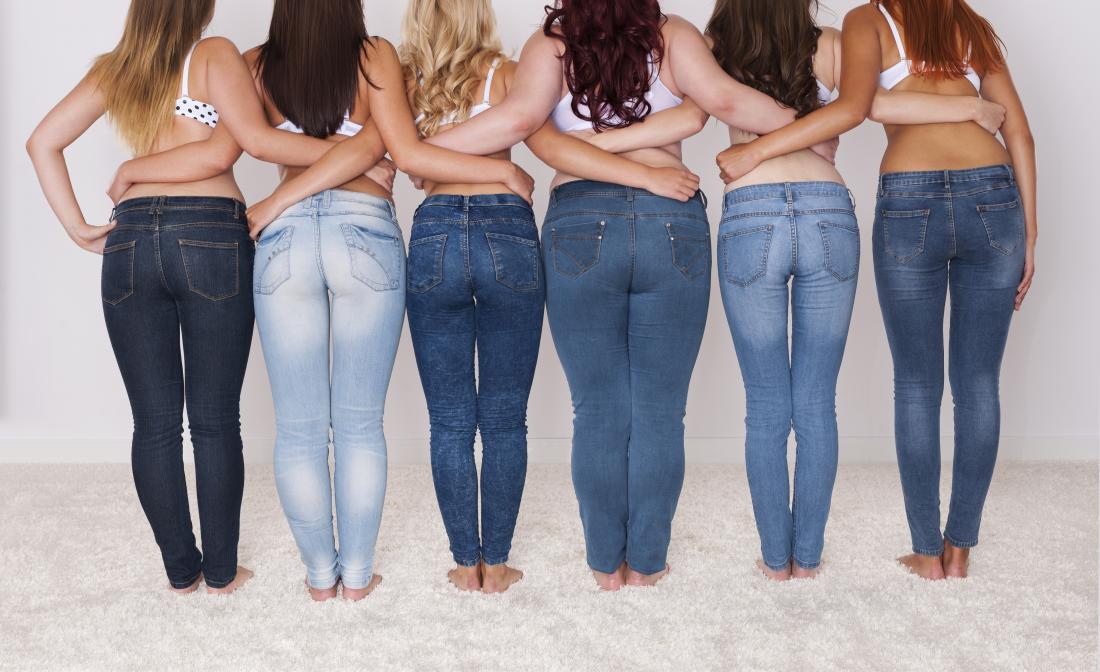
A commonly used indicator for measuring well-being is BMI.
At 177.9 lbs, the average body mass in North America is the highest of any continent worldwide, according to 2005 statistics published in 2012 by BMC Public Health.
North America also has the highest percentage of people who are overweight, with 73.9 percent classed as such.
The following table shows the weight data for different world regions:
| Region | Average body mass (kg) | Percentage of people overweight |
| Asia | 57.7 (127 lbs) | 24.2 |
| Europe | 70.8 (156 lbs) | 55.6 |
| Africa | 60.7 (133 lbs) | 28.9 |
| Latin America (Caribbean) | 67.9 (149 lbs) | 57.9 |
| North America | 80.7 (177 lbs) | 73.9 |
| Oceania | 74.1 (163 lbs) | 63.3 |
| World | 62.0 (136 lbs) | 34.7 |
In a 2015 review, the U.S. also had the highest rate of childhood obesity out of the world’s 20 most populated countries, with a rate of 12.7 percent, although Egypt topped the table for adults at 35.3 percent.
An “ideal weight” is where a person is at their healthiest and fittest in terms of what they weigh. There is a variety of different ways to calculate ideal weight ranges:
BMI is the most commonly used system for calculating ideal weight range, as it is relatively easy to work out. An individual can work out their BMI by applying their height and weight to the following formula:
For those people more familiar with using imperial measurements, there are various online calculators for working out BMI scores.
BMI calculations are the same for men and women, and BMI is seen as correlating fairly well with a person’s percentage of body fat.
Despite this, BMI can give a false picture, as muscle weighs more than fat. Research in the journal Sports Health, showed athletes rating as “overweight” or “obese,” despite being in peak condition.
One study also criticizes BMI for underestimating the prevalence of obesity in both sexes and being increasingly inaccurate as women age.
According to the National Heart, Lung, and Blood Institute, BMI ranges are as follows:
| Underweight | Less than 18.5 |
| Normal weight | 18.5–24.9 |
| Overweight | 25–29.9 |
| Obesity | 30 or greater |
Fat is spread around a person’s body but not all types of fat are equal.
The fat that can build up around someone’s midsection and turn into a beer belly or love handles can indicate a higher risk for related diseases that have potential to do harm to your body.
The World Health Organization (WHO) note that fat around the midsection is associated with an increased risk of heart attack, stroke, and premature death.
Furthermore, it says calculating a person’s waist-to-hip ratio is a better indicator of their fat distribution and disease implications than BMI is.
A person can work out their waist-to-hip ratio by dividing their waist measurement by their hip measurement.
Women should keep their waist circumference at 80 centimeters (cm) or 31.5 inches or less, according to the WHO. Anything more is associated with increased risk of related health problems, as follows:
| Indicator | Cut-off points | Risk of health problems |
| Waist circumference | More than 80 cm (31.5 inches) | Increased risk |
| Waist circumference | More than 88 cm (34.6 inches) | Substantially increased risk |
| Waist-to-hip ratio | Equal or more than 0.85 | Substantially increased risk |
Body fat percentage is another way of calculating a person’s ideal weight. Unlike BMI, it differentiates between how much of a person’s weight is lean tissue and how much is fat.
In theory, body fat percentage is a good way of measuring ideal weight. However, in practice there are drawbacks:
Nonetheless, the American Council on Exercise propose the following body fat guidelines for women:
| Condition | Percentage |
| Essential fat | 10–13 |
| Athletes | 14–20 |
| Fitness | 21–24 |
| Acceptable | 25–31 |
| Obesity | More than 32 |
A woman’s BMI and waist-to-hip ratio can help decide what is a healthy weight. But there are other factors to consider when finding what the ideal weight is for women.
Research shows that when people age, the amount of fat in their bodies increases while their muscle decreases. This means that people who want to stay lean may have to work harder on their diets and exercise when they get older compared to when they were younger.
Since BMI takes into account both height and weight, people who have the same BMI score but are of different heights will weigh different amounts.
Here’s how a healthy BMI range translates to different weights at different heights:
| Height | Weight (BMI 19–24) |
| 4’10” | 91–115 lbs |
| 4’11” | 94–119 lbs |
| 5’0″ | 97–123 lbs |
| 5’1″ | 100–127 lbs |
| 5’2″ | 104–131 lbs |
| 5’3″ | 107–135 lbs |
| 5’4″ | 110–140 lbs |
| 5’5″ | 114–144 Ibs |
| 5’6″ | 118–148 lbs |
| 5’7″ | 121–153 lbs |
| 5’8″ | 125–158 lbs |
| 5’9″ | 128–162 lbs |
| 5’10” | 132–167 lbs |
| 5’11” | 136–172 lbs |
| 6’0″ | 140–177 lbs |
| 6’1″ | 144–182 lbs |
| 6’2″ | 148–186 lbs |
| 6’3″ | 152–192 lbs |
.png)