x




If you think obesity seems like a complicated disease, its treatments are equally complex. Physiologically speaking, it’s difficult to lose a significant amount of weight and keep it off. “Eat less and move more” is great advice when you have 10 pounds to shed; less so when you need to unload 50 or more. (In fact, while exercise is vital for weight maintenance, research suggests it's less effective in helping people to lose large amounts, unless you're work out at a super-intense level.)
So yes, the struggle is real. Ready for some encouraging news? Losing just 3% to 5% of your weight—and maintaining that loss—has the power to bring about important improvements in health. You can stabilize your blood sugar levels, lower your risk of developing type 2 diabetes, and more. Dropping more than that helps improve heart health and may be enough to reduce the dose of medication you take for various related chronic diseases.
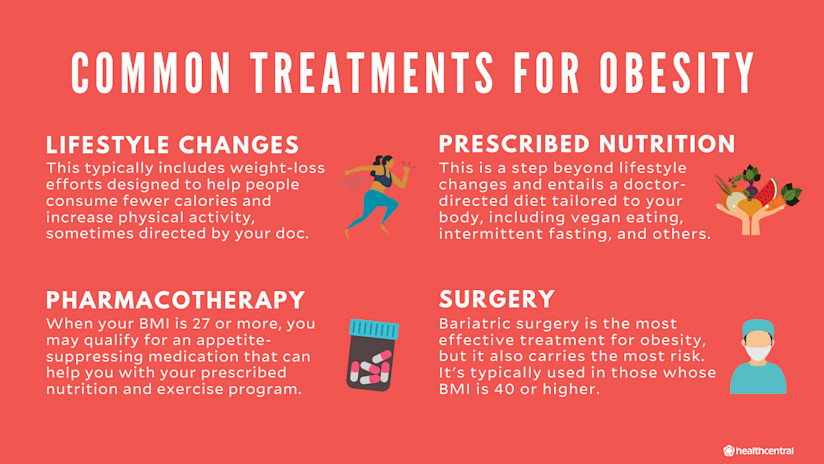
This category typically includes weight loss efforts designed to help people consume fewer calories and increase physical activity. If you’re working with a healthcare provider, she or he may recommend adding behavior change tools to help you stay on track, such as setting specific, attainable goals; keeping a food and exercise journal; and digging deep to learn about the environmental cues that prompt you to eat in unhealthy ways.
Percent of people who will reach their weight-loss goal using lifestyle modifications: 2% to 5%
A step beyond lifestyle medication, this category involves specific, prescribed behavioral modifications tailored to the individual’s unique environmental and genetic risk factors, with the goal of creating some sort of weight-loss advantage. Possibilities include (but are not limited to):
vegetarian or vegan eating
therapeutic carbohydrate reduction (a.k.a. the Keto diet)
Percent of people who will reach their weight-loss goal using prescriptive nutritional interventions: 5% to 10%
The Food and Drug Administration has approved several medications for weight loss and chronic weight management. You need a BMI greater than 30 to qualify for a prescription, though those with a BMI greater than 27 as well as a weight-related health complication are eligible as well, even though they’re not technically obese.
A few examples of medications include:
Alli (Orlistat) - This drug works by blocking the absorption of dietary fat. When taken, about 30% less fat is absorbed from food and eliminated in the stool.
Ozempic (Semaglutide) - Already used to treat diabetes, this drug is expected to be available for obesity by 2021. It belongs to a class of drugs called GLP-1 receptor agonists, and studies suggest it can help some people lose as much as 20% of their weight.
Suprenza (Phentermine) - This stimulant targets neurotransmitters in the brain that dampen appetite.
Pharmacotherapy requires medical supervision and is used in combination with nutrition and lifestyle changes.
Percent of people who will reach their weight-loss goal using pharmacotherapy: 5% to 20%
The term “endoscopic” means a doctor uses a tiny, flexible instrument to enter your gut through your mouth. Once inside, one of a number of approaches may be used to help reduce food intake. These include an intragastric balloon, which is exactly what it sounds like: a balloon is inflated in the stomach, where it takes up space to lower your appetite and encourage the patient to consume smaller portions. In endoscopic suturing, tiny stitches are sewn into the inside of the stomach, making a person feel fuller on less food.
On the upside, endoscopic procedures are done on a same-day, outpatient basis, and are less invasive than surgery (meaning fewer risks). On the downside, they are not yet covered by insurance, so you can expect to pay $5,000 to $8,000 out of pocket.
Percent of people who will reach their weight-loss goal using these endoscopic methods: 10% to 20%
This is the treatment category with the most risk but also greatest success rate. Surgery is usually reserved for people with a BMI higher than 40, or a BMI over 35 along with an obesity-related health condition. It has the potential to not just drastically reduce your weight, but to also help manage, improve or even reverse more than 40 obesity-related conditions, including heart disease, sleep apnea, high cholesterol, certain cancers, and more. In some trials, 70% of patients who undergo surgery show remission of type 2 diabetes within a few days.
A few types of metabolic surgery include:
Gastric Bypass - A surgeon essentially creates a new, much smaller stomach, then connects it directly to the small intestine. The first step reduces the amount of food that can be comfortably consumed (about two to six ounces at a time), and the second step prevents the body from absorbing as many calories as it otherwise would.
Gastric Sleeve (a.k.a. Vertical Sleeve Gastrectomy) - Like gastric bypass, this limits how much a person can eat. Unlike gastric bypass, about 80% of the stomach is removed. “The Sleeve” also has a strong effect on appetite-regulating hormones, so people generally just feel less hungry after the procedure.
Insurance companies typically do cover metabolic surgery, so long as you meet the proper criteria.
Percent of people who will reach their weight-loss goal using bariatric surgical methods: 20% to 40%
Individuals affected by excess weight and obesity are on the receiving end of unwarranted disapproval and shaming by others in the workplace, in the dating world, at their doctor’s office, when dining out, at the gym, or just at the corner store, as other customers assess and judge their purchases. Studies have concluded that weight stigma is as pervasive as racial stigma.
The effects of being treated as unworthy of respect or love can be emotionally haunting and physically and psychologically dangerous. Poor self-esteem, depression, and even suicidal thoughts have all been widely reported in individuals affected by obesity.
Weight bias also impacts how and whether a person chooses to access health care. For example, studies have shown that women with obesity tend to skip preventive care appointments and routine gynecologic cancer screenings. Reasons include wanting to avoid interacting with providers who had previously expressed a negative attitude towards their weight or given unsolicited weight loss advice; fearing being asked to wear a too-small gown or sit on a too-small examining table; not wanting to be weighed; you get the point. The result is a supremely unhelpful catch-22, causing those who need medical help the most to avoid it.
Ironically, some of the more successful forms of treatment, such as surgery, are themselves stigmatized. No one would ever fault a woman with breast cancer for needing a mastectomy, yet that’s a common response to hearing of someone electing to undergo metabolic surgery. (“Wow, what a failure. She couldn’t lose it on her own.”)
Still, society is slowly moving forward with an understanding that obesity is a disease and not a lifestyle choice. Using respectful language (“person with obesity” instead of “obese person”) is a major step in the right direction, and exciting work is being done with regards to public health policy and treatment innovation.
If you are living with obesity, finding a multidisciplinary weight loss team (they’re often affiliated with a university) can help you come up with a strategy to take control of your health. Through one of these teams, you’ll have access to physicians, psychologists, nutritionists, exercise specialists, and other experts who want to help you, judgement-free.
Power in numbers, right? With 40% of Americans currently living with obesity, this community has no shortage of people who are right there with you. This community finds a way to encourage each other — will each other — into a healthier future. Being a part of this world may seem daunting right now, but these influencers and orgs will help you come to terms with the number on the scale, and through their own journeys, encourage you to start your own.
.png)