x





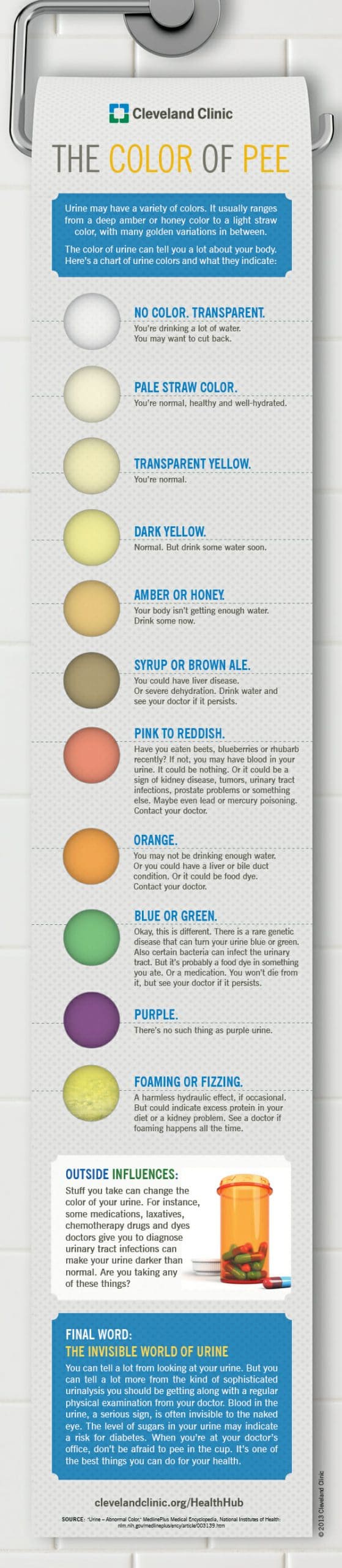
Urine comes in different colors and the color of your urine can help identify what’s going on in your body. For example, if your urine is transparent and has no color, it means that you could be drinking too much water. On the other hand, if your urine is amber or honey colored, you are not getting enough water and you should drink some soon. Urine can also help you determine if you should seek medical assistance. For example, if your urine is pink to reddish and you haven’t been eating rhubarb, beets, or blueberries recently, you may have blood in your urine, which could be a sign of kidney disease or urinary tract infections. Possibly even mercury poisoning. In any case, you should seek a doctor’s advice. Strangely, urine can also be orange if you have a liver or bile duct condition. It can also be blue or green if you have a rare genetic disease. If your urine foams or fizzes, it could just be a harmless hydraulic effect, but it could also be excess protein in your diet or a kidney problem. There are things that affect the color of your urine, like medications, chemotherapy drugs and dyes.