x




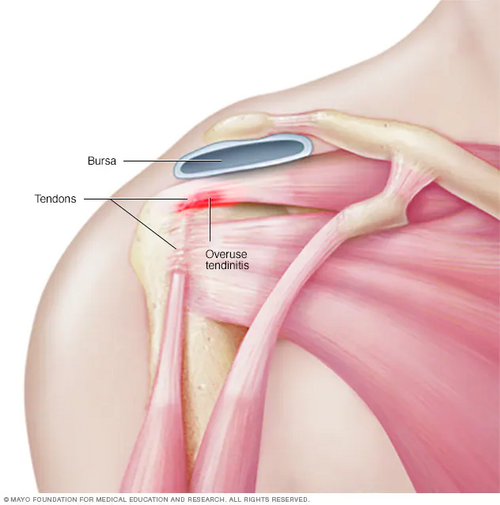
Tendinitis is inflammation or irritation of a tendon – the thick fibrous cords that attach muscle to bone. The condition causes pain and tenderness just outside a joint.
While tendinitis can occur in any of your tendons, it’s most common around your shoulders, elbows, wrists, knees and heels.
Some common names for various tendinitis problems are:
Most cases of tendinitis can be successfully treated with rest, physical therapy and medications to reduce pain. If tendinitis is severe and leads to the rupture of a tendon, you may need surgery.
Signs and symptoms of tendinitis tend to occur at the point where a tendon attaches to a bone and typically include:
Most cases of tendinitis respond to self-care measures. See your doctor if your signs and symptoms persist and interfere with your daily activities for more than a few days.
Although tendinitis can be caused by a sudden injury, the condition is much more likely to stem from the repetition of a particular movement over time. Most people develop tendinitis because their jobs or hobbies involve repetitive motions, which put stress on the tendons.
Using proper technique is especially important when performing repetitive sports movements or job-related activities. Improper technique can overload the tendon – which can occur, for instance, with tennis elbow — and lead to tendinitis.
Risk factors for developing tendinitis include age, working in particular jobs or participating in certain sports.
As people get older, their tendons become less flexible – which makes them easier to injure.
Tendinitis is more common in people whose jobs involve:
You may be more likely to develop tendinitis if you participate in certain sports that involve repetitive motions, especially if your technique isn’t optimal. This can occur with:
Without proper treatment, tendinitis can increase your risk of experiencing tendon rupture – a much more serious condition that may require surgery.
If tendon irritation persists for several weeks or months, a condition known as tendinosis may develop. This condition involves degenerative changes in the tendon, along with abnormal new blood vessel growth.
To reduce your chance of developing tendinitis, follow these suggestions: