x






“Ohh, my sciatica!” No other nerve is so popular in discussions, and is usually punctuated with sighs, winces, and the occasional expletive. A gentle workout can help relieve back-breaking pain from the sciatica nerve. Before you pop your next anti-inflammatory, consider alternative pain-reducers …
How to Diagnose Sciatica
Although not considered a disorder, the pain triggered by an inflamed sciatica nerve can be an ongoing part of life. Sciatica refers to pain that radiates along the path of the sciatic nerve and its branches — down your spinal cord to your buttock and hip area and down the back of each leg. As the longest nerve in the body, it is often responsible for emitting pain in the back (particularly low back area), and along one or both legs. Occasional tingling and numbness add “insult to injury.”
Anyone who has experienced sciatica is familiar with its presentation. Some flare-ups are mild; others are severe. The telltale pain aches, burns, or feels like a knife—or all three. Although the condition is more common as you age, sciatica does not discriminate. It can be triggered by some of the following:
Sometimes, sciatica pain is the result of sitting too long, common to certain careers; an inactive lifestyle, common to couch potatoes; an auto collision; or a clumsy moment.
Make It Stop
Regardless of its origin, simple self-treatment is often the solution. Hot/cold compresses, anti-inflammatory drugs, and stretches usually help reduce a flare-up’s intensity and length. Research has proven additional successful methods of treatment to help keep you moving when sciatica stops you in your tracks.
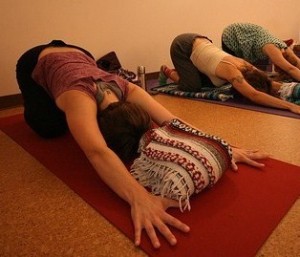
"The puppy," a yoga position, gives the lower back a soothing stretch.
Yoga: One of the leading exercise treatments in the relief of low back pain. With emphasis on balance and stretching, yoga practitioners tend to have an easier time performing daily activities involving the back. They gain improved overall back functioning and reduced back pain. A healing art by nature, with its combination of poses, deep breathing, and meditation, yoga’s benefits have been evident for over 4,000 years.
A study published in 2009, involving 90 participants, indicated that six months of regular yoga practice was associated with significant improvements among people with chronic back pain. Half of the participants took twice-weekly, 90-minute yoga classes. The other half continued with their usual medical care. Members of the yoga-practicing group were also provided with material to practice at home on non-class days.
The outcome reported by the yoga group participants:
This study reflects similar results discovered through other investigations. Talk with one of the Center’s yoga instructors to determine the appropriate class for you. Start with a beginner or gentle version until your pain is under control. Visit the Center’s Web site for a list of classes that meet your needs and schedule requirements.
Massage: Not just a luxury to melt away stress. A 2008 study found massage was therapeutic in increasing range-of-motion and decreasing pain in individuals struggling with sciatica. Treatment should target the lower spine, pelvis, thigh, and leg areas for best results in diminishing sciatica pain. However, a good overall massage can work wonders—just providing an opportunity to relax and be comfortably still for a short while!

Relieve back pain through professional massage therapy.
Other studies show the benefits of massage for lowering blood pressure, easing depression, reducing severity of tension headaches, and decreasing stiffness and soreness associated with arthritis. Although it cannot cure these conditions, it can have positive effects.
For a do-it-yourself version, try using a tennis ball to roll away knots and kinks in muscles. You can also purchase mini gadgets and chair cushions that mimic a massage when you’re feeling that pinch.
Functional Training: A proactive approach to treating and preventing sciatica pain. An inflamed or tight piriformis, the smallest muscle in the glute complex, can put pressure on the sciatic nerve. Fitness Director Chris Barlics recommends foam-rolling the piriformis. This is an exercise technique performed with a foam roller. The movement provides a type of self-massage of the piriformis and addresses any trigger points that originate there.