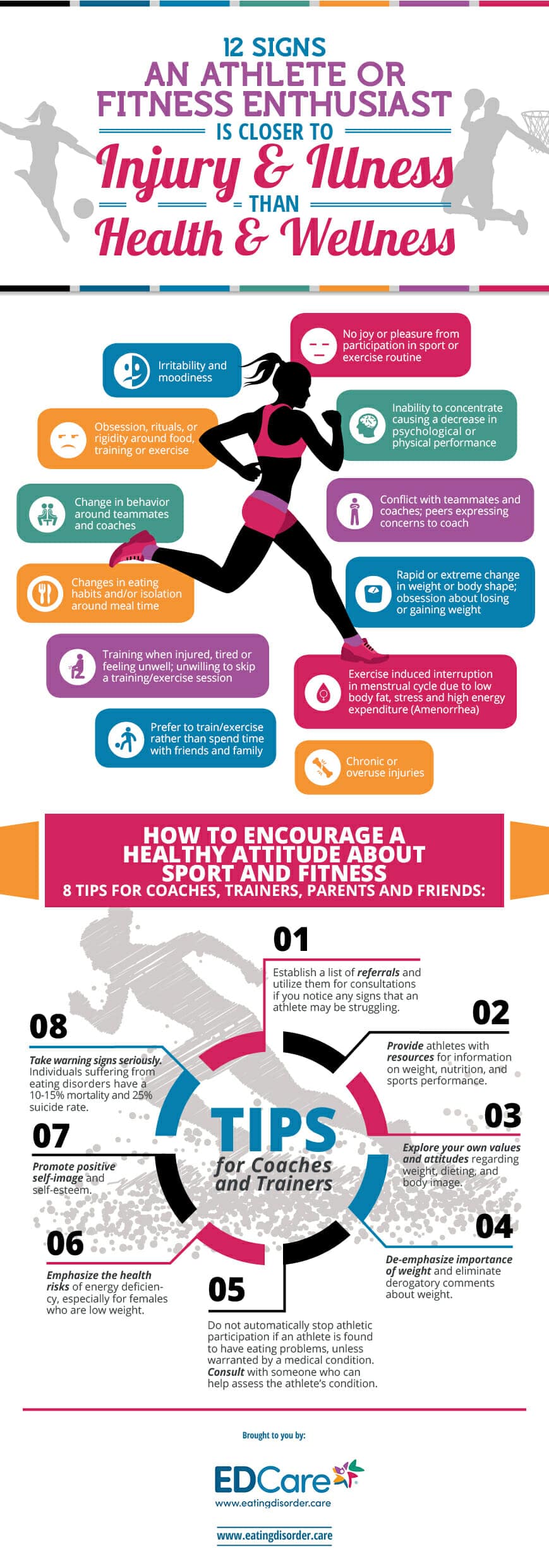
Exercise is one key ingredient of a healthy lifestyle. By keeping your body moving, you can boost your cardiovascular health, build and maintain muscle, and even help your body fight disease. But even the most knowledgeable athletes and fitness enthusiasts can fall into unhealthy patterns of obsessive exercise.
According to sciencedirect.com, the prevalence of exercise addiction ranges from 3%-29% in the different sports cultures. Exercise addiction has been identified in runners, fitness exercisers, triathletes, sport students and football players. Even gym-goers can form an unhealthy obsession with exercise. And, excessive exercise plays a role in both the development and maintenance of a variety of eating disorders
Key Points:
- It’s important to recognize the signs of exercise addition and eating disorders, particularly because the early signs often mimic the behaviors of an individual with a disciplined but healthy diet and fitness regimen.
- An individual struggling with exercise addiction may exhibit sudden or gradual behavioral and physical changes, including irritability or moodiness, inability to concentrate, obsessive food and exercise rituals, isolation around mealtimes, extreme or rapid weight loss or gain, training when injured, chronic injuries, conflict with coaches or teammates, and choosing to exercise rather than spend time with friends and family.
- Coaches, trainers, parents: evaluate your attitude about weight, dieting and body image and explicitly promote positive self-image and self-esteem. Most importantly, take signs of an eating disorder or exercise addiction seriously—consult with a mental health professional or someone who is qualified to assess the individual’s condition.