x





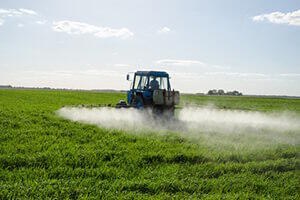
Over several decades, pollution has become a genuine public health issue. But while the subject of air pollution is discussed regularly, we very often forget about the presence and impact of pollutants in our food. Whether synthetic or natural, these dietary pollutants can have diverse origins and appear at various stages of the food chain, from production through to consumption. Intensive use of pesticides clearly plays a role in dietary contamination but other pollutants can also infiltrate our food during production, processing, packaging and preparation. Posing a risk to our health, the numerous food contaminants in modern diets to which we are exposed on a daily basis have been at the heart of several food scandals over the past few years. In the face of these alarming reports, a number of scientific studies are focusing on identifying, and preventing the impact of, these pollutants. Here we review these unwelcome additions to our food: What are they? Where do they come from? What risks do they pose to our health? How can we avoid and eliminate them?
It was several years ago that scientists first sounded warning bells about the growing presence of contaminants in our food. More than 455 such substances have actually been identified in everyday foodstuffs, a finding that emerged from the large-scale EAT2 study conducted between 2006 and 2011 by ANSES, the French Agency for Food, Environmental and Occupational Health & Safety1. An earlier EAT1 study carried out between 2000 and 2004 had already signalled the presence of a number of dietary pollutants. This second phase examined more than 20,000 food products consumed by the French population, including meat, fish, shellfish, cereals, pasta, bread, fruits and vegetables. Fortunately, the 455 substances identified are not all dangerous to human health. Nevertheless, there are around a dozen substances which may indeed be unsafe. They include, in particular, lead, cadmium, inorganic arsenic, aluminium, methylmercury, dioxins, furans and dioxin-like PCBs, deoxynivalenol (DON), acrylamide and sulphites. These pollutants are considered persistent, which means they accumulate in food throughout the food chain before reaching our plates. They are distinct from non-persistent pollutants which break down more easily than persistent pollutants, but are nonetheless found in our food. These include bisphenol A and phthalates.
As mentioned, food can be contaminated at various stages in its production, processing, packaging and preparation. At the level of agricultural production, for example, pesticides and fertilisers such as cadmium, dioxins and PCBs, dimethoate, and hexachlorobenzene (HCB) pose an undeniable risk to our health. Though some farmers are beginning to adopt a more responsible approach to food production, one that respects the environment, they unfortunately represent a small minority of the world’s producers. It is to be hoped that their commitment is long-lasting but even so, it will take several years to counteract the damage caused by the intensive use of polluting substances. In addition to pesticides, our food can also be affected by pollution in the atmosphere, soil and water supply. While food processing can destroy some contaminants, it can equally introduce others, whether as a result of certain aspects of food treatment, poor hygiene or the introduction of additives. Indeed, there have been concerns about the health effects of a number of additives, such as sulphates, nitrates and nitrites. Apart from farming and processing, the packaging of our food can also be responsible for introducing contaminants such as aluminium.
Though food poisoning from pollutants is rare, repeated and chronic exposure to contaminants can pose risks to our health. So conclude several scientific studies including one published in the FASEB journal in 20135. The authors of this particular study showed that a combination of pollutants could aggravate certain metabolic problems known to increase the risk of cardiovascular disease and type 2 diabetes. They used a mixture of four pollutants: bisphenol A, TCDD, PCB 153 and a phthalate. Mice were fed this cocktail of contaminants at doses similar to those assessed as being present in our everyday foods, and were incorporated into a high fat diet representative of modern diets. The researchers observed a deterioration in glucose intolerance and a change in the oestrogen pathway in female mice. This is all the more worrying given that impaired glucose tolerance is a component of metabolic syndrome, a major risk factor in the development of cardiovascular disease and type 2 diabetes. Though the results were less marked in male mice, the researchers did note a change in cholesterol metabolism. Their findings were consistent with those of a recent study on the impact of persistent pollutants such as PCBs. Published in November 2016 in the journal Environment International, this study found an association between high levels of PCBs and alterations to HDL-cholesterol proteins6. HLD-cholesterol is considered to be the ‘good’ form because of its function in transporting cholesterol to the liver for elimination. According to the authors, their findings highlight a potential, worrying link between exposure to PCBs and risk of cardiovascular disease. Together, these studies’ findings raise concerns over the long-term health risks of dietary pollutants, their accumulation in the body and the increased impact that may result from combinations of these contaminants.
Though largely able to defend against contaminants, the body has particular difficulty in eliminating certain toxins which, when they accumulate, can lead to metabolic disorders and produce health complications. It is therefore important to take measures to protect yourself against these harmful dietary pollutants.
Essential tips for avoiding dietary pollutants
It is unfortunately very difficult to avoid breathing in atmospheric pollutants, but the following tips can at least help you make the right food choices to minimise your health risk from food contaminants. You should, for example, try to buy unprocessed, additive-free, organically–grown and quality-labelled food. Make sure you check the packaging for the presence of aluminium or bisphenol A. When it comes to eating fish, it is a good idea to opt for smaller types such as herrings, sardines, anchovies and mackerel as they contain fewer heavy metals. Always wash fruit and vegetables thoroughly before cooking or eating, avoid foods packaged in plastic or aluminium, and choose gentler cooking methods. When eating out, it can be difficult to establish the origins of restaurant food but if a dish is described as home-made, it’s usually an indication of quality and trustworthiness
Solutions for eliminating food pollutants from the body
However strict you are about choosing your food, it is nevertheless impossible to avoid dietary pollutants altogether. To protect against external toxins, the body has various defence systems including organs such as the liver and kidneys. But while these vital organs play a key role in detoxifying the body, they may prove inadequate when faced with the accumulation of pollutants such as heavy metals. Fortunately, the scientific community has identified certain substances able to promote detoxification via different mechanisms of action. They work, for example, by boosting liver and kidney function, or by trapping certain toxins. This is the case with EDTA, a molecule recognised as a powerful chelator of lead and other heavy metals. In binding to these pollutants, EDTA steers them towards natural elimination pathways. Malic acid acts in a similar way to chelate aluminium8. In order to get the most out of these chelators’ effects, they are formulated into dietary supplements to provide effective detoxification of the body. Other compounds have also been found to promote elimination of toxins. A combination of humic and fulvic acids, for example, boosts the body’s drainage function and facilitates excretion of waste products, as well as stimulating the immune system A valuable aid to protecting the body, this humic/fulvic acid combination is available as a dietary supplement.
.png)