x





Natalie Stilwell, DVM, MS, PhD
Updated: November 12, 2020
Published: July 25, 2019
Share this:FacebookTwitterPinterest
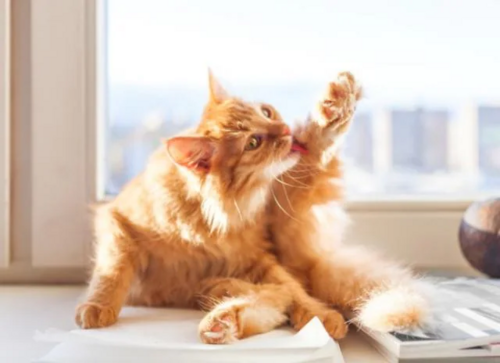
It’s normal for cats to groom on a regular basis. After all, cat self-grooming is an important behavior that helps cats remove loose hair, dirt, and parasites from their coat.
Cats typically spend up to 50% of their waking hours grooming, but excessive amounts of licking, biting, chewing, or scratching may mean that your cat’s self-grooming habits have become problematic.
If your cat is licking too much, they can lose fur in strips along their back, belly, or inner legs. The affected areas may be completely bare or have very short stubble. Your cat may also have an unusually high number of hairballs.
Here are some common reasons for excessive licking in cats and what you can do to help.
To help manage your cat’s overgrooming habits, you need to understand what’s causing the excessive licking in the first place. Your veterinarian can address the underlying issues.
Here are the most common health conditions that can lead to excessive cat self-grooming.
Irritated skin can be caused by an infection, an allergy to certain foods, parasites, or substances in the environment. Your cat’s fur-loss pattern may even hint at the source of the problem:
Flea allergy: irritation at the base of the tail
Ear mites: hair loss and scabbing on the neck and ears
Allergic response to pollen: excessive chewing of the paw pads
Overgrooming can also indicate that your cat is experiencing pain or discomfort, particularly if she is repeatedly licking one area of her body.
For example, disc disease can cause back pain so that your cat overgrooms a certain spot on their back, while a urinary tract infection or anal sac impaction may encourage excessive grooming of the genitals or perianal area.
Some cats use overgrooming as a way to cope with stress or boredom.
It is thought that licking releases endorphins that help relieve anxiety, so when a stressed cat finds relief in licking, it can turn into a habit.
Compulsive grooming, known as psychogenic alopecia, is usually triggered by a change in the cat’s daily routine or environment, such as moving to a new house or the arrival of a new family member or pet. Cats are very observant and may even feed off of our stress levels.
Cats are also highly intelligent and prone to boredom if their daily routine lacks proper enrichment. This cause of overgrooming is especially common in indoor cats that are alone for a large portion of the day.
In these cases, grooming helps make up for the lack of mental or physical stimulation.
This condition can be seen in any breed but is most common in Siamese, Abyssinian, Burmese, and Himalayan cats, due to their sensitive and attention-demanding dispositions.
The key to managing excessive grooming is to first address the underlying cause. Your veterinarian can diagnose the root cause and provide medical treatment or suggestions for deterring the habit if it’s behavioral.
First, your veterinarian will need to rule out medical problems.
Infections or allergies can be treated with the appropriate medications, which (depending on the cause) may include antibiotics, antihistamines, and/or anti-inflammatory drugs.
Keep your cat on flea medication year-round to help with flea allergies and ear mites.
If your cat is in pain, your vet can determine what’s causing it and how to manage the pain.
Cats love routine, so if the hair loss is stress-related, try to create a comfortable environment and a predictable schedule. Change the litter box at least once a day, and feed your kitty at the same times every day.
It’s best to incorporate changes gradually, such as the introduction of a new pet or changes in your living situation, to limit the amount of stress for your cat.
Be sure to provide environmental enrichment for your cat with cat trees, different types of toys, scratching posts, and frequent opportunities for play. This will help your cat build confidence and distract her from obsessively grooming.
Cats with persistent anxiety may benefit from anti-anxiety medications and/or supplements. You will need a vet’s prescription for medications, and calming supplements are available over the counter in the form of treats.
You can also try sprays and plug-in diffusers that disperse synthetic cat pheromones. Talk to your vet about the best course of treatment.
Finally, the most important part of managing overgrooming is to be patient.
If you see your cat licking excessively, don’t punish her or try to interfere. This will only add to your cat’s stress and make her overgrooming problem worse.
After you’ve sought help from your vet, it may take a month or so for an overgrooming behavior to resolve, and even longer for your cat’s fur to grow back.
.jpg)