x



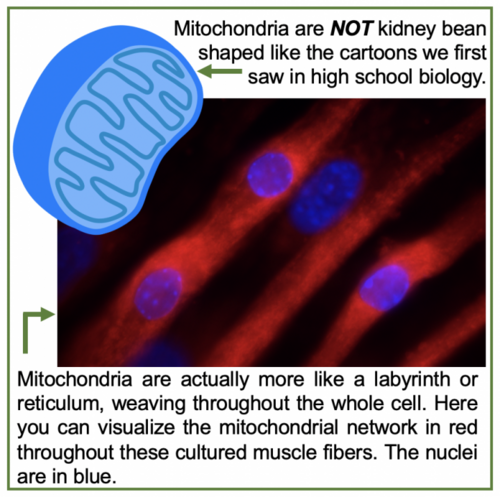
Remember back in high school biology when you learned about those little kidney-bean-shaped structures in cells called mitochondria? They were probably described to you as the powerhouses of cells, and today they still are; however, we now know that they are not shaped like kidney beans but instead more like a labyrinth throughout our cells. Mitochondria are the primary source for generating cellular energy in the form of ATP. You can find anywhere between 1,000-2,000 of them in each of your cells (except for red blood cells, which have no mitochondria and instead generate energy from glycolysis). If you lined up over 300,000 mitochondria, it would be only a foot long. Thus, they are small but mighty.
What happens to mitochondria as we age?
As we age, our mitochondria can become less efficient in generating ATP while producing greater amounts of “reactive oxygen species.” This age-related change in mitochondrial function is considered a hallmark of aging and may contribute to the development of age-related chronic diseases. Specifically, the smaller amount of ATP at a given instance means cells must become frugal with how much of their energetic “budget” they allocate to processes, such as making whole new cells or repairing damage imposed by stressors, like reactive oxygen species produced in excess. A simple analogy would be having less money in the bank, but still the same amount of indispensable bills. Consequently, you would have less money for dispensable expenditures, like building a new home or going on a nice vacation. Meanwhile, cells acquire greater amounts of daily damage by reactive oxygen species and other stresses, thus creating a downward spiral that can contribute to the development of age-related chronic diseases.
How do you prevent our powerhouses from becoming dysfunctional?
The good news is that you have the power to improve your powerhouses. Specifically, a recent study examined how mitochondria function in the thigh muscles of young sedentary adults, older sedentary adults, and older active adults, and found that with age, mitochondrial function declined in the older sedentary adults. However, this decline was blunted in the older adults who remained aerobically active by swimming, running, or biking. The even more encouraging news was that the older adults only engaged in aerobic activity three times a week, not crazy volumes of training like an elite athlete may require for sport performance. Furthermore, aerobic exercise has other systemic benefits including decreased risk for numerous age-related chronic diseases, improved cognitive function, and mental health. Therefore, remaining physically active can be a one-stop shop for preserving your mitochondrial function.