x




Science confirms that your microbiome directly impacts your brain, mental health, and behavior.
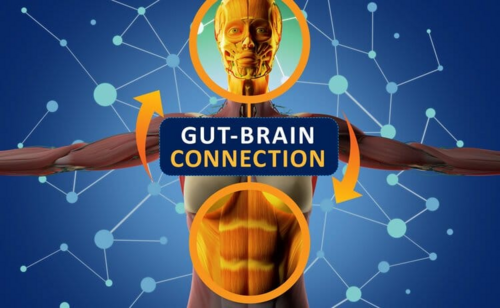
Your gut and brain are closely connected and communicate directly with each other through the gut-brain axis. This gut-brain connection is a bidirectional highway that transmits critical data between the GI tract and the brain. It is made up of neurons, hormones, and proteins.
The microbiome can also influence brain activity through the vagus nerve. It runs from your neck to your abdomen connecting internal organs to the brainstem. It’s the body’s major parasympathetic nerve responsible for basic functions, like the gag reflex, slowing the heart rate, controlling sweating, regulating blood pressure, stimulating the gastrointestinal tract, and controlling vascular tone. The vagus nerve is a physical pathway between the gut and brain. The gut-brain axis is a chemical pathway.
It’s not exactly clear how the microbiome alters the brain, but it’s probably via multiple mechanisms, including neural, hormonal, and immune systems. Scientists have found that gut bacteria produce neurotransmitters which play a key role in determining moods. Your gut also generates neuroactive chemicals and makes proteins that carry messages to the brain. Additionally, your microbiome is intertwined with your immune system, which itself influences your mood and behavior.
According to the article, What Is Your Gut Telling You?, “There’s a good chance your microbiome is associated with every disease you can think of.” And, it’s possible that in the future, altering gut bacteria could be a front-line treatment for neurodevelopmental and mental disorders. Here are six mental health conditions that have been linked to the microbiome.

Experiments by Nobuyuki Sudo in 2004 showed that germ-free mice born and raised with no bacteria had different reactions to stress than normal mice. Since those early experiments, researchers have shown that the relationship between the gut and stress, anxiety, and depression can be causal. Many experiments have shown that you can transmit depression by transferring microbes.
In one study, scientists identified specific bacterial species significantly reduced in animals with mood disorders. They then demonstrated that oral treatment with the same bacteria restored normal levels and eliminated the depressive-like behaviors. Hence, certain bacteria could serve as a treatment for some mental health conditions. This emerging field is known as nutritional psychology or psychobiotics.
In a small study, a group of human volunteers saw reductions in depression and anxiety after taking a combination of probiotics, similar to those found in yogurt, for 30 days. And scientists at UCLA found that healthy women who ate yogurt twice a day showed changes in the parts of the brain that process emotion. In the future, it’s possible that we can feel happier and less anxious just by manipulating our microbiota.
An article in Scientific Reports in 2015 stated that some brain regions are found to be infected with fungi in some people with Alzheimer’s Disease. The article suggested that untreated fungal infections slowly spread to the central nervous system. When the fungal burden gets high enough, neuronal loss happens and communication between neurons becomes impaired.
In recent years, the scientific community has further explored the role the gut microbiome plays in the development of Alzheimer’s. Science now confirms the correlation between an imbalance in the gut microbiota and the development of amyloid plaques in the brain, which are the signature of Alzheimer’s disease. In another study, researchers looked at proteins related to Alzheimer’s disease in the cerebral spinal fluid of people with the disease. There was a link between the abundance of certain microbes in the gut and brain changes related to Alzheimer’s.
Recent research found that people living with inflammatory bowel disease have more than twice the risk of developing dementia. A growing body of research suggests changes in the gastrointestinal tract may affect the brain through the gut-brain axis.
There is a gut-brain connection in Parkinson’s disease. One of the earliest symptoms of the disease, starting before most people are even diagnosed, is constipation. A person may experience a variety of mental health issues along with physical Parkinson’s symptoms. These can range from depression and anxiety to hallucinations, memory problems, and dementia. Anxiety and depression are two of the most common mental health symptoms that affect people with Parkinson’s.
Studies have found toxic forms of the protein alpha-synuclein in the colon of Parkinson’s patients. A bacteria (Escherichia coli) in the gut makes a specific protein, which can prompt other proteins, including alpha-synuclein, to misfold. This misfolded protein is linked to Parkinson’s’. Some researchers suspect the misfolded proteins transmit the error up the vagus nerve to the brain. However, whether the problem originates in the brain, the gut, or both is not known.

Although autism spectrum disorder (ASD) primarily impacts the brain, science has confirmed links with other bodily systems, including the gut. Gastrointestinal (GI) issues occur more often in individuals with ASD than in the rest of the population. Up to 90 percent of people with autism also have gut problems. New research reveals that the same gene mutations — found both in the brain and the gut — could be the cause.
In one study, compared with typically developing children, those with ASD were six to eight times more likely to report GI symptoms. Research shows that children with ASD who experience GI problems have more severe ASD symptoms. Treating the GI symptoms can sometimes relieve the behavioral and social symptoms of ASD. In other recent research, autism symptoms in children were reduced nearly 50 percent for two years following fecal transplants. A fecal transplant is transferring feces from a healthy donor to another person to restore the balance of gut bacteria.
According to researchers, the GI issues that accompany ASD might be caused by inappropriate immune activation, resulting in inflammation of the tract and the types of gut bacteria that are present. However, the link is still unclear, and scientific exploration is ongoing.
How to Support a Healthy Gut
It is becoming apparent that looking after the health of your gut is vital to your physical and mental health. Prioritizing your gut health may be an integral part of optimizing mental health. Altering your microbiome may become a front-line treatment for mental health issues.
You can’t rely on expensive probiotic supplements to improve your gut health. As it turns out, you can get many of the good bacteria your gut needs to move things through properly by changing things in your environment. For better digestion and increased metabolism, decreased inflammation and decreased risk of chronic disease, try our 6 easy ways to improve your gut health: