x




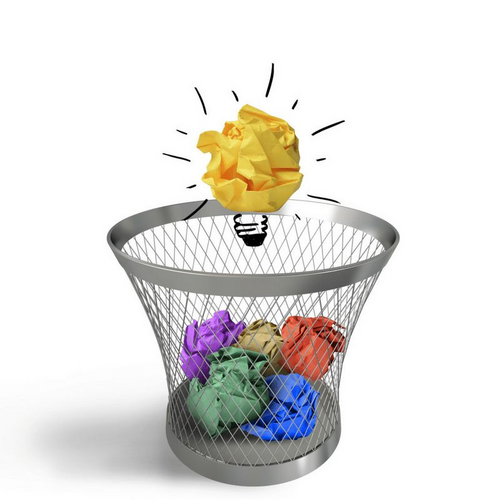
Gathering more information, thinking through possibilities, and making careful, deliberate decisions is better, right?
Not always.
Eurekas are hardly ever discovered that deliberately. If a solution is outside of your brain’s familiar experience — which is shaped by your beliefs, culture, and biases — your conscious mind will most likely never find it. An analytical search for a solution can comb through the entire content of your mind’s “known” but not outside of it. Novel answers reside outside of your mind’s known box.
When you allow your brain to integrate new information with existing knowledge on a subconscious level, it can establish new connections and see patterns not obvious to your conscious mind. Creative solutions and ideas are more likely to bubble up from a brain that applies unconscious thought to a problem, rather than going at it in a deliberate approach with your frontal lobe. When your thinking brain is on thinking and inundated with information, it doesn’t have the opportunity to connect concepts or make creative leaps.
Science shows that your brain’s resting-state circuitry, called the default mode network (DMN) — which is activated when you stop thinking about something specific and just veg out — is the best place to park a problem. In the DMN, your brain does some of its best, wisest, and most creative work.
Your working memory is limited.
Even though the brain can store virtually limitless amounts of information in long-term memory, you can only keep a limited amount of information in short-term (STM) memory at one time. Research shows that the average span is 7.3 for letters and 9.3 for numbers. Information stays in STM between 15 and 30 seconds. Then, it either attended to by working memory or discarded.
You learn better with spaced session than with contiguous practice.
You probably know from experience and science confirms that your brain performs better if you take in information in chunks with regular breaks rather than trying to cram everything into one long session. Your brain needs downtime to consolidate the incoming information before you can use it effectively. Studies show that napping can improve memory and creative problem-solving .