x




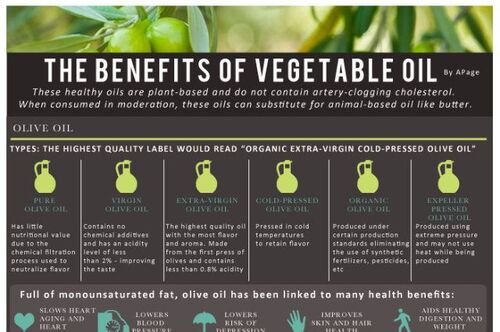
Monounsaturated fats contribute to good cholesterol levels and reduce your risk of heart and cardiovascular diseases.
Olive oil, canola oil, sunflower oil, hazelnut oil, and almond oil are all known for being high in monounsaturated fats.
Polyunsaturated fats. These are also called omega-3 and omega-6 acids.
Health Benefits of Vegetable Oil
When you think of vegetable oil, you may picture the jugs of oil commonly found at grocery stores used for deep frying foods. Vegetable oil actually encompasses a much more extensive range of oils.
Which vegetable oils are the healthiest, and how can you incorporate them into your diet?
About Vegetable Oil
The name is a little misleading, as vegetable oil doesn’t always come from vegetables. It is extracted from different types of fruits, seeds, grains, and nuts. Vegetable oil comes in many varieties for many cooking purposes. The healthiest vegetable oils are:
Canola
Corn
Olive
Peanut
Safflower
Soybean
Sunflower
Even the healthiest oils should be used in moderation since they are high in calories and primarily fat. When cooking with vegetable oils, consider the different types of fat.
Saturated fats. Saturated fats usually come from animal sources like lard and butter. They lead to higher cholesterol levels in your blood, putting you at risk for heart and cardiovascular diseases. When choosing an oil, look for one that is low in saturated fat.
Trans fats. Similar to saturated fat, trans fat contributes to an increased risk of heart and cardiovascular diseases. These fats are from foods that are high in hydrogenated or partially hydrogenated oils, such as processed food. These should be avoided when possible.
Monounsaturated fats. These are also called omega-9 fatty acid and oleic acid. Monounsaturated fats contribute to good cholesterol levels and reduce your risk of heart and cardiovascular diseases. Olive oil, canola oil, sunflower oil, hazelnut oil, and almond oil are all known for being high in monounsaturated fats.
Polyunsaturated fats. These are also called omega-3 and omega-6 acids. This type of fat helps to maintain cell membranes that regulate your body’s processes, like managing cholesterol metabolism in your bloodstream.
Polyunsaturated fats also help your body absorb the fat-soluble vitamins A, D, E, and K.
How Is Vegetable Oil Produced?
Some oils, like olive oil, are simple to make. Olives only need to be crushed, and the resulting oil is filtered and ready for use. Other oils have more complicated processes. Plants, nuts, and seeds are crushed to produce their oil, which sometimes requires a chemical for complete extraction. The leftover solids are used for feeding animals and livestock.
Health Benefits of Vegetable Oil