x




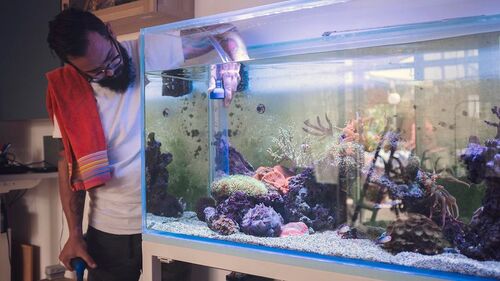
The ideal temperature for a reef aquarium is 75-78 degrees Fahrenheit. Maintaining a stable temperature is of the utmost importance, since the incorrect temperature or temperature fluctuations can cause stress to the inhabitants of the aquarium, and can lead to disease and algae outbreaks.
We hear this question daily, from just about everyone who walks through our door and sees how beautiful a properly set up marine tank can be. The answer is simple: with the right combination of basic knowledge and quality equipment, anyone can have a successful saltwater aquarium. From a beginner's basic tank with just a few clownfish to the most advanced high-end custom reef aquarium with dozens of live corals, all successful marine aquariums share many of the same principles.
A few common mistakes to avoid when starting a marine aquarium:
1. Failure to plan ahead
2. Failure to read current, reputable marine aquarium books, or otherwise research the hobby to gain a basic knowledge of equipment and methods prior to making the big purchase
3. Relying on unqualified individuals or sources for advice.
4. Starting with an aquarium that's too small
5. adding fish and corals too quickly
6. using unfiltered tap water
7. using outdated, ineffective or inadequate equipment
8. using the wrong substrate
9. positioning the aquarium near a window, heater, or drafty area.
10. not testing the water
11. purchasing unhealthy or poorly conditioned animals
12. purchasing fish on impulse, rather than planning ahead
13. purchasing fish that are incompatible or that grow too large for your aquarium
14. adding newly acquired fish to an established tank without quarantining them first.
15. adding harsh fish medications to an aquarium containing invertebrates
16. Not cleaning out the protein skimmer frequently
17. Adding uncured live rock to an established aquarium
18. Purchasing photosynthetic animals such as corals and tridacna clams without first installing adequate lighting to sustain them.
We will now briefly discuss some of the basics of a marine aquarium.
1.) Biological Filtration: Biological filtration refers to the purification of aquarium water by beneficial aerobic bacteria colonies. The input of fish food and fish waste into the closed-system aquarium produces toxic ammonia and nitrite. These compounds need to be broken down and removed from the aquarium if invertebrates and fish are to thrive in the tank. Both of these compounds are toxic to most organisms and are removed from the aquarium by beneficial bacteria colonies living in the filter, or within the live rock and live sand (if present).
2.) Salinity: Salinity is the measurement of the total dissolved salts in the aquarium, and is usually expressed in Parts Per Thousand (ppt). Specific Gravity is the measurement of the density of water, and is expressed as a decimal. Pure freshwater has a Specific Gravity of 1.0. Saltwater aquariums are usually maintained at a S.G. of 1.020-1.026, depending on the type of organisms maintained in the aquarium. Reef aquariums or any aquarium housing invertebrates generally needs a higher S.G., while aquariums housing only marine fish are best maintained at a slightly lower S.G. The devices used to measure S.G. are either a hydrometer or a refractometer, and is an absolute necessity for all marine aquarium owners. Most devices display specific gravity as well as salinity, and are usually calibrated for use with marine aquarium temperature water.
For more info on Saltwater Aquarium