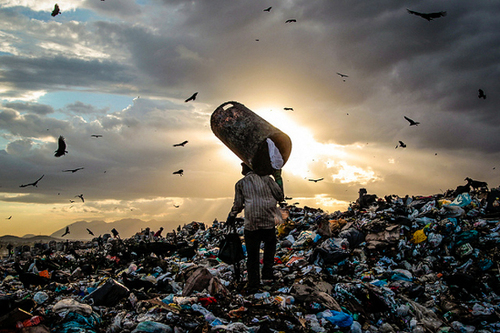

A small technology and innovation company based in Tanzania is working to create a healthier environment and produce more medical tools by re-using plastic waste as 3D printer filament.
Using this recycled material, STICLab hopes to enhance the area’s health ecosystem by providing a range of medical tools and applications. And since Dar es Salaam, the city in which the company operates from, generates an estimated 400 tonnes of plastic waste in one day, STICLab is hoping to help the region’s environment, as well as its medical sector.
In a project, named ReFabDar, similar to ALT LLC’s last year, STICLab is passionate about ‘fixing the mess we have created for ourselves.’ The company says the first step to doing that, is changing the perception of trash and finding a way to make value out of waste. Currently in Tanzania, the cost of 1kg of filament can rise above forty dollars.
Focusing particularly on recycling plastic bottles, the aim for the company’s engineers has been to create new machines that turn this plastic waste into 3D filament, and then use that filament to innovate new products for the Tanzanian market.
“Today, the plastic waste that is collected by waste pickers is then shipped freight to China,” said Adella Salum, Engineer, STICLab. “We need more local enterprises to recycle this waste. If we could just have ten percent of Dar’s plastic waste, we could make about a million medical tools a day.”
Using its RETR3D 3D printer and Thunderhead filament extruder, the company’s vision is becoming a reality. Through the ReFabDar project, five feasible product markets have been established. While education items, spare parts, jewellery and consumer goods are all viable end-parts, STICLab sees healthcare as the field in which it can have the greatest impact.
Tanzania is one of Africa’s worst affected areas for the spread of malaria – practically the entire country carries a high risk of infection. To properly diagnose malaria, doctors often use microscopes, which in poorer parts of the country are not always easy to come by. Having already 3D-printed a medical microscope, STICLab is hopeful the ReFabDar project can help to sufficiently detect and treat killer diseases, such as malaria, while cracking down on plastic waste.
“We have laboratories where we conduct our research activities,” said Calista Emeda, Senior Research Scientist, National Institute for Medical Research. “We use microscopes in several activities while testing. Malaria is among the top ten diseases, it could be a number one killer. Sometimes we don’t have microscopes in these villages where we have dispensaries, so we really need to have these new technologies, which are cheaper and easier to use.”
With STICLab envisioning a similar impact on the other four of its five indentified target markets, the company is growing in confidence. Suggesting drip hydroponic agriculture systems to produce more food with less water on smaller pieces of land for farmers, and low cost microscopes to help students better understand microbiology, STICLab promise there’s still more innovation to come.
“We have only just begun,” finished Salum. “With filament, a laptop, a printer and a solar panel, you have a portable factory to print solutions on-demand anywhere in the world.” Nominations and bookings for the inaugural TCT Awards can now be made on the TCT Awards website.