x



 What is common law?
Stare decisis is Latin for “to stand by things decided.” In short, it is the doctrine of precedent.
Courts cite to stare decisis when an issue has been previously brought to the court and a ruling already issued. According to the Supreme Court, stare decisis “promotes the evenhanded, predictable, and consistent development of legal principles, fosters reliance on judicial decisions, and contributes to the actual and perceived integrity of the judicial process.” In practice, the Supreme Court will usually defer to its previous decisions even if the soundness of the decision is in doubt. A benefit of this rigidity is that a court need not continuously reevaluate the legal underpinnings of past decisions and accepted doctrines. Moreover, proponents argue that the predictability afforded by the doctrine helps clarify constitutional rights for the public. Other commentators point out that courts and society only realize these benefits when decisions are published and made available. Thus, some scholars assert that stare decisis is harder to justify in cases involving secret opinions.
The doctrine operates both horizontally and vertically. Horizontal stare decisis refers to a court adhering to its own precedent. A court engages in vertical stare decisis when it applies precedent from a higher court. Consequently, stare decisis discourages litigating established precedents, and thus, reduces spending.
Despite the legal stability afforded by stare decisis, it is not without negative externalities. Critics argue that the doctrine occasionally permits erroneous decisions to continue influencing the law and encumbers the legal system’s ability to quickly adapt to change.
Although courts seldom overrule precedent, Justice Rehnquist explained that stare decisis is not an “inexorable command.” On occasion, the Court will decide not to apply the doctrine if a prior decision is deemed unworkable. In addition, significant societal changes may also prompt the Court to overrule precedent; however, any decision to overrule precedent is exercised cautiously.
For a recent example of the application of stare decisis by the US Supreme Court, see Kimble v. Marvel Entertainment. Our Preview of that case contains further discussion of the doctrine.
Courts, however, need not always adhere to precedent of prior courts. Courts are typically bound by decisions either they, or their superior courts, have made. For example, a federal district court (which would be a trial-level court) in New York is in the Second Federal District. That district court needs to adhere to a decision in a case made by a Second District Circuit Court of Appeals. Conversely, that same federal district court need not adhere to a decision made by any district or appellate court in any other district. The Second Circuit District Court may find that precedent to be persuasive, but the trial court in this example is not bound by that other districts' precedent. Although the precedent may not be binding, it may be extraordinarily persuasive, especially if the facts of the precedent case and the original court's rationale for its decision are very similar to the current case.
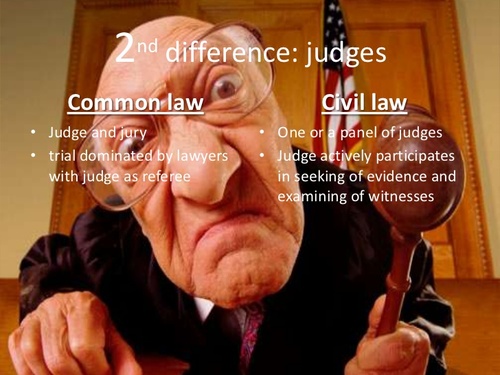
Stare decisis is typically used by common law legal systems. Civil law legal systems, however, place a stronger reliance upon statutes and ordinances for precedent. Every state in the United States use a common law system (which means they rely upon stare decisis), except for Louisiana, which retains a civil law legal system. Therefore, while Louisiana courts may rely upon previous caselaw, the reliance is much weaker than that of every other states' court systems.
Authored by Timothy Oyen.