x





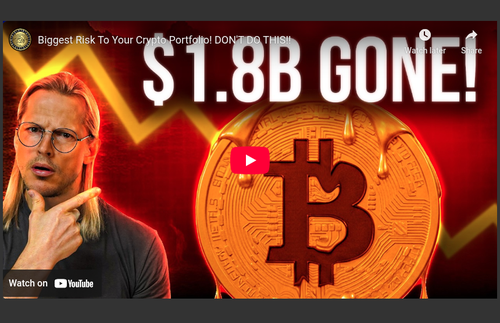
"The crypto markets just had one of their biggest liquidation waves of 2025. Around $1.8 billion in long and short positions were wiped out in a single day.
But what actually causes these wild moves, and why do they snowball so violently? In this video, we look at the mechanics of leverage, liquidations, and the domino effect that drives these massive price moves.
Watch through to the end to learn how you can use these events to your advantage!"
~ Coin Bureau
The video explains crypto liquidations, which occur when leveraged trading positions are force-closed by an exchange because the market moves against the trader, causing their margin to be depleted. Leverage allows a trader to control a large position with a small amount of capital (margin), amplifying both gains and losses. For example, a 10x leveraged long position means a 10% price drop results in a total loss of the initial margin, leading to liquidation. Traders use either isolated margin, where only a specified amount of capital backs the trade, or cross margin, where the entire account balance acts as collateral, which can prevent premature liquidation but exposes the whole account to risk. The video emphasizes that liquidations are a significant risk in cryptocurrency trading, particularly when using perpetual futures (perps), which are the preferred instrument for leveraged trading.
A "liquidation cascade" happens when initial liquidations force-sell positions (for longs) or force-buy positions (for shorts), pushing the price further and triggering more liquidations in a chain reaction. This phenomenon often ends with a massive price spike and a "wick" on the candle as the forced selling/buying exhaustion occurs, leading to a temporary quiet period while the market resets. Traders can track liquidation risk using tools like CoinGlass by monitoring open interest, which shows the total number of futures contracts open, and funding rates. Consistently positive funding rates with stalling prices and high open interest can signal a potential long flush, while prolonged negative funding suggests a potential short squeeze. The simplest way to avoid becoming liquidation fodder is to avoid using leverage entirely and stick to spot trading. If using leverage, it should be modest (e.g., 2x) and used to reduce overall risk or to capitalize on favourable market conditions like collecting negative funding payments.
0:00 Intro
0:48 Leverage and Liquidations
3:52 Perpetual Futures (Perps)
7:25 Liquidation Cascades
11:07 Anticipating Liquidations
14:35 Using Liquidations To Your Advantage
Source - Coin Bureau YouTube: https://www.youtube.com/watch?v=sRAnPTXC0jk
Disclaimer: This video is provided for informational purposes only, and not offered or intended to be used as legal, tax, investment, financial, or any other advice.















