x




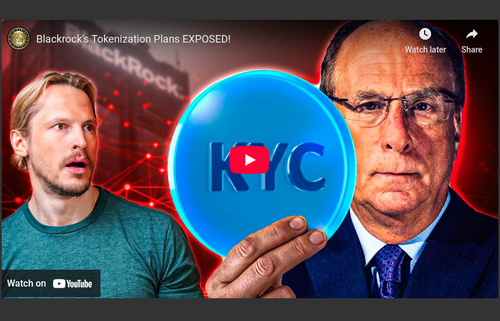
"BlackRock has been quietly preparing to capture your savings — and now, their technical solution has arrived. CEO Larry Fink recently confirmed that the world’s largest asset manager is developing its own proprietary system to tokenize assets.
That’s why today, we’re uncovering the real 68-trillion-dollar reason behind BlackRock’s tokenization push, how they plan to use crypto for control, and what it all means for the markets. Enjoy!"
~ Coin Bureau
BlackRock's tokenization push is presented as a crucial part of CEO Larry Fink's "second draft of globalization," a plan to fund an estimated $68 trillion infrastructure drive aligned with the UN's Sustainable Development Goals. Since governments and corporations lack the necessary capital, BlackRock's strategy is to funnel trillions of dollars from citizens' low-yield savings and pension funds into these massive, long-term, and illiquid projects. Tokenization provides the necessary technical solution by fractionalizing assets like power grids and data centres into thousands of liquid, tradable tokens on a blockchain. This effectively transforms illiquid private assets into programmable instruments, thereby satisfying fiduciary standards and unlocking the vast amount of pension capital required for their global investment strategy to work.
However, the video warns that BlackRock's approach is geared toward maximum control, as evidenced by their development of proprietary, permissioned systems rather than relying fully on public blockchains like Ethereum. By joining private network initiatives and integrating their massive risk management platform, Aladdin, BlackRock ensures compliance and oversight over trillions in assets. Their strategy is a hybrid model: utilizing public chains for 24/7 liquidity (like the BUIDL and S-token framework) but enforcing control via programmable compliance—a system where rules are encoded directly into the asset's contract. This effort is viewed as converging with the Bank for International Settlements' vision of a fully tokenized financial system linked to digital IDs and CBDCs. The speaker cautions that this model, while offering efficiency and legitimacy to crypto, ultimately risks turning open DeFi into a tightly controlled utility layer, where ownership becomes programmable and access could be digitally restricted.
0:00 Intro
0:42 Why BlackRock Needs Tokenization?
4:25 The Compliance Trojan Horse
8:28 The Hybrid Liquidity Engine
10:59 Tokenization’s Dystopian Endgame
13:21 What It All Means For the Markets and You?
Source - Coin Bureau YouTube: https://www.youtube.com/watch?v=SXd6dO-Uvb0
Disclaimer: This video is provided for informational purposes only, and not offered or intended to be used as legal, tax, investment, financial, or any other advice.















