x





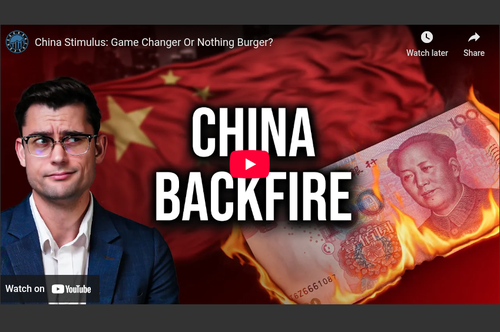
"When a government announces a trillion-dollar stimulus, markets are supposed to rally. More money flowing typically means optimism, higher asset prices, and a weakening currency.
So why did markets do the exact opposite after China’s back-to-back massive stimulus packages? The yuan strengthened, stocks retraced their gains, and bonds rallied on bets the economy would weaken.
More than a year after their announcement, consumers still aren’t spending, and youth unemployment is at 17%. So what on earth did they spend all that money on? And is China’s economy beyond repair?"
~ Coin Bureau
In late 2024 and throughout 2025, China introduced significant economic measures that many investors initially hoped would be a traditional growth-boosting stimulus, but the results proved to be more about structural stabilization than immediate market reflation. The government utilized a combination of monetary policy shifts, such as cutting reserve requirements and interest rates, alongside a massive twelve trillion yuan debt swap program designed to move expensive, hidden local government debt onto more transparent and manageable balance sheets. Rather than issuing direct cash handouts to consumers to combat deflation and high youth unemployment, Beijing has strategically funnelled capital away from the declining real estate sector and toward advanced manufacturing and high-tech industries like AI and semiconductors. This approach, framed as developing new quality productive forces, aims to transition the economy toward long-term technology-driven productivity even if it means enduring slower short-term growth and continued friction with global trade partners. Consequently, while the measures prevented a systemic financial collapse, they reinforced a deflationary trend in the bond market and signalled a deliberate decoupling from foreign technology and traditional consumption-led growth models.
0:00 Intro
1:03 Background
5:34 China’s Stimulus Flop Era?
9:49 Stimulus Round Two
14:42 Xi: Deflator and Rotator in Chief
18:15 Global Spillover
Source - Coin Bureau Finance YouTube: https://www.youtube.com/watch?v=lkihKRNoG7I
Disclaimer: This video is provided for informational purposes only, and not offered or intended to be used as legal, tax, investment, financial, or any other advice.















