x




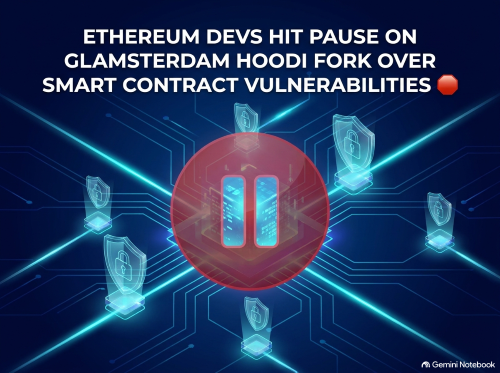
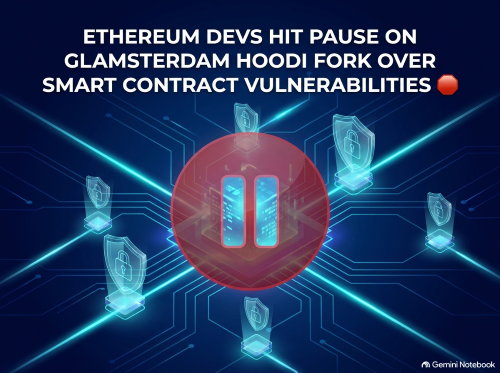
Ethereum core developers have taken a decisive step to safeguard the network's decentralized application ecosystem. Following the discovery of subtle yet critical smart contract vulnerabilities, core engineers confirmed that the upcoming Glamsterdam hard fork will not be deployed on the Hoodi testnet until all security concerns are thoroughly resolved.
This pause comes on the heels of intensive testing on Sepolia and in-depth investigations into how changes to Ethereum's gas pricing model interact with existing smart contract codebases. As highlighted in a recent Cointelegraph report, the primary concern revolves around eight specific smart contract gas invariants that could be broken when Glamsterdam introduces fundamental changes to gas calculations.
For protocol developers, auditors, and node operators, understanding why these changes pose risks is essential for preparing smart contracts for the post-Glamsterdam landscape.
At the core of the Glamsterdam upgrade are two major Ethereum Improvement Proposals: EIP-8037 and EIP-8038. Designed to optimise state access and improve layer-1 scalability, these proposals overhaul how execution gas is calculated and introduce a dedicated state-gas reservoir for state creation operations.
While these optimisations make Ethereum's execution layer more efficient, they disrupt long-standing assumptions built into legacy smart contracts. As detailed in the official Ethereum Foundation announcement, many deployed contracts rely on precise assumptions about how much gas specific operations consume and how much gas remains after a failed external call.
The alarm was first sounded following a detailed security review conducted by smart contract auditing firm ChainSecurity. Their research revealed a paradoxical behaviour under Glamsterdam's new rules: under certain conditions, gas spent during an external call can effectively return to the caller frame upon failure.
As explained in ChainSecurity's technical analysis, smart contracts frequently attempt to catch failed subcalls to record errors, trigger fallback logic, or log attempts. Under current rules (the Osaka schedule), if a subcall runs out of gas, the remaining execution gas in the main contract is often insufficient to complete expensive operations, causing the main contract to revert safely as well.
Under Glamsterdam, however, three major mechanics break this safety assumption:
The primary danger of these broken invariants is insufficient gas griefing.
In an griefing scenario, a malicious actor intentionally passes a restricted gas budget to a smart contract method. The attacker aims to force an internal call to fail due to lack of gas, while leaving just enough gas for the parent contract to process the failure handler. If the failure handler executes successfully, it might permanently record the operation as failed, cancel a valid claim, or disable retries for a legitimate user.
Under previous Ethereum execution rules, protocol developers frequently relied on implicit reverts—expecting that any underfunded call would cascade into a total transaction revert. With Glamsterdam's gas refills and lower execution charges for reservoir-backed writes, failure handlers that used to revert safely may now execute to completion, leading to unexpected state changes.
Within days of publishing the invariant list, the Ethereum Foundation received multiple reports from development teams confirming that their deployed, immutable contracts could exhibit vulnerable behaviour post-upgrade.
The decision by AllCoreDevs (ACD) to delay the Hoodi testnet fork reflects a clear prioritisation of security over rigid deployment timelines. Notably, core developers confirmed that parallel work on subsequent upgrades, such as Hegota, remains entirely unaffected and continues at full speed.
The Ethereum community has laid out a clear roadmap to address the Glamsterdam gas risks:
Formal findings and potential spec adjustments are scheduled for discussion during upcoming AllCoreDevs meetings before any new date is set for the Hoodi testnet fork.
The delay of the Hoodi fork serves as a reminder of the complexities inherent in upgrading decentralized infrastructure. For protocol engineers, this window provides an ideal opportunity to audit smart contract failure handlers, re-evaluate hardcoded gas assumptions, and verify that fallback paths degrade gracefully under changing EVM mechanics.
By addressing these invariant edge cases today, the Ethereum ecosystem ensures that Glamsterdam will deliver its intended performance gains without compromising the security of deployed applications.
Disclaimer: This article is provided for informational purposes only, mistakes may be made, and it's not offered or intended to be used as legal, tax, investment, financial, or any other advice.