x



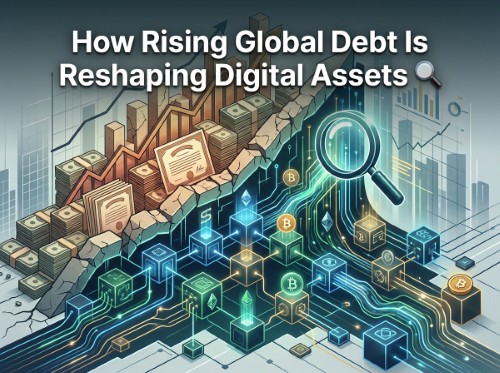
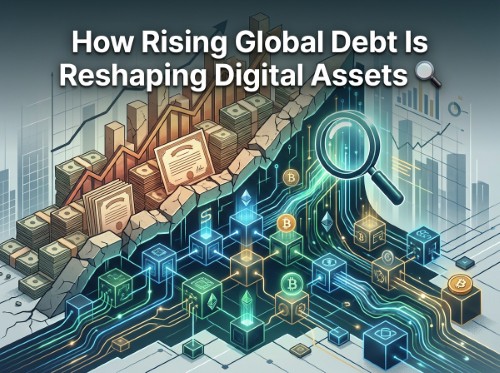
The global financial system is navigating an unprecedented period of structural realignment. As sovereign debt levels reach historical highs across major developed economies, traditional monetary policy tools are facing severe limitations. Central banks and national treasuries find themselves balancing the delicate act of managing debt service costs while attempting to kerb persistent inflationary pressures. In response to these mounting macroeconomic headwinds, a significant migration is taking place across global capital markets: the rapid convergence of traditional finance with digital asset infrastructure.
Understanding this paradigm shift requires looking beyond short-term market speculation. The underlying mechanisms driving digital asset adoption are increasingly rooted in systemic macroeconomic pressures, institutional liquidity requirements, and the necessity for technological modernisation across global banking networks.
At the heart of the current financial landscape is the rapid expansion of government bond supplies. Unprecedented fiscal deficits have forced sovereign issuers to flood the market with treasury instruments, placing upward pressure on yields and dramatically increasing borrowing costs for governments. To prevent debt servicing from consuming national budgets, monetary authorities frequently resort to yield control measures, liquidity injections, or gradual currency debasement.
When real yields become compressed or negative in inflation-adjusted terms, conventional fixed-income assets lose their attractiveness as long-term wealth preservation tools. Market participants naturally seek alternative avenues to safeguard capital, manage counterparty risk, and maintain purchasing power. Historically, capital fled towards traditional safe-haven assets such as precious metals. Today, however, digital assets featuring fixed supply schedules and programmatic monetary policies offer an alternative store-of-value proposition that operates independently of sovereign fiscal decisions.
Beyond serving as a hedge against monetary expansion, cryptocurrency infrastructure is actively providing solutions to structural inefficiencies within the traditional financial system. The tokenisation of real-world assets (RWAs)—particularly sovereign debt instruments and short-term treasury bills—is transforming how global liquidity is managed.
By migrating traditional financial assets onto permissioned and public blockchain networks, financial institutions can achieve several immediate operational advantages:
This fusion of sovereign debt instruments with blockchain networks provides high-grade collateral with the velocity and transparency of decentralized technology.
Stablecoins have emerged as a critical bridge in this new financial architecture. By digitising fiat currency, stablecoins provide a seamless medium of exchange across digital asset venues while simultaneously creating significant demand for real-world government debt. Major stablecoin issuers have quietly become some of the largest purchasers of short-term sovereign debt, backing their digital tokens with high-quality liquid assets.
This dynamic creates a powerful feedback loop. Sovereign issuers gain an expanding, price-insensitive buyer base for short-term debt, while the global market gains access to a dollar-denominated, borderless, 24/7 payment rail. For businesses and institutions operating in regions with volatile local currencies or restrictive banking hours, digital dollar stablecoins offer immediate, reliable liquidity and reduced transaction friction.
The broader financial sector is no longer merely observing this transition from the sidelines. Major asset managers, custodian banks, and financial market utilities are actively building institutional-grade infrastructure to accommodate digital assets. The approval and growth of spot exchange-traded products, coupled with regulated institutional custody solutions, have integrated digital assets into conventional portfolio construction.
Rather than replacing traditional finance entirely, crypto infrastructure is becoming the underlying operational layer upon which modern capital markets function. From cross-border interbank settlements to automated compliance frameworks, decentralized ledger technology is providing the efficiency and auditability that ageing legacy systems lack.
As global debt dynamics continue to push capital towards more efficient and resilient financial rails, both individual market participants and institutional leaders must adapt. Thriving in this evolving environment requires a balanced strategy that prioritises strict risk management, regulatory compliance, and a clear understanding of technological fundamentals.
The ongoing transformation of global finance represents far more than a routine market cycle; it reflects a fundamental evolution in how value is stored, transferred, and managed across borders. As sovereign debt pressures persist, the reliance on digital assets and blockchain infrastructure will only continue to grow, cementing their place at the core of international finance.
Coin Bureau - Wall Street FINALLY Surrenders To Bitcoin (Episode 4)
"By 2020, Bitcoin had survived crashes, crackdowns, scandals, and countless predictions of its demise. Then the pandemic hit, putting the economy on life support.
As governments and central banks flooded economies with stimulus to prevent collapse, investors saw how quickly money could be created when the stakes were high. That sparked demand for an asset with a supply no government could expand and no central authority could control.
Bitcoin became the clear standout. Its fixed supply became a major selling point, and its price surged as investors piled in. But nothing goes up forever, and 2022 would give Bitcoin its biggest survival test yet."
~ TIMESTAMPS ~
0:00 The Wall Street Taboo Starts to Break
03:58 Michael Saylor Makes the Biggest Bet Yet
08:31 Corporate America Starts Paying Attention
11:57 Wall Street Builds the Infrastructure
15:35 Then Crypto Blows Up Again
19:47 BlackRock Changes the Game
22:06 Bitcoin Gets Its Wall Street Wrapper
25:10 From Fringe Asset to Financial Institution
Source 👉 https://www.youtube.com/watch?v=V9H2YSprxp4
Disclaimer: This article is provided for informational purposes only, mistakes may be made, and it's not offered or intended to be used as legal, tax, investment, financial, or any other advice.