x






The U.S. Securities and Exchange Commission (SEC) has charged Ramil Palafox, the founder of PGI Global, with orchestrating a $198 million Ponzi scheme disguised as a legitimate crypto asset and foreign exchange trading business. From January 2020 to October 2021, Palafox lured investors globally by selling "membership" packages promising high returns and incentivized recruitment through a multi-level marketing model. However, instead of actual trading activity, Palafox misappropriated over $57 million for personal luxuries—including cars, watches, and homes—and funnelled remaining funds to pay off earlier investors, a hallmark of Ponzi fraud. The SEC’s complaint, filed in Virginia, demands civil penalties, restitution, and a ban on Palafox’s participation in future MLM schemes, while a parallel criminal case has been initiated by the U.S. Attorney’s Office.
In addition to U.S. actions, PGI Global faced enforcement abroad. In 2022, the UK High Court shuttered PGI Global’s British operations for running a fraudulent investment scheme that falsely promised returns of up to 200%. Investigations revealed the company had siphoned over $700,000 from investors, with executives diverting funds into personal accounts and splurging on luxury goods. Palafox reportedly refused to cooperate with UK authorities. The SEC emphasized how Palafox exploited the allure of crypto innovation to conceal a large-scale securities fraud, naming several associated individuals and entities in its complaint to recover ill-gotten funds. Source
Binance, the world’s largest crypto exchange, has airdropped and listed Hyperlane (HYPER), the native token of a new permissionless interoperability protocol, for trading. As the 15th project under Binance’s HODler Airdrops program, eligible BNB holders received HYPER tokens based on historical snapshots of their holdings. Hyperlane positions itself as the first permissionless interoperability layer, enabling smart contract developers to send arbitrary data between blockchains. Its capabilities include token transfers, cross-chain function calls, and the creation of interchain applications that users can access across multiple blockchains—eliminating the need for centralized intermediaries.
Upon listing, HYPER began trading at $0.2695 and saw an initial price increase of nearly 6%. Binance also applied a seed tag to the token, indicating its lower liquidity and potential for higher volatility compared to other assets on the exchange. This designation requires users trading HYPER to complete risk-awareness quizzes every 90 days. The launch highlights Binance’s continued focus on supporting emerging blockchain infrastructure projects that enhance cross-chain communication and decentralized application development. Source
Newly appointed SEC Chairman Paul Atkins has announced that establishing clear and consistent regulatory guidelines for digital assets will be a top priority during his tenure. Speaking at his swearing-in ceremony, Atkins emphasized the need for the SEC to return to its core mission of investor protection, fair markets, and capital formation, while keeping politics out of regulatory enforcement. He pledged to advance "rational, coherent, and principled" rules for the crypto industry to foster investment and ensure the U.S. remains a leading destination for business and innovation.
Under the prior leadership of Chairman Gary Gensler during the Biden Administration, the SEC aggressively pursued legal action against several high-profile crypto firms, including Coinbase, Kraken, Binance, Consensys, Ripple Labs, and OpenSea. Since Atkins’ nomination by President Donald Trump in December and Trump’s assumption of office in January, the SEC has moved to drop many of these lawsuits. Atkins’ approach signals a shift toward a more structured and potentially less adversarial regulatory framework for digital asset companies operating in the U.S. Source
PayPal is preparing to launch a program that offers users yield on its proprietary stablecoin, PayPal USD (PYUSD), in an effort to boost adoption and usage of the asset. According to a Bloomberg report, the program—set to roll out sometime this summer—will allow users of both PayPal and Venmo to earn an annual yield of 3.7% on their PYUSD holdings within their crypto wallets. The rewards, which accrue daily and are paid out monthly in PYUSD, can be converted to fiat, used for payments, or sent to other users.
Jose Fernandez da Ponte, PayPal’s senior vice president of blockchain, crypto, and digital currencies, explained that the initiative is part of a long-term strategy to promote stablecoins as the foundation of next-generation payment systems. He emphasized that while the transition to widespread stablecoin adoption will take time, PayPal is committed to this decade-long vision. PYUSD, which launched in 2023 through a partnership with Paxos, is backed 100% by U.S. dollar deposits, ensuring 1:1 redemption for users. Source
The University of the Hespérides in Spain has announced the launch of a ten-month, fully online Master’s in Bitcoin program starting April 28, 2025, offering 60 ECTS credits and targeting professionals such as entrepreneurs, engineers, lawyers, and investors. The program, taught entirely in Spanish, blends theoretical and practical content covering Bitcoin’s philosophy, technology, monetary theory, legal considerations, and investment strategies. It features workshops on self-custody, proof-of-work mining, and tax compliance, along with perks like a Blockstream Jade hardware wallet and a book by program director Álvaro D. María. The faculty includes industry experts from organizations like BTC Inc. and Jan3, with a strong emphasis on networking through partnerships with Bitcoin-focused companies.
The course structure includes asynchronous online classes with optional in-person seminars in Santa Cruz de Tenerife and Las Palmas de Gran Canaria. Admission involves an application process, interview, and available financing options, though tuition fees are not disclosed. The University of the Hespérides joins global academic institutions like MIT, NYU, UC Berkeley, Duke University, and the University of Nicosia, which have also introduced specialized cryptocurrency and blockchain programs in response to the growing demand for expertise in digital assets. In addition to the master’s program, the university offers a shorter six-month postgraduate option for those seeking less intensive study, reflecting Bitcoin’s rising relevance in global finance, policy, and innovation. Source
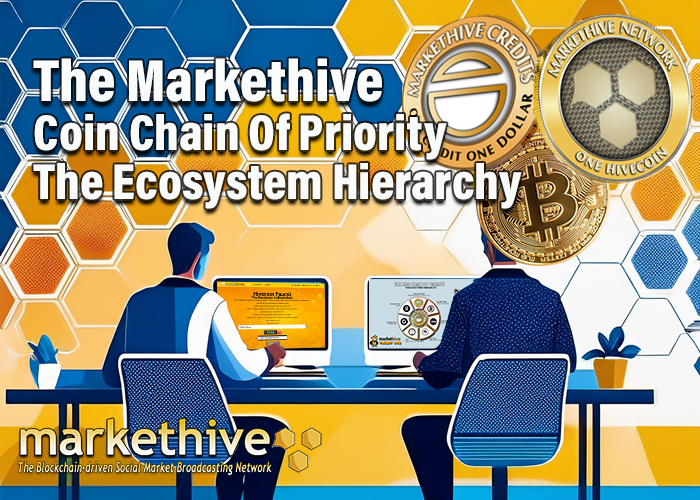
Markethive is transforming the digital landscape by integrating cryptocurrency, social networking, inbound marketing, and e-commerce into a decentralized ecosystem aimed at empowering entrepreneurs and businesses of all sizes. Central to its structure are two key tokens: Markethive Credit (MHC), a stablecoin pegged at $1 used for purchases and staking rewards within the platform, and Hivecoin (HVC), a premium transactional cryptocurrency with broad utility including payment processing, content promotion, and access to premium features. The ecosystem incentivizes long-term engagement by rewarding users for holding MHC and actively participating in the platform, while also offering discounts on products and services when purchasing with Hivecoin. This dual-token model promotes financial independence and community-driven growth, positioning Markethive as a comprehensive solution for modern entrepreneurs.
Beyond tokens, Markethive enriches user engagement through diverse earning opportunities such as faucets, micropayments, referrals, content creation, and social interactions—all rewarding users with Hivecoin. The platform also integrates mainstream payment options (like Visa, MasterCard, and Amex), as well as Google Pay and Yandex Pay, to enhance accessibility, especially in regions with limited banking infrastructure. By rewarding merit-based contributions and fostering community building, Markethive not only creates a vibrant, self-sustaining economy but also offers users tools to grow their brands and businesses. Its innovative approach positions it as more than a social network—it’s an all-encompassing, decentralized ecosystem designed to democratize opportunity and redefine digital entrepreneurship. Source
The Solana Foundation is introducing a new validator policy aimed at enhancing network decentralization and reducing validator dependence on foundation support. Under this strategy, for every new validator added to the Solana Foundation Delegation Program (SFDP), three long-term validators who have attracted less than 1,000 SOL in external stake after 18 months will be removed. This shift addresses concerns that many validators rely heavily—up to 90–100%—on foundation-delegated stake and might not be sustainable without it. Research suggests that around 57% of current validators would struggle to cover operational costs if SFDP support were suddenly withdrawn. Despite these risks, the foundation and its partners argue that transitioning validators toward self-sufficiency will ultimately strengthen the network's decentralization and performance.
By promoting self-reliant validators, the Solana Foundation aims to improve the network's Nakamoto Coefficient, a key measure of decentralization that reflects how distributed the stake is across validators. Although the coefficient was frequently cited as 19 in late 2024, experts acknowledge it might be lower in reality. Critics like Kydo from EigenLayer have called for more transparency about the foundation’s impact on validator distribution, suggesting that many validators were effectively "spawned" by the foundation and wouldn't survive independently. In response, foundation representatives emphasized that many now self-sufficient validators originally benefited from the SFDP. The overall strategy signals a deliberate shift away from validator count as a vanity metric toward a healthier, more decentralized and resilient Solana network. Source
Crypto influencer Scott Melker, known as "The Wolf Of All Streets," revealed that scammers have impersonated him using AI-generated fake IDs and deepfake technology, leading to at least one victim losing $4 million. Melker reported being contacted by a private investigator who uncovered that a Nigerian group had used his name, face, and even fake driver’s licenses—created with AI and featuring his X (formerly Twitter) avatar—to trick victims. The scammers conducted sophisticated Zoom calls and even spoofed accounts of Melker’s family members to reinforce their deception. Similar scams have been reported, including one where technical analyst "TheChartGuys" saw a victim lose $5,000 after scammers replicated their voice using AI deepfakes.
These incidents highlight a growing trend of AI-enhanced scams in the crypto space. While some experts, like trader “Nebraskan Gooner,” noted that discrepancies in fake IDs can be caught with basic checks, the rising sophistication of such scams remains alarming. Regulatory bodies and cybersecurity firms have also flagged the surge in AI-enabled scams; California's Department of Justice and Microsoft have both warned about bad actors leveraging AI to create highly convincing social engineering attacks. Melker expressed deep concern, warning that as generative AI technology advances, these scams will likely become even more pervasive and difficult to detect. Source
FNT Crypto is a crypto-as-a-service (CaaS) platform designed to simplify and accelerate the adoption of cryptocurrency infrastructure by fintechs and Web3 startups. By offering modular, white-label tools — including wallets, exchanges, compliance systems, and branded interfaces — FNT aims to bridge the gap between the complex backend of crypto and user-friendly, scalable applications. Originally launched as a consumer app in 2022, FNT evolved into a full-service provider that allows clients to launch branded custodial or self-custody apps quickly, with options like customized crypto cards, governance tokens, and visual identity integration. This approach addresses long-standing barriers in crypto usability, making it easier for businesses to deploy secure, compliant, and community-aligned crypto services.
FNT is also integrating AI into its infrastructure to enhance automation, scalability, and compliance, particularly in Know Your Customer (KYC) and Anti-Money Laundering (AML) processes. Since its beta launch in December 2023, FNT has surpassed $100,000 in daily trading volume, secured partnerships with major exchanges, and joined prominent startup programs from Google and Microsoft. With audited code and brokerage partnerships, the company is well-positioned to expand its crypto card offerings and deepen AI integration. Founder Valentin Sokolnikov emphasizes that FNT’s mission is to make crypto finance as accessible and secure as traditional banking, reflecting an industry-wide push toward mainstream adoption through intelligent, modular, and compliant infrastructure. Source
XRP futures are financial contracts that allow investors to speculate on the future price of XRP without owning the token itself. These contracts, launched by Coinbase Derivatives in April 2025, are regulated by the U.S. Commodity Futures Trading Commission (CFTC), providing a structured and secure way for investors to trade. XRP futures are offered in two types: Nano XRP futures, which represent 500 XRP per contract and are geared towards retail traders, and Standard XRP futures, covering 10,000 XRP per contract for larger institutions and active traders. Both contracts are cash-settled, meaning the difference between the entry and exit prices is paid in USD rather than the actual XRP token. Futures trading offers flexibility, including the ability to go long (buy) or short (sell), with leverage that can amplify both gains and losses.
Investing in XRP futures provides a way to gain exposure to the price movements of XRP without dealing with the complexities of owning the token itself, such as wallet management and security risks. Futures can also be used for hedging existing positions or speculating on XRP's price in either direction. The main benefits of XRP futures include the ability to trade with leverage, high liquidity, and the convenience of cash settlement. However, the use of leverage introduces higher risks, making it essential for traders to understand the product and practice effective risk management. Platforms like Coinbase, Kraken, Binance, and others offer XRP futures with various leverage options, and each has specific requirements for accessing these products. Source
The United Nations Office on Drugs and Crime (UNODC) has issued a warning about the growing use of cryptocurrency and blockchain technology by organized crime syndicates. According to a recent report, criminal gangs, particularly in Southeast Asia, are developing complex financial ecosystems to aid in their operations. These systems include unlicensed cryptocurrency exchanges, stablecoins, encrypted communication platforms, and illicit online marketplaces, all designed to evade detection and facilitate money laundering. Many of these groups are diversifying their activities beyond traditional crime, expanding into sectors like online gambling, software services, and payment processing.
The UNODC emphasizes the need for stronger international cooperation and regulatory frameworks to counter these criminal activities. The rise of these criminal networks has allowed them to significantly expand their reach, target a broader range of victims, and dramatically scale up their profits, both in fiat and cryptocurrency. This has resulted in billions of dollars in illicit capital, which are reinvested into further criminal ventures and used to launder money for other criminal organizations globally. The UNODC is calling for enhanced global efforts to curb the influence and growth of these syndicates. Source
Disclaimer: These articles are provided for informational purposes only. They are not offered or intended to be used as legal, tax, investment, financial, or any other advice.
Featured Image Source: Pixabay















